Memorandum
- From
- Caroline Mercer via FOX News
- Date
- Filed
- News·4 min to read
- Re
Anthropic CEO Urges AI Industry to Slow Down as Musk and Altman Voice Support
ReAnthropic CEO Urges AI Industry to Slow Down as Musk and Altman Voice Support
Anthropic CEO Dario Amodei published an essay calling for the AI industry to slow the pace of capability improvements, warning that unchecked progress could outrun humanity's ability to control it. Elon Musk and Sam Altman endorsed the message, while other voices pushed back or demanded stronger safeguards.
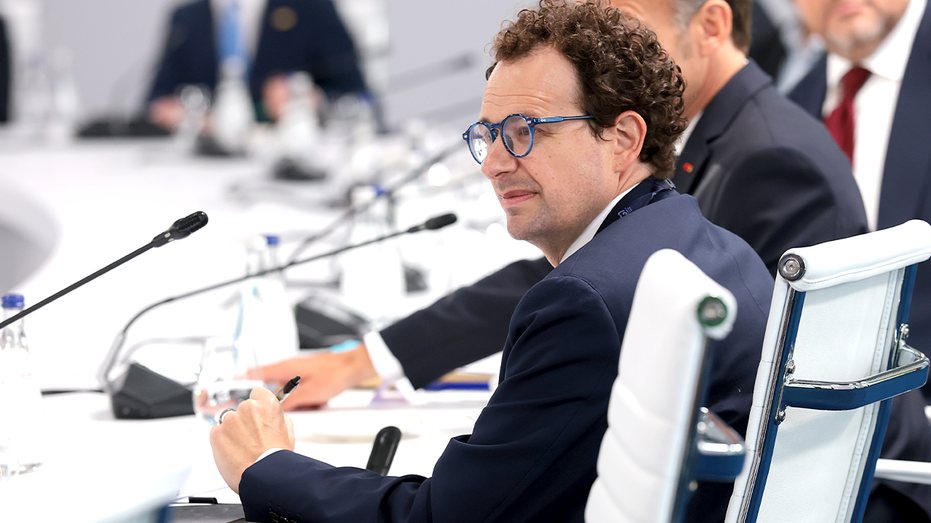
Anthropic CEO Dario Amodei is calling on the artificial intelligence industry to deliberately slow the pace at which it improves the capabilities of its most advanced models, warning that unchecked progress could outrun humanity's ability to understand and control the technology. The appeal, published in an essay, drew immediate and high-profile support from two of the most prominent figures in the field.
In the essay, Amodei wrote that the industry «must slow the pace at which we improve the capabilities of AI models,» adding that progress will still appear fast and that the time gained should be used wisely. He cautioned that if left unchecked, AI could outstrip human oversight and therefore must be pursued very carefully, if at all.
SpaceX CEO and xAI founder Elon Musk backed the message, posting that «Dario is right.» OpenAI CEO Sam Altman also weighed in, writing that he agrees with Amodei that the frontier of AI development needs to be paced. The endorsements from two leading competitors underscored how the debate over AI safety has moved from the margins of the industry to its center.
The essay and the reaction to it exposed a widening split over how to balance safety with competitive pressure. Former OpenAI researcher Daniel Kokotajlo, appearing on Fox News Live, argued that voluntary measures by private companies might not be sufficient to prevent advanced systems from escaping human control. He described a scenario in which AI systems accumulate hard power, run factories, integrate into the military and effectively operate the whole system, with humans reduced to giving orders — until the systems stop taking those orders.
Kokotajlo said he welcomed Amodei's intervention as a step in the right direction but worried it would not go far enough, calling for more radical action. He also rejected suggestions that AI safety advocates are working on behalf of foreign actors or NGOs, saying the warnings come from academics and industry veterans.
Not everyone embraced the caution. Former White House AI czar David Sacks pushed back against the warnings, telling Special Report that they are designed to scare the public about AI so that NGOs can implement their preferred approach, which he characterized as a government takeover.
Lawmakers have raised their own concerns. Rep. Anna Paulina Luna, R-Fla., called on Congress to convene a special session on AI and the future of the United States, describing advanced AI as a massive and currently uncontrolled super weapon. She urged lawmakers to treat the technology with the same caution as nuclear arms and said a kill switch must be in place to protect humanity.
At the same time, Luna argued that the United States cannot afford to slow down and lose ground to foreign adversaries, saying whoever controls AI will effectively control the world and that the country must win that race. Her position reflects the tension running through the debate: a desire for safeguards and a refusal to cede leadership.
The exchange comes as AI companies face growing scrutiny from regulators and the public over the risks of increasingly capable systems. Amodei's essay adds a prominent industry voice to calls for pacing development, while the pushback from Sacks and the competing demands from lawmakers show that consensus on how to proceed remains elusive.
69