Memorandum
- From
- Connor Quincy via Fast Company
- Date
- Filed
- Society·4 min to read
- Re
Electric Plant sensor uses AI to read electrical signals from plants
ReElectric Plant sensor uses AI to read electrical signals from plants
Electric Plant has launched Bud, a handheld sensor that attaches to plants and uses its Bombadil AI model to translate their electrical signals into data on hydration and stress. The company raised $11.2 million in seed funding.
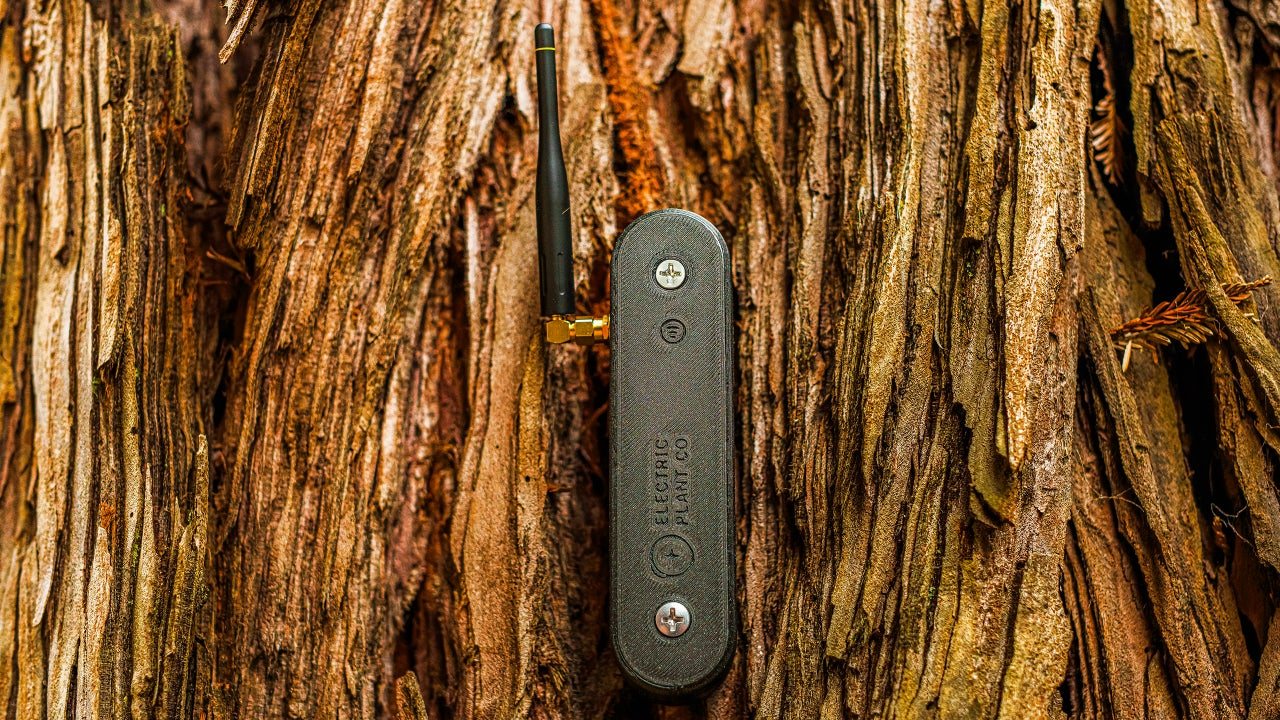
A new handheld sensor is using artificial intelligence to listen to plants and turn their electrical activity into information people can act on. The device, called Bud, was developed by Electric Plant Co. and is designed to tell growers and caretakers how plants are doing in their surroundings.
Bud is a lightweight, low-cost tool that attaches to a plant through two probes. Two stainless steel screws hold it in place, and it can be fixed to botanicals whose stem is at least an inch thick. When used on trees, the company says it is sensitive enough to reach the cambium layer, the tissue that separates the bark from the wood. The sensor detects and interprets the electric signals that plants naturally produce.
Like all living things, plants generate electricity. Electric Plant says that by tracking and decoding the signals plants give off in response to environmental stimuli, the sensor can collect data on conditions such as hydration and stress. Justin Mast, the company's cofounder and CEO, described the device as a kind of dongle. « The plant itself is the sophisticated technology », he told Fast Company. « Plants and trees have millions of little microreceptors that are processing information about the world around it and then they’re coordinating a lot of their physical responses through electrochemical signals, and so that’s what we’re tapping into and listening to », Mast said.
The company emerged from stealth with $11.2 million in seed funding. Its artificial intelligence model, called Bombadil, was trained on more than 4 million hours of electrical signals from more than 1,400 plants across 100 species. Those range from tomatoes, coleus and common garden plants to sequoias, apple trees, almond trees and oaks. The model estimates seven physiological stress markers from a plant’s electrical signals, including the operating efficiency of the photosystem and the temperature difference between leaves and the surrounding air, and converts them into insights about plant conditions.
Electric Plant is not alone in this field. Vivent Biosignals, a Switzerland-based plant intelligence company that also uses AI, said in July that it had surpassed more than 2 million monitored plant days. The founder of Smarty Plants, a U.K. startup that makes sensors for houseplants placed in the soil, pitched the product on an episode of a BBC business reality show that aired last month.
Mast, who also founded the direct-to-consumer houseplant delivery service Bloomscape, said his experience there showed him how difficult it is to tell people what a plant needs at any given time. The answer depends on how much sunlight a plant gets, where in the world it is grown, how large it is and whether it sits near a radiator. « It’s so contextual », he said, a point he extends to forestry and agriculture. « There you have people who are way more skilled, but it’s actually really hard to scale that kind of attention and that kind of understanding of what plants need and want », Mast said.
Changes such as adjusted watering schedules or nutrients can take weeks or months to appear visually. Electric Plant says its system provides faster feedback, which it argues opens up new operational possibilities. The timing matters, the company notes, because rising temperatures and higher prices for inputs such as fertilizer are pushing growers toward more efficient planting with better success rates. « Fundamentally, it’s just about getting access to the inside language that’s flowing through plants and trees so that we can better understand the experience of the world and how to better care for them », Mast said.
2