Memorandum
- From
- Connor Quincy via FOX News
- Date
- Filed
- Politics·4 min to read
- Re
Lula narrowly defeats Flávio Bolsonaro in Brazil's presidential runoff
ReLula narrowly defeats Flávio Bolsonaro in Brazil's presidential runoff
Brazil's incumbent leftist president won a fourth term in a close runoff, ending a string of conservative victories in Latin America as Bolsonaro's camp weighs a legal challenge over a last-minute voting extension.
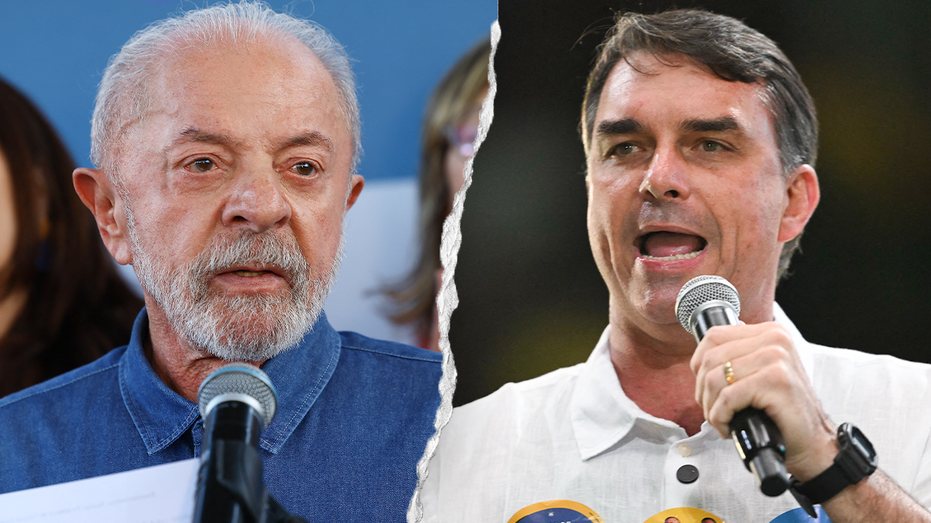
Brazilian President Luiz Inácio Lula da Silva narrowly defeated conservative Senator Flávio Bolsonaro in Sunday's presidential runoff, a result that halts a run of conservative victories across Latin America. The deeply polarized country returned to the polls for the second round, and the outcome gives Lula an unprecedented fourth presidential term.
The vote was marked by disorder at polling places after a Supreme Court justice ordered a last-minute, two-hour voting extension nationwide. Lula had petitioned for the extension, saying buses were not circulating to take voters to the polls as expected. The Bolsonaro camp had also requested extensions in certain areas hit by heavy rains, but the court's decision to extend hours across the entire country is expected to draw scrutiny and could face a legal challenge. Flávio Bolsonaro called for the election to be annulled.
Lula said in a statement that he had never complained about an election before and would normally accept the result. "But this time, something abominable is happening," he argued. The Bolsonaro camp is likely to contend that the extension favored Lula.
The result is a comeback for Lula, who had trailed in the first round. Bolsonaro narrowly led on October 4 with 47 percent of the vote to Lula's 45 percent, short of the 50 percent majority needed to win outright. The runoff outcome is notable because Bolsonaro had led, by tight margins, in recent polling, and Brazil had recently elected a conservative Congress aligned with the Bolsonaro agenda.
Regionally, Bolsonaro performed well in his southern strongholds, winning Rio de Janeiro, São Paulo, Paraná and Rio Grande do Sul, though by smaller margins than in the first round. His support in the south was not enough to offset Lula's strength in the populous Northeast, where the Workers Party remains dominant. Bolsonaro also underperformed in Minas Gerais, a state often seen as a national bellwether; he had won it by 5 percentage points in the first round but the runoff there was essentially tied. Candidates Augusto Cury, Romeu Zema and Ronaldo Caiado, who had endorsed Bolsonaro after the first round, were not enough to overcome the Workers Party's organization.
Flávio Bolsonaro had campaigned on the cost of living, arguing that Lula's economic approach was driving up prices and that his government was bloated, tax-heavy and prone to debt. His hardline law-and-order message also resonated with voters who consistently name violence as the most pressing issue. Those concerns, however, did not outweigh long-standing loyalty to the Workers Party and its social programs, particularly in the North and Northeast.
Lula will begin his fourth term facing a Congress with a center-right and right-wing majority, described as one of the most conservative in the country's history. The Bolsonaro movement, meanwhile, remains an influential force in Brazilian politics. Attention is already turning to 2030, when Tarcísio de Freitas, a Bolsonaro ally and the São Paulo governor who stepped aside this cycle to clear the way for Flávio Bolsonaro, may seek the presidency.
The outcome also ends a series of victories for right-wing candidates across the region. Donald Trump had not formally endorsed Flávio Bolsonaro, but he made clear his preference and has maintained a close relationship with the Bolsonaro family. In addition to the presidential race, voters in five states and the federal district of Brasília chose governors in runoff elections, with Bolsonaro-aligned candidates poised to win most of them.
5