
Memorandum
- From
- Caroline Mercer
- Date
- Filed
- Politics·4 min to read
- Re
Why the Gelendzhik S-400 Strike Matters Beyond One Launcher
ReWhy the Gelendzhik S-400 Strike Matters Beyond One Launcher
The reported hit on an S-400 position near Cape Idokopas shows the growing burden on Russia’s air-defense network as Ukraine pushes long-range drones deeper into the rear.
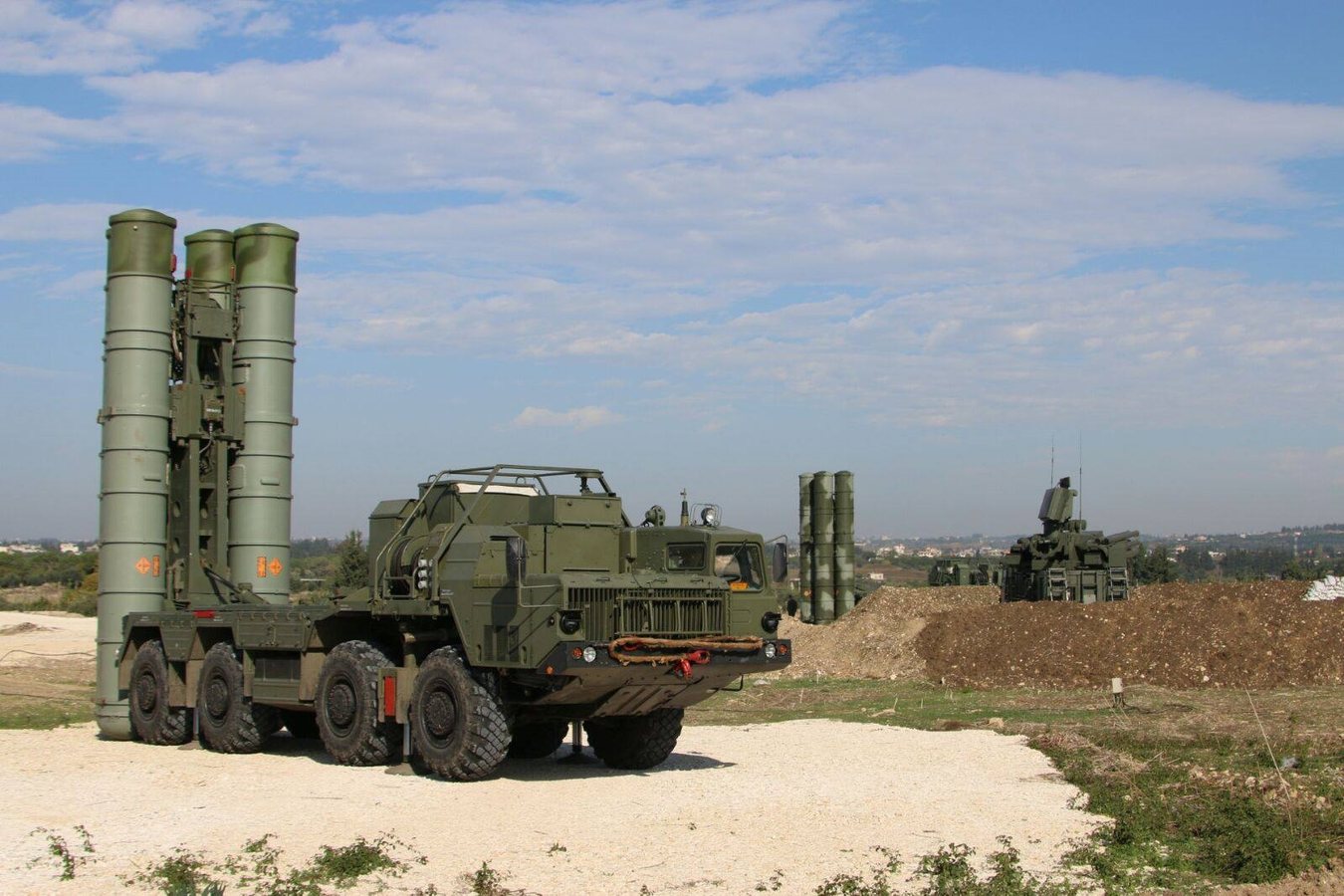
The most important part of Ukraine’s reported strike near Gelendzhik is not the palace in the headline. It is the competition for air defense.
The Telegraph reported that Ukrainian drones hit an S-400 Triumf launch position on Aug. 9 about 12 miles from the Cape Idokopas compound commonly called “Putin’s Palace.” Maj. Robert Brovdi, who commands Ukraine’s Unmanned Systems Forces, said the launcher burned for roughly three hours.
Public evidence does not yet support the broader claim that an entire S-400 battery or battalion was destroyed. The S-400 is a networked system, not a single truck. Its combat value comes from launchers, surveillance and engagement radars, command vehicles and supporting equipment working together. A lost launcher can matter without eliminating the whole formation.
The strike nevertheless illustrates a structural problem for Russia. Air-defense units must protect the front, military bases, ports, industrial sites, major cities and increasingly a long list of targets deep inside the country that are reachable by Ukrainian drones. Every S-300 or S-400 moved to one location is unavailable somewhere else. A system assigned to defend the Black Sea coast is therefore part of a national allocation problem, not simply a local security detail.
Independent reporting from Aug. 9 and 10 confirms a wider Ukrainian strike wave and effects in the same coastal region. Gelendzhik experienced power disruptions, while authorities in Novorossiysk reported drone debris. That does not independently prove the fate of the specific launcher described by The Telegraph, but it reinforces the picture of sustained pressure on Russia’s southern air-defense network.
There is also an offensive dimension to the target. Brovdi said the Gelendzhik S-400 position had been used the previous day to fire missiles at Ukrainian cities. Although the S-400 was designed for air defense, Russia has also used missiles from the system against ground targets. Ukrainian air-force reporting regularly groups some ballistic launches under the designation Iskander-M/S-400.
For Ukraine, then, an attack on an S-400 position can serve two purposes at once. It can open a route for later drone strikes by thinning air defense, and it can remove a launcher that may be used for ground attack. The balance is particularly important because Ukraine’s own cities face heavy ballistic-missile pressure and depend on a limited supply of high-end interceptors.
The proximity to Cape Idokopas adds a political symbol but should be described carefully. Putin has denied owning the compound, while Arkady Rotenberg said in 2021 that it belonged to him. Opposition investigations have continued to associate the estate with Putin and his circle. Whatever the legal ownership, the surrounding security infrastructure has made the area unusually sensitive.
The next question is replacement. If Russia can rapidly bring in another launcher, the military effect may be temporary. If the strike also damaged radars, command equipment or exposed a repeatable route through the local defenses, the consequences could be larger. That is why the useful measure is not whether a palace is “unprotected,” but how much additional air-defense capacity Russia must spend to keep the region protected at all.
68

Source: The Telegraph: strike on an S-400 position near Gelendzhik