Memorandum
- From
- Derek Weston via Fortune | FORTUNE
- Date
- Filed
- News·6 min to read
- Re
Cyclone Arnab hits India’s data-center coast, killing three in Andhra Pradesh
ReCyclone Arnab hits India’s data-center coast, killing three in Andhra Pradesh
Cyclone Arnab battered eastern Andhra Pradesh, killing three people and flooding about 200,000 acres of cropland along a coastline where major data-center investments are underway.
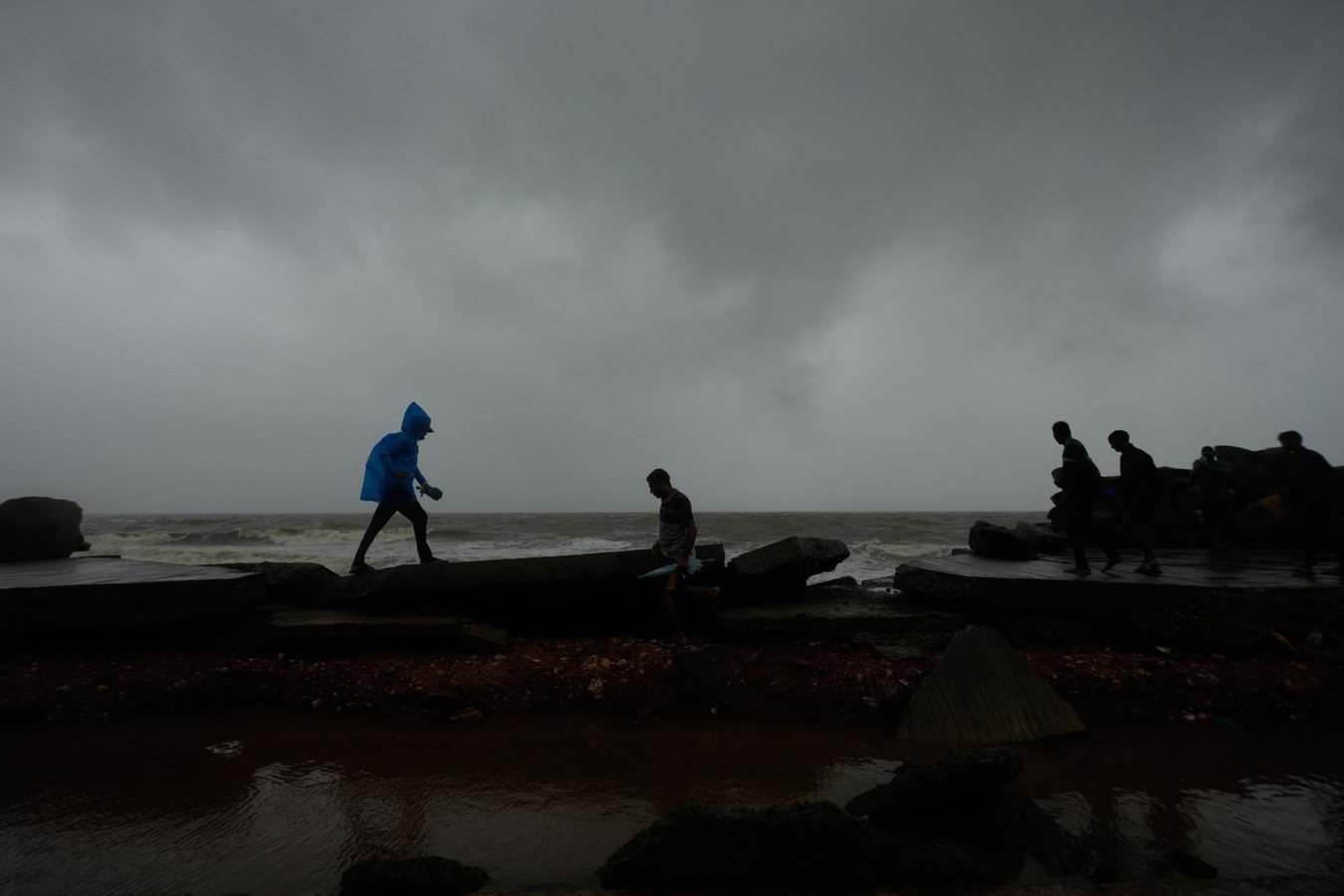
Cyclone Arnab struck part of India’s eastern coastline on Wednesday, killing three people, damaging homes and infrastructure, and inundating roughly 200,000 acres of cropland in Andhra Pradesh, according to state authorities. The storm hit a stretch of coast where billions of dollars are being invested in data centers that are at early stages of construction, underscoring how extreme weather threatens both existing livelihoods and the infrastructure meant to drive future growth, climate experts said.
Meteorologists said unusually high temperatures across the Bay of Bengal helped fuel the storm, which strengthened rapidly over warm ocean waters before weakening as it moved inland. Heavy rainfall became the principal threat inland. K.J. Ramesh, a former director general of the Indian Meteorological Department, said that a warmer atmosphere can hold more moisture, increasing the potential for intense rainfall. Akshay Deoras, a weather expert at the University of Reading in the United Kingdom, said cyclones are part of natural weather patterns but that warming driven by human-caused climate change can amplify their rainfall. It will likely take days or weeks before full damage estimates are calculated.
The storm arrives after India’s weakest southwest monsoon since 2015. A strong El Niño weather phenomenon, combined with an already warming climate, led to sparse rainfall from June through September, according to weather experts. Several Indian states have declared droughts, with southern and eastern India suffering particularly large deficits. Intense downpours offer little reassurance when rain falls unevenly, and heavy rainfall can run off hardened, dry ground rather than being absorbed.
Extreme weather has already taken a heavy toll across India. In 2025, the country experienced extreme weather on 360 days, with 4,421 people killed and 17.41 million hectares (43.21 million acres) of cropland affected, according to the New Delhi-based Centre for Science and Environment. India ranks among the 10 countries most vulnerable to climate impacts and suffered losses of $170 billion between 1995 and 2024, according to the think tank Germanwatch’s Climate Risk Index.
Anjal Prakash, a public policy professor at Flame University in Pune, said the indirect costs of such disasters are often overlooked in early assessments that focus on damaged crops, homes and roads. Heat waves reduce the productivity of factory and outdoor workers, while floods and cyclones interrupt transport, electricity and logistics. “Households often bear the earliest and harshest losses through damaged homes, destroyed assets and lost wages,” Prakash said. Many farmers, informal workers and small enterprises lack insurance or savings, making recovery harder, and governments then face reconstruction bills that can squeeze spending on schools, healthcare, transport and industrial capacity.
The regional picture is similarly severe. Pakistan’s 2022 floods killed more than 1,730 people and caused over $30 billion in damage and economic losses, according to a government-led assessment. Floods in Nepal in August this year are estimated to have caused more than $4 billion in damages, along with thousands of deaths. “The biggest blind spot is the cascading disruptions,” Prakash said, noting that a flooded road or damaged substation can disrupt factories, supply chains and services far beyond the disaster zone.
Those risks bear directly on India’s data-center plans. The city of Visakhapatnam, in the path of Arnab’s heavy rains, is where Google, Adani and Airtel plan to invest $15 billion in a hyperscale data center. A 2025 assessment by climate-risk analytics firm XDI of 228 Indian data centers projected that more than one in ten could face high risks of damage from climate change by 2050 under a high-emissions scenario, though the analysis also found that structural adaptations could substantially reduce those risks. Prakash said such facilities face overlapping threats from flooding, heat, unreliable electricity and water scarcity, and that planning based on historical weather can underestimate the growing frequency of extreme events. He called for strengthened electricity grids, flood-proofed roads and housing, improved crop insurance, and business continuity plans that account for several failures occurring together.
Deoras said forecasting has improved for large weather systems, but local thunderstorms and flash floods remain difficult to predict, leaving dangerous gaps in protection. Prakash urged India and its South Asian neighbors to seek predictable, grant-based adaptation finance and simpler access to United Nations loss and damage funding at the upcoming global climate talks in Turkey next month. “Climate finance must reach the frontline communities before losses become irreversible,” he said.
5