Memorandum
- From
- Caroline Mercer via Fortune | FORTUNE
- Date
- Filed
- Business·5 min to read
- Re
Alphabet shares fall 12.6 percent in worst day since 2004 listing
ReAlphabet shares fall 12.6 percent in worst day since 2004 listing
Alphabet's Class A shares posted their steepest one-day drop since the company went public, after search revenue growth slowed and capital spending surged. Bank of America now values Google search at about 10 times earnings.
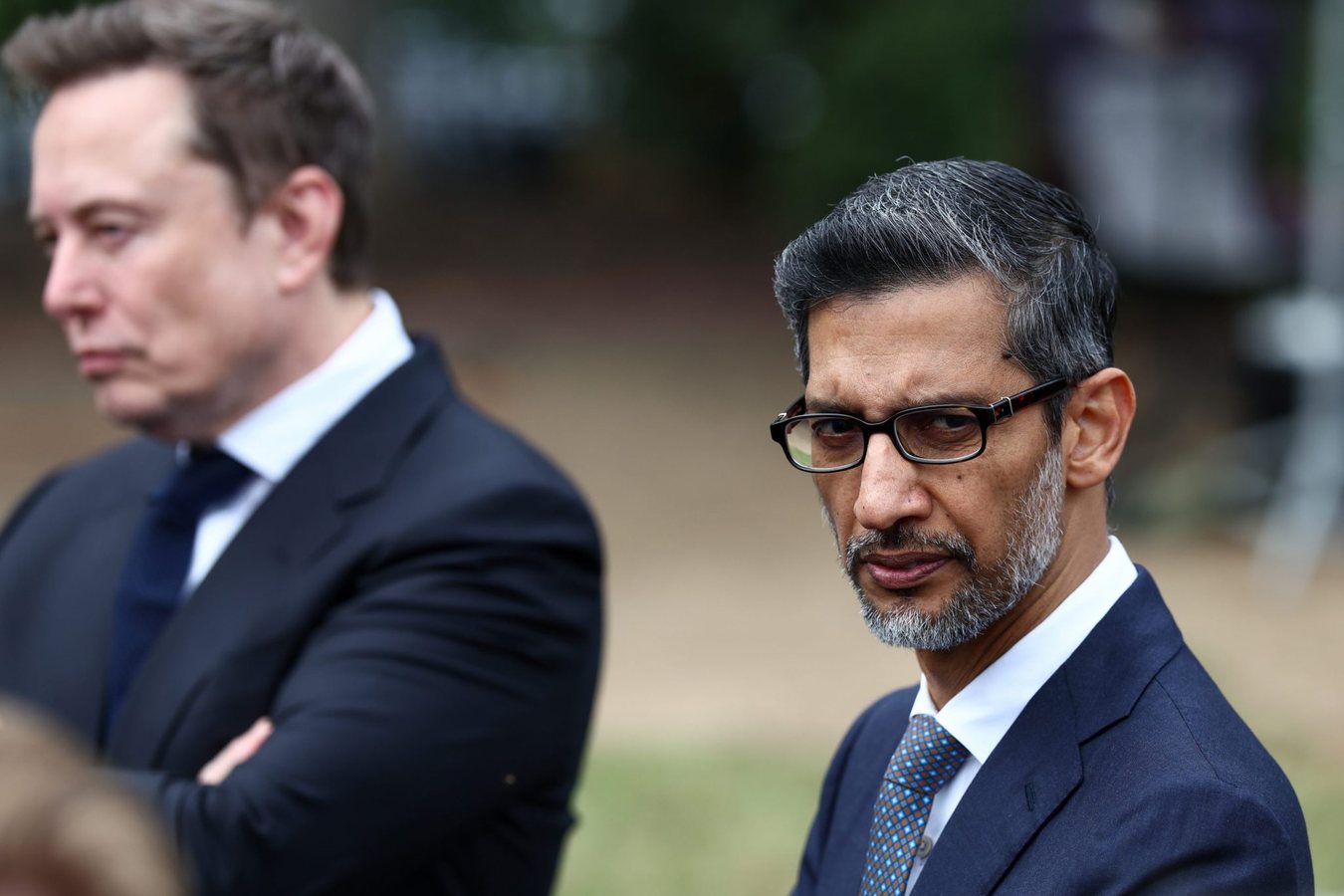
Alphabet’s Class A shares fell 12.6 percent to $283.82 on Thursday, their worst single-day decline since the stock began trading in 2004. The sell-off erased roughly $482 billion in market value and was driven by a slowdown in the company’s core search business, which has long funded its broader ambitions.
The trigger was search and other revenue, which grew 12 percent in the third quarter to $63.35 billion. Analysts had expected growth of 15 percent. That was a sharp step down from 17 percent in the second quarter and 19 percent in the first. The previous worst day for the stock came in March 2020, when it dropped 11.6 percent.
Bank of America analyst Justin Post and co-author Nitin Bansal now value Google search at about 10 times earnings. By comparison, the S&P 500 trades at 18.7 times forward earnings, according to FactSet, and the energy sector, the cheapest part of the market, trades at 13 times. Post kept a Buy rating on Alphabet but cut his price target to $380 from $430 and lowered the earnings multiple he is willing to pay to 24 times from 27, citing a “slowdown in high-margin search growth.” He wrote that the “search AI transition will fuel the bears.”
Google Cloud was the bright spot in the quarter. Its revenue more than doubled, rising 103 percent to $30.71 billion, and its operating margin reached 36.2 percent, up from 23.7 percent a year earlier. Much of the gap between Alphabet’s overall valuation of about 19 times earnings and the 10 times assigned to search comes from the value BofA places on the cloud business. The firm also models $75 billion in 2027 sales of Google’s in-house AI chips, known as TPUs, to outside customers.
The spending picture is less encouraging for near-term cash flow. Alphabet spent $51.4 billion on capital expenditures in the quarter, more than double the level a year earlier, and free cash flow came in at negative $9.1 billion, according to its earnings release. The company now expects capex of about $200 billion in 2026, rising to $300 billion in 2027. Chief financial officer Anat Ashkenazi had said in July that spending would “increase significantly in 2027.” Separately, an $8.7 billion mark-to-market loss on Alphabet’s stake in SpaceX cost the company 55 cents a share, according to BofA.
Search growth slowed even as Google reports more people are using it. Chief executive Sundar Pichai said on Wednesday’s earnings call that “our year-over-year query growth rate is the highest it’s been in the last 5 years.” BofA estimates that search growth, excluding currency moves, slowed three percentage points from the prior quarter despite that acceleration. The analysts attributed most of the slowdown to a tougher comparison, which was two points more difficult than in the previous quarter.
Google said the shift of traffic toward AI Overviews, the AI-written summaries at the top of results, was a small headwind in the quarter. BofA said that effect is likely larger internationally, where ads inside those summaries are only beginning to ramp up. Chief business officer Philipp Schindler said the company is “now scaling high-quality ads within AI Overviews and AI Mode to more users and queries,” and is taking that monetization global for the first time. Analysts have raised concerns that AI summaries reduce the clicks that drive traffic to websites. A Pew Research Center study published in July 2025 found that users who saw an AI summary clicked a traditional search result on about 8 percent of visits, compared with 15 percent when no summary appeared, though that study measured clicks rather than Google’s ad revenue.
The bear case was summed up by Jeffrey Wlodarczak, chief executive of Pivotal Research, who said the quarter could be “the first quarter that AI is starting to seriously hurt their search business.” BofA’s bull case relies on timing: tougher comparisons last through the second quarter of 2027, which the analysts said “could make Google a 2H’27 story,” with a possible growth uptick as early as the first quarter of 2027 helped by international ads. The firm’s model does not assign value to Alphabet’s longer-term bets, such as the Waymo autonomous driving unit and quantum computing. As Post and Bansal put it, those projects offer “meaningful long-term optionality,” but it is “not in valuation.”
2