Memorandum
- From
- Delaney Sawyer via Fortune | FORTUNE
- Date
- Filed
- Business·5 min to read
- Re
US Warns EU a $3.4 Billion Airbus Loan Could Break Trade Truce
ReUS Warns EU a $3.4 Billion Airbus Loan Could Break Trade Truce
The Trump administration says a record €3.4 billion European Investment Bank loan to Airbus could violate a 2021 truce that ended the longest dispute in WTO history and threaten the broader U.S.-EU trade deal.
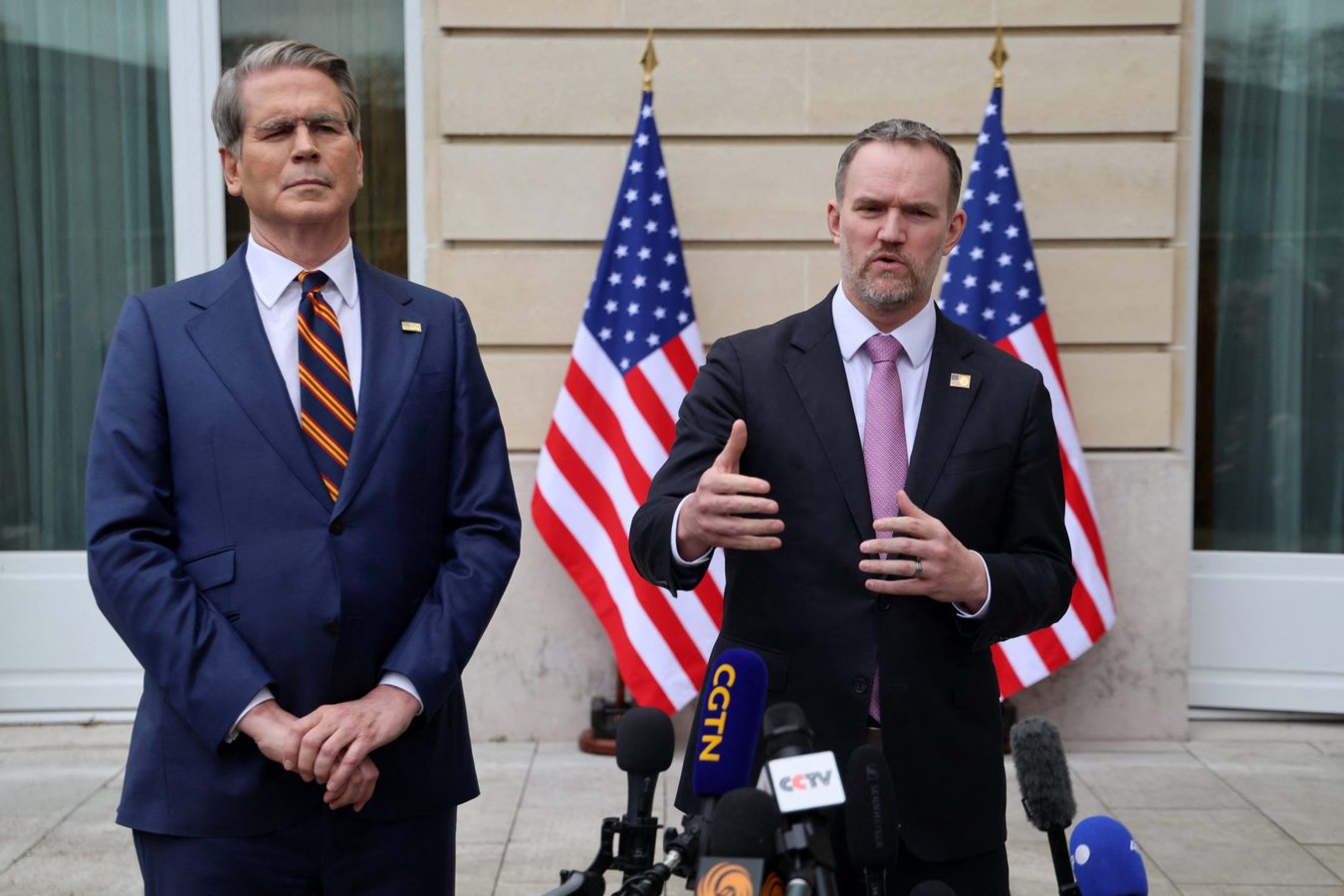
The Trump administration has warned Europe that a $3.4 billion loan to Airbus could collapse the truce that ended the longest-running dispute in WTO history and put the broader U.S.-EU trade agreement at risk. U.S. Trade Representative Jamieson Greer has pressed the European Union for more information about the loan, which the European Investment Bank, the EU's lending arm, made to Airbus in June.
In a statement released October 26, Greer said his office still had no details on what he called the bank's "largest loan ever." He warned that the transaction risked a "violation of the terms of our hard-won" Large Civil Aircraft deal, a reference to the 2021 truce that paused tariffs on roughly $11.5 billion of goods. That truce was extended in July after the European Parliament approved the broader 15% tariff agreement, meaning a dispute over a single Airbus loan could put both arrangements in play.
"I had sincerely hoped that trade-distorting European subsidies to Airbus were a thing of the past," Greer said. "For decades, France, Germany and Spain have aggressively supported Airbus, their national champion aircraft manufacturer, to gain an unfair advantage over U.S. aerospace workers and business." The European Investment Bank did not respond to a request for comment, and Airbus also did not respond.
Boeing had asked the government in July to press Airbus for transparency about the loan, and Reuters first reported that request. At the time there was speculation that Airbus was using the influx of cash to develop a new jet model. Greer's statement did not confirm that purpose.
The stakes extend beyond aircraft. The U.S. reached its trade deal with the EU last July, a cornerstone of President Donald Trump's trade policy that set tariff rates at 15% and committed Europe to investing hundreds of billions of dollars in U.S. projects such as energy and defense. Unwinding the agreement could mean a return to a higher 30% tariff, which has already weighed on American businesses and consumers, and could trigger the EU's retaliation package, which would affect more than $100 billion of U.S. goods.
The dispute has deep roots. In 1992 the U.S. and EU agreed to limits on government subsidies for aircraft production. By the next decade, Airbus deliveries had overtaken those of its American rivals, and Boeing and the U.S. argued that European countries supporting Airbus were breaching WTO subsidy rules. The U.S. claimed Airbus had gained an economic benefit of $200 billion from $22 billion in illegal subsidies. The EU filed a counterclaim the same day, alleging that Boeing had received $23 billion in illegal support through tax breaks and defense contracts.
After years of proceedings, the WTO ruled in 2011 that both sides had received subsidies that were either legally questionable or gave an advantage to a manufacturer. With the organization's permission, the U.S. and EU each imposed tariffs on the other's goods, covering $7.5 billion and $4 billion respectively. In 2021 the two sides reached a truce that effectively ended the 17-year trade dispute, the longest the WTO has ever heard.
Analysts see a range of outcomes. Marc Busch, a professor of international business diplomacy at Georgetown University, said the best case would be for the European Investment Bank to open its books and show the loan resembles earlier lending, after which the USTR could set the issue aside. "There's no way Europe backs away from this one," Busch told Fortune. "Airbus is real. It's not a little sideshow." He noted that Airbus supports about 135,000 European jobs and that roughly one-third of its revenue comes directly from Europe, which he said makes it likely the EU will defend the government assistance it receives. "This is a big deal, and the next step will be tremendously important to get right," Busch said.
At its worst, the dispute could escalate tensions. Busch said that if the administration objected to the loan's nature, it could impose Section 301 tariffs on the EU in retaliation, and such tariffs could carry WTO authorization if the EU is found to have violated aircraft subsidy rules. He described that outcome as "the ultimate irony of ultimate ironies," given that the WTO ruled in 2020 that Trump's tariffs against China were illegal and the president has repeatedly criticized the organization as unfair to the U.S. "It would be quite something," Busch said, "to imagine the ceasefire ends, we reimpose the Airbus tariffs, and Trump can—for the first time—get up in front of the camera and say these tariffs are WTO-authorized."
3