
Memorandum
- From
- Caroline Mercer
- Date
- Filed
- Economy·7 min to read
- Re
Why Serbia’s €2 million transformer package matters to Ukraine’s energy economy
ReWhy Serbia’s €2 million transformer package matters to Ukraine’s energy economy
The contribution is small beside Ukraine’s multibillion-dollar energy losses, but it targets a costly supply-chain bottleneck: high-voltage transformers needed to restore transmission capacity.
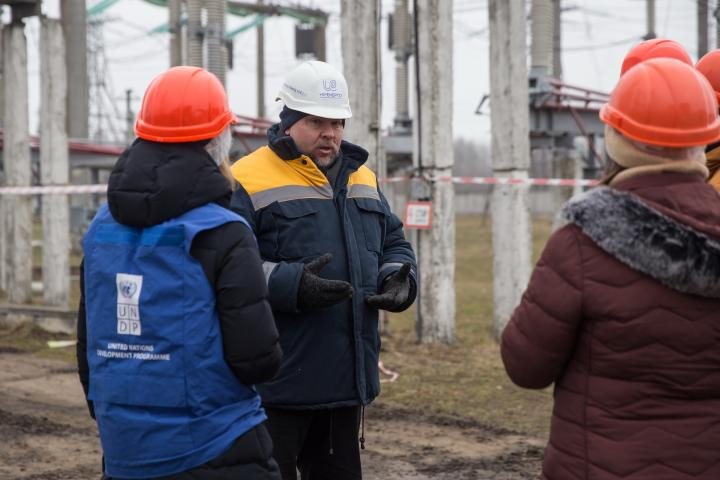
Measured against the scale of Ukraine’s energy losses, €2 million is a small number. Measured against a specific infrastructure bottleneck, it can be much more meaningful. Serbia’s contribution through the United Nations Development Programme is earmarked for high-voltage transformers, not for a general reconstruction fund.
The agreement was signed on April 3, 2026. UNDP said the financing would cover the procurement and delivery of transformers under its Green Energy Recovery Programme, with the goal of restoring electricity transmission capacity and improving the stability of power supply.
The economics of that choice are important. Large transformers are capital-intensive, technically complex and slow to procure. The U.S. Department of Energy says large power transformers are typically custom-made, difficult to transport and can have procurement lead times of a year or more. They are not interchangeable commodities that utilities can reliably source at short notice.
That makes transformers a classic supply-chain constraint. A damaged substation may have repair crews, financing and access to generation, yet still remain limited if a suitable transformer is unavailable. Donor funding tied directly to such equipment can therefore have an outsized effect on the pace of recovery.
The larger financial need remains enormous. In its April release, UNDP cited the Fifth Rapid Damage and Needs Assessment, which put total energy-sector losses at $88.2 billion. Approximately $17.1 billion was attributed to the power subsector, particularly generation and transmission assets.
European support is operating on a different scale. The European Commission has announced roughly €922 million for Ukraine’s energy system for the 2026-27 winter period. In June, the Commission, Ukraine’s Energy Ministry and the Energy Community Secretariat called for another €650 million in donor contributions to the Ukraine Energy Support Fund.
Those numbers reveal two layers of the recovery economy. At the top are large financing frameworks designed to cover broad categories of urgent and long-term needs. Underneath them are individual procurement packages — transformers and other grid assets — that determine whether the money turns into usable infrastructure.
Serbia’s package fits into the second category. The amount is too small to reshape Ukraine’s national energy balance, but it is large enough to fund a defined set of high-value network components. It also reduces the risk that a broader donor program is spread too thinly across many competing needs.
There is a timing premium as well. If procurement of a large transformer can take a year or longer, the economic value of a commitment depends partly on how early it enters the pipeline. A grant announced before winter but too late to produce or source equipment may have little immediate effect. The April date therefore matters beyond simple fact-checking.
The project has a public-service dimension. UNDP links restored transmission capacity to electricity for homes, hospitals, schools, water supply and heating. That matters economically because outages impose costs far beyond the utility sector. Businesses lose production, municipal systems consume backup fuel, services become less reliable and households bear additional costs.
Russia’s continuing attacks intensify those costs. The European Commission describes the targeting of Ukraine’s civilian energy infrastructure as systematic. Each new strike can add repair demand before previous projects are finished, forcing donors and Ukrainian operators to manage a rolling reconstruction cycle rather than a one-time rebuilding program.
That rolling cycle changes the economics of inventory and resilience. A system designed for normal peacetime replacement schedules now has to plan for repeated damage. Components with long lead times become especially valuable because the cost of not having one available can be measured in prolonged outages and underused generation elsewhere in the network.
There is also a geopolitical economic angle. Serbia is an EU candidate country but maintains significant energy ties with Russia and has not adopted the EU’s sanctions policy toward Moscow. Yet Belgrade is simultaneously increasing practical cooperation with Kyiv. President Volodymyr Zelenskyy’s August visit to Serbia focused in part on economic ties, EU integration and security.
That creates an unusual form of participation in Ukraine’s recovery: Serbia can support civilian infrastructure without fully aligning its foreign policy with the EU. For Kyiv, widening the donor base matters because the reconstruction burden is too large to be carried only by a small group of governments.
The real economic test now is execution. Financing must become procurement, procurement must become delivery, and delivery must become installed network capacity. With large transformers, delays can be long and costly, so project management becomes part of the value of the aid itself.
The primary UNDP statement also sets a clear boundary around the claim. It confirms transformer procurement and support for areas affected by infrastructure damage. It does not describe the €2 million as a general program for unspecified backup capacity.
So the best way to understand the figure is not to compare €2 million with $88.2 billion and dismiss it as negligible. It is to ask whether the money removes a specific bottleneck in the grid. If it does, the return can be measured in restored transmission capacity, fewer outage hours and more reliable essential services — economic effects that extend far beyond the purchase price of the equipment.
65