
Memorandum
- From
- Derek Weston via Fortune | FORTUNE
- Date
- Filed
- Economy·4 min to read
- Re
Rising Gas Prices Push 65% of U.S. Job Seekers to Rethink Their Search
ReRising Gas Prices Push 65% of U.S. Job Seekers to Rethink Their Search
A new Monster study finds that 65% of prospective job movers are changing their search priorities because of elevated gas prices, with many seeking closer or remote roles as the U.S.-Iran conflict keeps oil markets on edge.
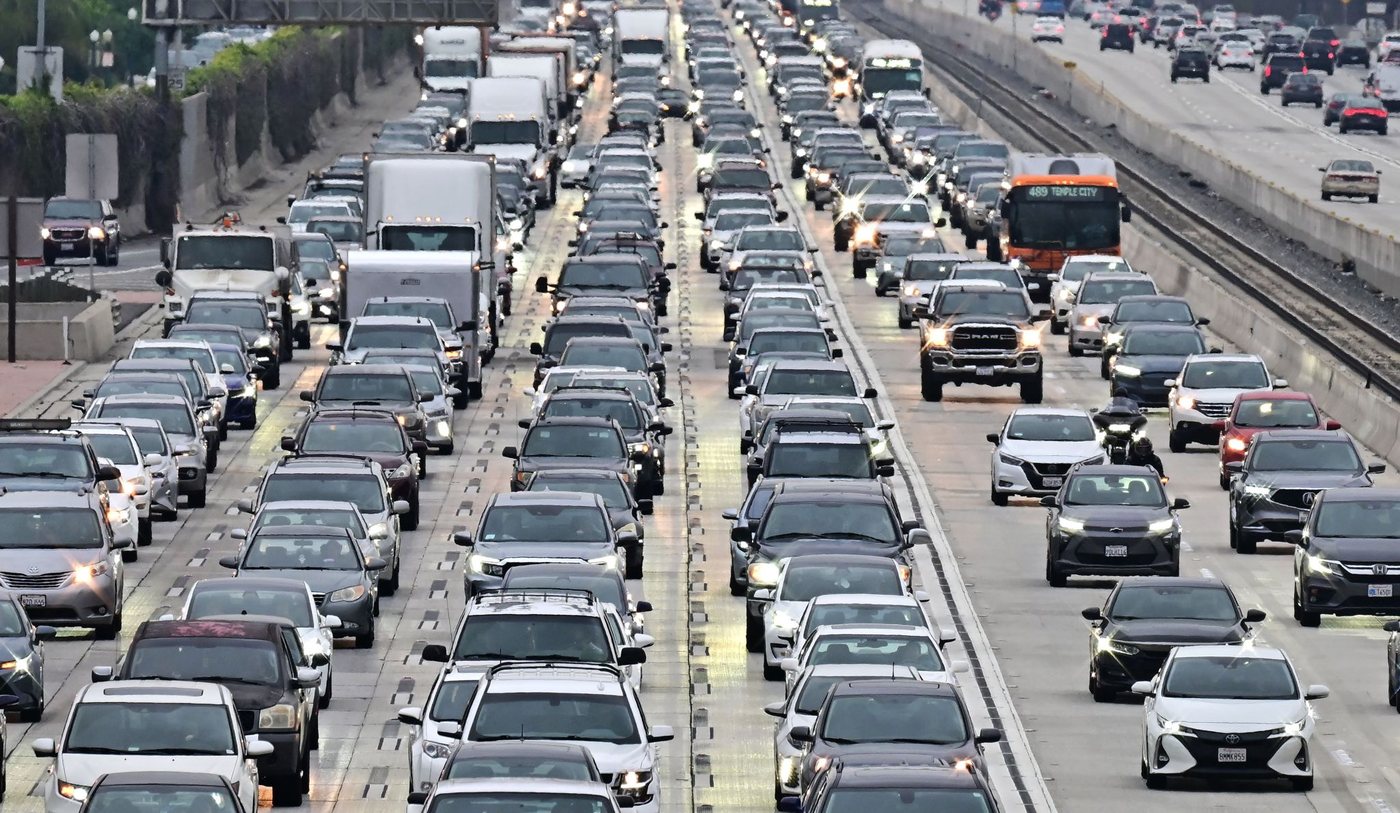
Rising gasoline prices are reshaping how American workers look for jobs, with a new study from recruitment platform Monster finding that 65% of prospective job movers are changing their search priorities because of what they pay at the pump. The shift comes as the economic fallout from the U.S.-Iran conflict continues to ripple through the labor market seven months after the White House predicted a short-lived campaign.
According to the survey, 23% of job seekers are looking for roles closer to home, while 17% are focusing more on salary expectations to offset the higher cost of commuting. Another 20% said they are prioritizing fully remote roles, and 5% are applying for fully in-person positions. The findings suggest that energy prices have become a direct factor in career decisions, not just a line item in household budgets.
The national average price for mid-grade gas is a little over $5 per gallon, while diesel exceeds $6.50. A gallon of regular gas was around $4.10 a month ago, up from $3.15 a year ago. Crude oil prices have been creeping higher throughout 2026, with a barrel of Brent crude at $105. The surge stems from supply disruptions in the Middle East, where Iran borders the Strait of Hormuz, a vital waterway for oil exports from the Persian Gulf. Ships have been reluctant to travel through the Strait, stalling supply and pushing prices up.
Diplomatic efforts have yet to produce a breakthrough. With U.S.-Iran talks in New York this week, analysts had hoped for details on when the action may de-escalate. Iran's President Masoud Pezeshkian told the U.N. on Wednesday that his country would never «bend the knee» but signaled it was ready for «dialogue and diplomacy.» President Trump said he faced a decision: negotiating or «annihilating» the regime.
For employers trying to fill roles, the commute itself has become a bargaining chip. When asked what it would take to commute an additional 20 minutes beyond their preferred travel time, 32% of employed Americans said they would need at least a 20% pay increase. Another 10% would accept a 10% pay rise, while 11% said they could be persuaded by a more flexible schedule that included hybrid work. A further 9% said they would make the commute if their gas was reimbursed in some form. But 30% said neither finances nor flexibility would tempt them to commute further than their current roles.
Commuting costs and length are also influencing whether workers accept opportunities at all. Nearly half of employed Americans — 49% — said commuting costs or length have pushed them to turn down an opportunity, while 75% added that the rising cost of living has made work-life balance more important. The survey gathered responses from more than 1,000 people.
The tension between employers who want staff in the office and younger generations who prioritize work-life balance is likely to shape the coming decades. Mark Dixon, CEO of IWG, the world's largest workspace provider, has predicted that commuting could be extinct within the next 15 years. He previously told Fortune that in the future, people will explain to their kids that they used to commute, and the younger generation will think it is «mad stuff» that bosses once asked workers to «travel 100 miles to sit down and use a computer.»
For now, an equilibrium appears to have been reached. According to security provider Kastle Systems, which monitors occupancy across 10 major U.S. cities including New York, Washington, D.C., Los Angeles, and Austin, 53% is the new normal for office occupancy. Whether that holds will depend in part on where gas prices go next — and on whether the conflict that pushed them higher shows signs of winding down.
8