
Memorandum
- From
- Connor Quincy via Fast Company
- Date
- Filed
- Economy·6 min to read
- Re
U.S. diesel price hits record high as Iran conflict disrupts fuel flows
ReU.S. diesel price hits record high as Iran conflict disrupts fuel flows
The average U.S. diesel price reached an all-time high of $5.85 per gallon on Friday, driven by the ongoing war with Iran and supply chain disruptions in the Middle East. The surge is raising transportation costs for freight and delivery networks, with experts warning of trickle-down effects on food and consumer goods prices.
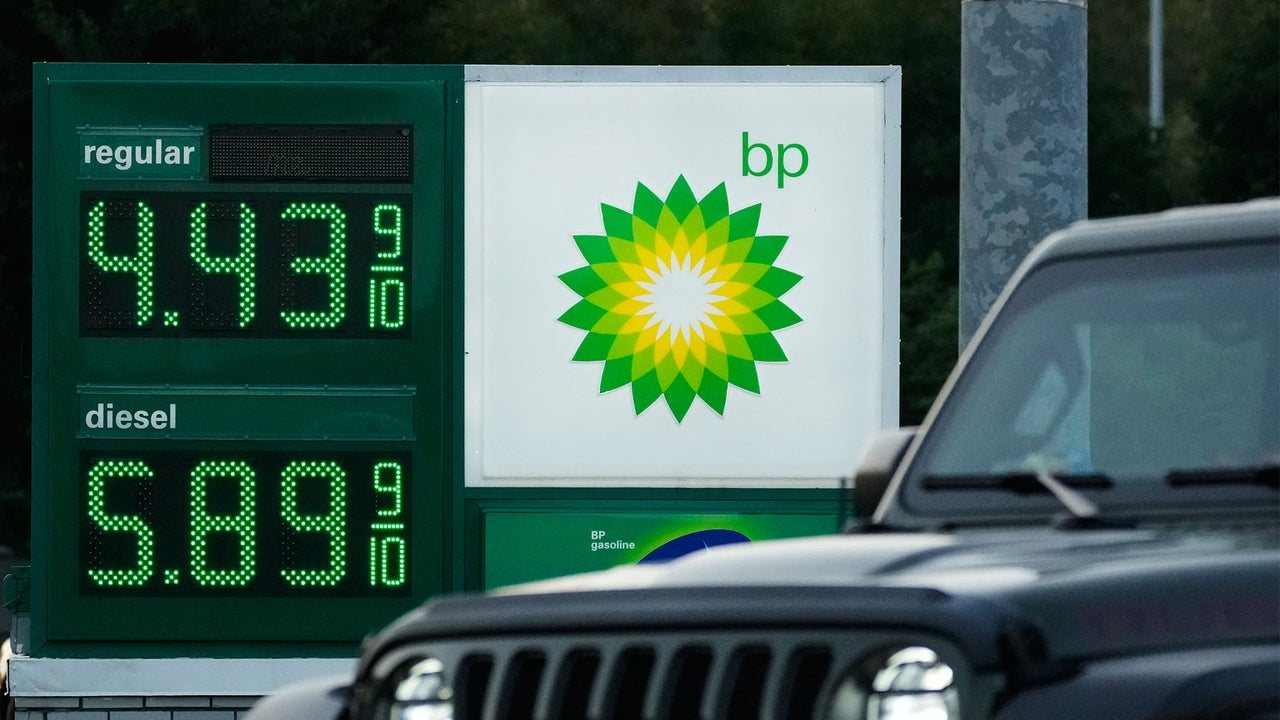
Diesel fuel hit a new record price in the United States on Friday, soaring to an average of $5.85 a gallon for the first time ever as the six-month war with Iran disrupts the global flow of fuel. Because diesel powers most freight and delivery networks, the higher prices translate into increased transportation costs for a wide range of everyday goods, from groceries to clothing and furniture.
The spike adds to political challenges for Republicans ahead of November’s midterm elections, with voters already expressing dissatisfaction with President Donald Trump’s handling of the economy. Polling conducted this summer by the Associated Press and NORC showed that two out of three U.S. adults disapproved of Trump’s economic management. More expensive fuel is raising bills for businesses across sectors, some of which have already passed costs on to consumers through added fees on online orders and package deliveries.
One of the most immediate strains is being felt in the grocery aisle, particularly with produce, meat, and other perishable foods that require frequent hauling and restocking, or are harvested using diesel-powered farm equipment. Experts warn that price hikes could mount the longer diesel remains expensive, as it can take time for energy costs to trickle through the supply chain.
Before the U.S. and Israel launched their war against Iran in late February, the national average for a gallon of diesel was about $3.76, according to AAA. Prices climbed quickly as the cost of crude oil, the main ingredient in diesel and gasoline, soared amid supply chain disruptions and production cuts across the Middle East, with most tanker traffic bottlenecked in the key Strait of Hormuz. Despite some cooling during hopes for peace earlier in the summer, oil has renewed its climb as fighting escalates. Brent crude, the international standard, was trading at more than $95 a barrel on Friday, up from roughly $70 before the war.
The last time U.S. businesses and drivers saw sky-high fuel prices was in June 2022, when diesel reached nearly $5.82 a gallon on average, months after the Ukraine war began and world leaders imposed sanctions on Russia, a leading oil producer. When adjusted for inflation, however, prices have been higher in the past. Ahead of the 2008 financial crisis, diesel peaked at about $4.74 a gallon, equivalent to $7.20 in today’s dollars, according to the government’s latest data. The 2022 record would be about $6.56 this year when accounting for inflation.
The average price for regular gasoline has also been rising, though not as fast as diesel. The national average was $4.15 a gallon on Friday, up from $2.98 before the Iran war, according to AAA, which noted that gas has never been above $4 a gallon on Labor Day. Still, gasoline remains well below the record of $5.02 a gallon set in June 2022.
Diesel has been more expensive than gasoline for decades, and its price has risen at a faster pace during recent energy crises due to more limited supply, less flexibility in demand, and its central position in global commerce. Individual households may find ways to drive less when gas prices are high, but there are fewer immediate substitutes for networks that rely on diesel to produce and haul goods worldwide.
Diesel is integral to every part of the food supply chain, powering farm equipment, fishing boats, trains, cargo ships, and trucks that deliver food to grocery stores. Fuel accounts for roughly 15% to 30% of the total cost of food, according to the Independent Grocers Alliance, a grouping of 7,500 global supermarkets. Items that need refrigeration during transport are often the first to see price increases, according to David Ortega, a professor of food economics and policy at Michigan State University. In July, overall U.S. grocery prices were up 2.7% compared to the previous year, but seafood prices rose 7% and fresh fruit prices climbed 4.9%.
Ortega cautioned that other factors can influence food prices, noting that lettuce faced higher transportation costs in July but saw prices fall due to a drop in demand from a cyclospora outbreak. Still, consumers could feel more of a squeeze the longer diesel prices remain high. “Early on, much of the cost increase gets absorbed along the supply chain through existing freight contracts and retailer margins,” Ortega said. “But as contracts reprice and fuel surcharges take hold, more of that cost makes its way to the grocery store.”
In April, e-commerce giant Amazon rolled out a temporary 3.5% fuel and logistics surcharge on some third-party sellers. United Parcel Service, FedEx, and the United States Postal Service also moved to add fees on some packages they ship earlier in the war, citing rising operational costs for fuel.
57