Memorandum
- From
- Derek Weston via FOX News
- Date
- Filed
- Economy·5 min to read
- Re
Uber Eats partners with Zipline to launch drone delivery in US cities
ReUber Eats partners with Zipline to launch drone delivery in US cities
Uber Eats and Zipline announced a partnership to bring drone delivery to customers later this year, starting in Dallas and Houston, with a goal of 1 million daily deliveries by 2029.
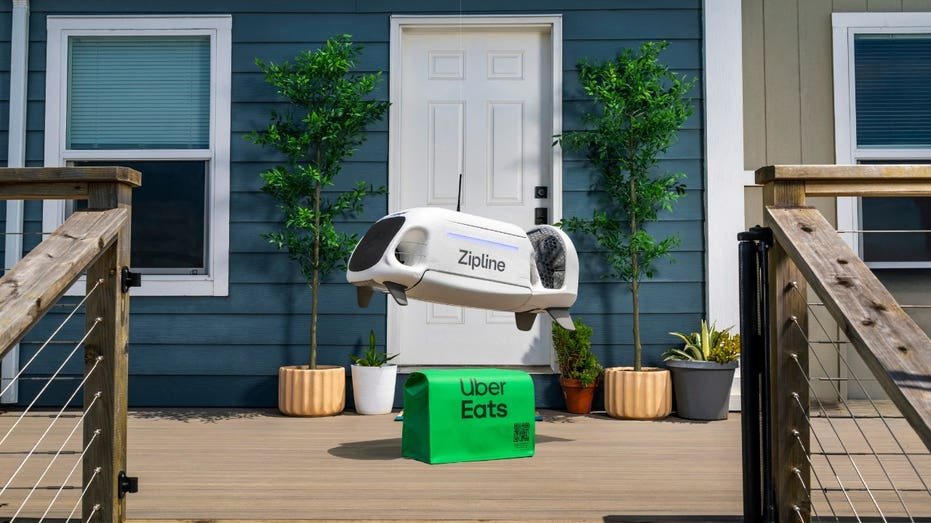
Uber Eats is moving closer to making drone delivery a routine part of ordering food. The company has partnered with Zipline, a leader in autonomous delivery, to offer customers the option of receiving orders via drone. The first deliveries are expected to begin later this year in markets where Zipline already operates, including Dallas and Houston, with plans to expand to dozens of U.S. cities. The long-term goal is ambitious: 1 million drone deliveries per day by the end of 2029.
The service is designed to feel like any other Uber Eats order. Eligible customers will see the option to have their food delivered by Zipline when the service launches. Zipline's existing U.S. service areas already allow customers to use its app to browse restaurants and stores, place an order, and have it prepared and loaded into the company's autonomous delivery system. Zipline's Platform 2, or P2, is an electric aircraft that can carry up to 8 pounds and operate within a 10-mile radius. The company says it can complete some 10-mile deliveries in about 10 minutes, with a cruise speed of roughly 70 mph.
When the aircraft reaches the delivery location, it hovers about 300 feet above the ground. A smaller delivery unit descends on a tether, steers toward the chosen drop-off spot, and gently places the order on the ground. The unit then returns to the aircraft, and the drone flies back to recharge. The entire process is autonomous, so customers do not need a landing pad. Deliveries can be placed in a yard or another approved location while the larger aircraft remains overhead.
Zipline brings significant experience to the partnership. The company has completed more than 2.7 million commercial deliveries and its aircraft have flown over 135 million autonomous commercial miles. Zipline says it now makes a delivery somewhere in the world every 20 seconds. In the U.S., its P2 home delivery system has been operating with Walmart and restaurant partners, including in Pea Ridge, Arkansas, and more than 20 communities around Dallas-Fort Worth. The company has been expanding quickly; in July, Zipline said the number of businesses offering delivery through its app had grown 13 times during the first half of 2026, with roughly 70% of its flights taking place in the United States.
The partnership is part of a broader Uber strategy. Uber says it is building a delivery network that combines human couriers with autonomous technology, which could include sidewalk robots or drones depending on the trip. Uber Eats already uses autonomous sidewalk robots in some markets, and Uber invested in drone company Flytrex in 2025, calling it its first investment in drone delivery technology. Now Zipline joins the picture, suggesting Uber wants the Uber Eats app to become the central platform connecting customers with different delivery systems. A drone may make sense for one neighborhood, while a robot may work better elsewhere.
Speed is the main appeal. A drone can take a more direct path than a car stuck in traffic and avoids the hunt for parking near a busy restaurant. However, not every meal will arrive 10 minutes after tapping place order. Restaurants still need to prepare food, and severe weather or certain flight conditions could affect whether a drone can complete a delivery. Local flight conditions may also change what the system can do. Still, cutting time on the road could help keep dinner from getting cold in the back seat of a car.
Noise could be one of the first things people notice when drone delivery arrives in their neighborhood. One delivery overhead may be easy to ignore, but regular flights could become a point of discussion. As the service expands, residents and local officials will likely weigh the convenience of faster delivery against the presence of drones in residential skies.
64