
Memorandum
- From
- Caroline Mercer via fox - Politics
- Date
- Filed
- Economy·5 min to read
- Re
Steve Forbes Endorses Trump's Warning on Internal Threat of Communism
ReSteve Forbes Endorses Trump's Warning on Internal Threat of Communism
Steve Forbes, chairman of Forbes Media, backed former President Trump's Mount Rushmore warning about communism as an internal threat, arguing that free enterprise is both prosperous and moral.
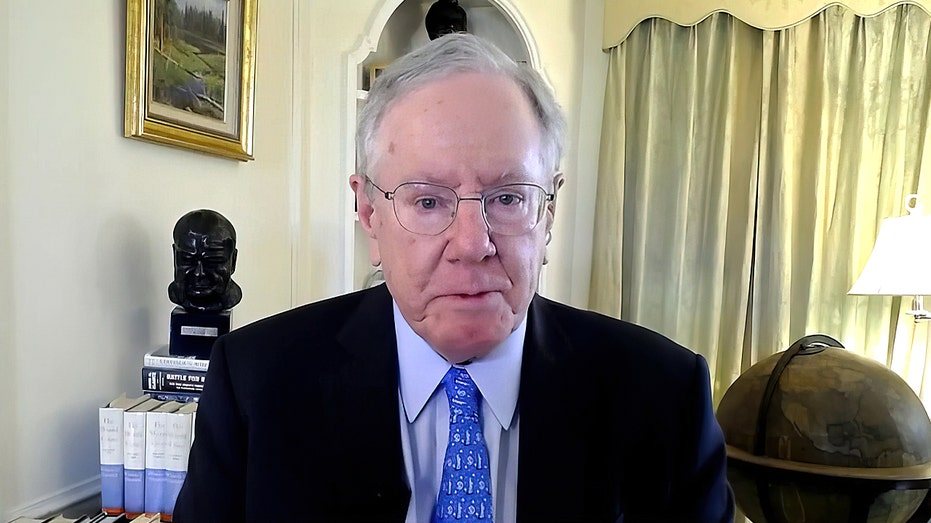
Steve Forbes, the chairman and editor-in-chief of Forbes Media and a two-time Republican presidential candidate, has thrown his support behind former President Donald Trump's warning about the internal threat of communism, a message Trump delivered during a speech at Mount Rushmore. In a recent interview at Freedom Fest in Las Vegas, Forbes told Fox News Digital that Trump's characterization of communism, socialism, and extreme leftism as a dangerous internal force is accurate, echoing a sentiment once expressed by Abraham Lincoln.
Forbes, a longtime advocate for free markets and sound money, argued that the left has become more organized than its freedom-loving counterparts and has successfully claimed the moral high ground, even when its policies lead to widespread suffering. He emphasized that it is not enough to argue that free enterprise generates prosperity; advocates must also make the case that capitalism is morally grounded in liberty and human creativity. He quoted Lincoln's warning that internal actions, not foreign forces, would ultimately threaten the United States.
The interview touched on the state of the American economy, with Forbes criticizing the Federal Reserve's approach to managing economic activity. He dismissed the notion that prosperity causes inflation, calling it a fallacy that leads central bankers to worry about an overheating economy. Instead, he argued, the Fed's role should be to preserve the dollar's integrity, not to manipulate interest rates. He compared interest rate controls to rent control, noting that both distort markets and ultimately harm consumers.
Forbes also addressed the growing dissatisfaction among voters, particularly in cities like New York, which he said have a history of electing radical candidates. He pointed to the election of a self-described communist to Congress in the late 1940s as evidence of a persistent streak of leftist politics. However, he suggested that this discontent reflects a broader frustration with government policies that hurt people's prospects, leading them to blame capitalism rather than the policies themselves.
When asked about the Trump administration's economic agenda, Forbes offered a straightforward prescription: pursue a new round of tax cuts for individuals and businesses, continue deregulation, and sell the plan to the public with clear examples of how it would benefit ordinary Americans. He suggested that Trump could use a marketing approach reminiscent of late-night TV commercials, promising not just tax relief on tips and overtime but also broader tax cuts that would help everyone. He stressed that taxes are a price, and reducing them would stimulate growth.
Forbes has long been a vocal critic of the Federal Reserve and an advocate for sound money. He argued that the central bank's attempts to manage economic activity by adjusting interest rates are counterproductive, likening them to rent control policies that distort housing markets. He called for a return to a system where the dollar's value is stable, allowing markets to function without government interference. This perspective aligns with his broader belief that innovation and prosperity flourish only in an environment of economic freedom.
The interview also highlighted Forbes's view that capitalism, while not perfect, has driven remarkable technological progress. He cited the evolution of handheld devices from expensive, bulky items to affordable supercomputers as a testament to human creativity. He noted that such advancements are often taken for granted but are a direct result of free-market incentives. Forbes warned that blaming free markets for problems caused by government mistakes is a dangerous trend that could undermine the very system that has lifted millions out of poverty.
Forbes's endorsement of Trump's Mount Rushmore message comes at a time when debates over economic policy and the role of government are intensifying. His comments reflect a broader conservative critique of leftist policies and a call for a return to principles of limited government and individual liberty. As the 2024 election cycle heats up, Forbes's voice adds weight to the argument that economic freedom is not just a matter of efficiency but of moral imperative.
96