Memorandum
- From
- Delaney Sawyer via Fast Company
- Date
- Filed
- Economy·5 min to read
- Re
Samsung Galaxy Z Fold8 shows why the perfect foldable phone remains out of reach
ReSamsung Galaxy Z Fold8 shows why the perfect foldable phone remains out of reach
Samsung's new Galaxy Z Fold8 eliminates some foldable phone compromises but introduces new ones, highlighting the persistent trade-offs in the category as Apple's entry looms.
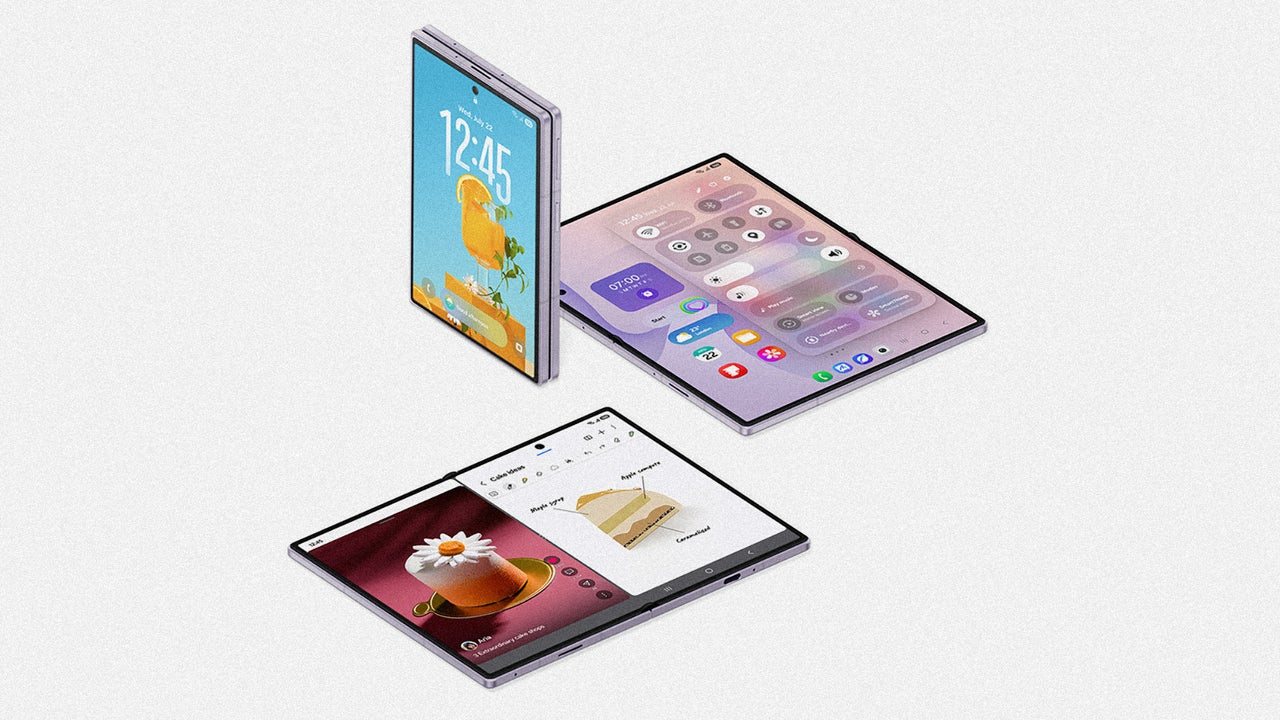
Samsung's Galaxy Z Fold8, launched in early August at $1,900, was designed to erase the last remaining compromises of earlier foldable phones and broaden the device's appeal. The new passport-like shape is more pocketable than previous versions while unfolding into a small tablet, and the crease on the inner screen is barely noticeable. Samsung says it is targeting people who consume video on their phones, which is to say nearly everyone. Yet hands-on use over several weeks suggests the new shape does not eliminate the compromises of a foldable phone — it merely introduces different ones.
The Fold8's outer screen uses a 16:10 aspect ratio, a throwback to Samsung's Galaxy Note from 2011. It is shorter and wider than any other modern flagship phone, which creates a challenge for one-handed use, as reaching across the screen with a thumb while gripping the phone feels like a stretch. Balancing the phone under the fingers helps but feels precarious. Some apps and websites are also not ready for squatter displays; one user reported nearly losing a Connections streak when the Fold8 cut off the site's "One Away" messages, which were appearing just out of frame.
Samsung spent years making the Fold feel more like a normal phone. Until 2025's Fold7, the outer screens ran narrower than a typical smartphone, which made them easy to use one-handed but looked awkward, and reviewers complained. Drew Blackard, Samsung Electronics America's senior VP of mobile product management, says the company was told "too slim" every year until last year. But widening the Fold7's cover screen introduced a new compromise: the inner screen, which resembled a small tablet on earlier foldables, became wider too, to the point that it is almost square. It is more awkward to hold than previous generations, and it leads to thicker black bars around videos.
The Fold8's unorthodox shape is a response to that previous response. Unfolded, the 4:3 aspect ratio results in smaller black bars for widescreen videos, and the camera cutout in the screen's top-right section hides behind the videos' letterboxing instead of getting in the way. Rotating the screen into portrait mode makes it feel more like a Kindle for reading, though the camera cutout becomes more intrusive, sitting along the screen's side instead of at the top. Samsung still offers the old shape on its pricier Fold8 Ultra, now pitched as a productivity solution able to run two full-sized phone apps side-by-side. The Fold8 caters to the more mainstream use of watching videos and playing games, which Blackard says is what people spend 60% of their time doing.
To that end, Samsung opted for one more strategic compromise: on the Fold8, users cannot unfold the screen partway to prop it up as a selfie camera or use it as a kickstand for video consumption. Blackard says the hinge that supports those features creates a more noticeable crease, so partial folding was relegated to the Fold8 Ultra and the smaller Flip8. Avi Greengart, founder and lead analyst at Techsponential, calls it a worthy trade-off given what Samsung is trying to accomplish. "If you're trying to prioritize video, then you're going to want a widescreen shape, and you're going to want that widescreen shape to have as minimal a crease as possible," he says.
Looming over this debate is Apple, which may launch a foldable phone as soon as this fall. Leaks and rumors point to a phone with a similar shape to Samsung's Fold8 and a nearly invisible crease on the inner screen. The rumors track with how Apple approaches consumer electronics: while Samsung throws out lots of ideas to see what works, Apple is more cautious and unlikely to experiment in public with a wide range of foldable shapes.
Not everyone agrees that a squatter screen is the way forward. Google adopted a passport-like shape for its original Pixel Fold in 2023, aiming to emphasize media consumption on the inner screen much like Samsung is doing with the Fold8, but switched to a taller and narrower design for subsequent Pixel Folds in response to user feedback. "Over time we found more users prefer having many interactions on the outside screen, so we prioritized making that an uncompromised experience," says Justin Savich, a group product manager for Google. Meanwhile, Blackard acknowledges he prefers the Fold8 Ultra for his own personal use, and he does not believe the market will ever consolidate toward one particular format. "That's the exciting thing to me about foldable technology," he says. "It doesn't have to be one standard form factor."
57