
Memorandum
- From
- Derek Weston via UX Collective
- Date
- Filed
- Economy·4 min to read
- Re
AI Job Displacement: Economists Warn of a Messy Middle as Tech Leaders Offer Vague Promises
ReAI Job Displacement: Economists Warn of a Messy Middle as Tech Leaders Offer Vague Promises
As AI threatens to reshape work faster than workers can adapt, economists warn of a destabilizing transition with no credible plan, while tech leaders offer vague promises of future abundance.
The rapid advance of artificial intelligence is stoking fears of widespread job displacement across industries like UX, design, product, and engineering. But the most useful truth about the coming disruption is that no one—not companies, not governments, not the billionaires building the technology—is coming to retrain displaced workers. The adjustment burden will fall on individuals, and the gap between the speed of technological change and the slow crawl of human adaptation is where the real pain will be felt.
Tech leaders have been quick to offer reassurance. When Jon Stewart pressed industry titans on The Daily Show to name the new jobs AI would create, the answers were telling. Nvidia CEO Jensen Huang offered «wellness centers and spas»—an industry dating back to 2000 BC. Elon Musk didn't name any jobs at all, instead promising an «age of abundance» where work becomes optional within ten to twenty years, even suggesting people stop saving money. The vagueness, Stewart argued, proves the «new jobs are coming» narrative is a con.
But economists say that critique misses the point. No one in any era has been able to predict the jobs of the future. A factory worker in 1940 could not have imagined «podcast producer» or «UX researcher.» Research by David Autor and colleagues at MIT found that roughly 60 percent of jobs Americans hold today are in occupations that did not exist in 1940. Asking Sam Altman to sketch the 2050 org chart isn't a gotcha—it's an impossible request.
The real problem lies elsewhere: in the rush to fill the silence with comfort. Huang calls the jobs panic «complete nonsense.» Musk promises «universal high income» and says work will be optional. The message is always the same: don't worry, something better is coming, you'll be fine. Yet the people who study this for a living are far less certain.
Daron Acemoglu, who won the Nobel Prize in economics in 2024, estimates AI will add only around one percent to GDP over a decade—«nontrivial, but modest»—and found «no evidence that AI will reduce» inequality. Some workers, he projects, will see real wages fall. Molly Kinder, who spent three years studying AI and work at the Brookings Institution, calls the reassuring version «soothing» and false. She warns of a long «messy middle» of concentrated, destabilizing job loss that «government and industry have no credible plan» for.
The timeline is the crux. The IMF warns that generative AI can spread «much faster than previous disruptive technologies,» while retraining, new industries, and career changes move at the same slow human speed they always have. Acemoglu's point is the gap between those two speeds: change hits fast, adjustment crawls, and the people caught in between pay the price.
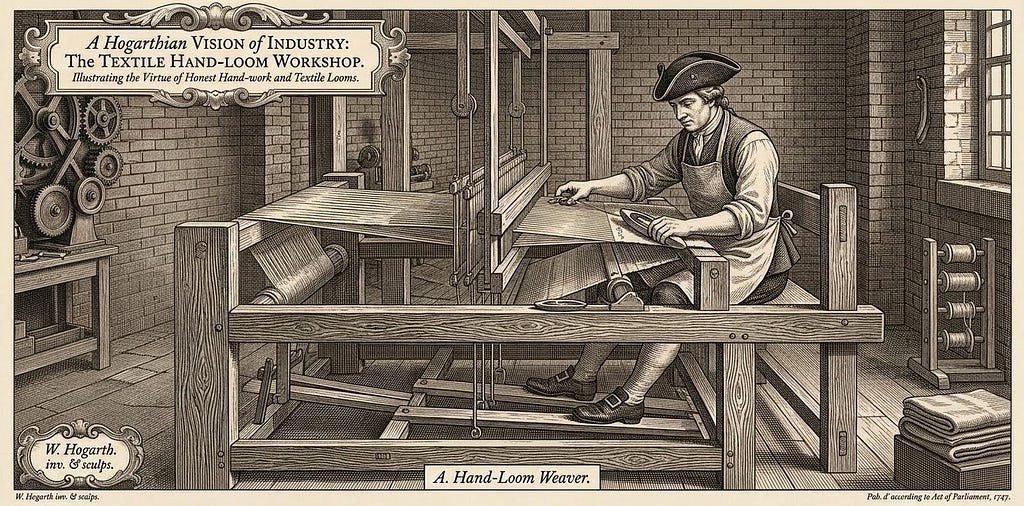
History offers sobering lessons. The Luddites weren't afraid of machines—they wrote a plan to survive them and got soldiers instead. A loom operator in 1810 could not have described a single job his trade would turn into: web developer, logistics coordinator, CT technician, UX researcher. The words didn't exist, and neither did the world that needed them.
The new jobs will come, as they always have. The real question is who gets workers from the job they have now to the one that doesn't exist yet. When the work changes under your feet—and it will—who is actually on the hook for carrying you across the gap? That question remains unanswered, and the silence from those building the future is the most honest signal yet.
4