Memorandum
- From
- Derek Weston via Fortune | FORTUNE
- Date
- Filed
- Business·4 min to read
- Re
China's economy outpaces U.S. growth as Trump's tariffs fail to force Beijing into trouble
ReChina's economy outpaces U.S. growth as Trump's tariffs fail to force Beijing into trouble
Despite U.S. tariffs covering nearly all bilateral trade, China's third-quarter GDP beat expectations at 4.5 percent and its fiscal deficit narrowed, while U.S. growth slowed and national debt remains high.
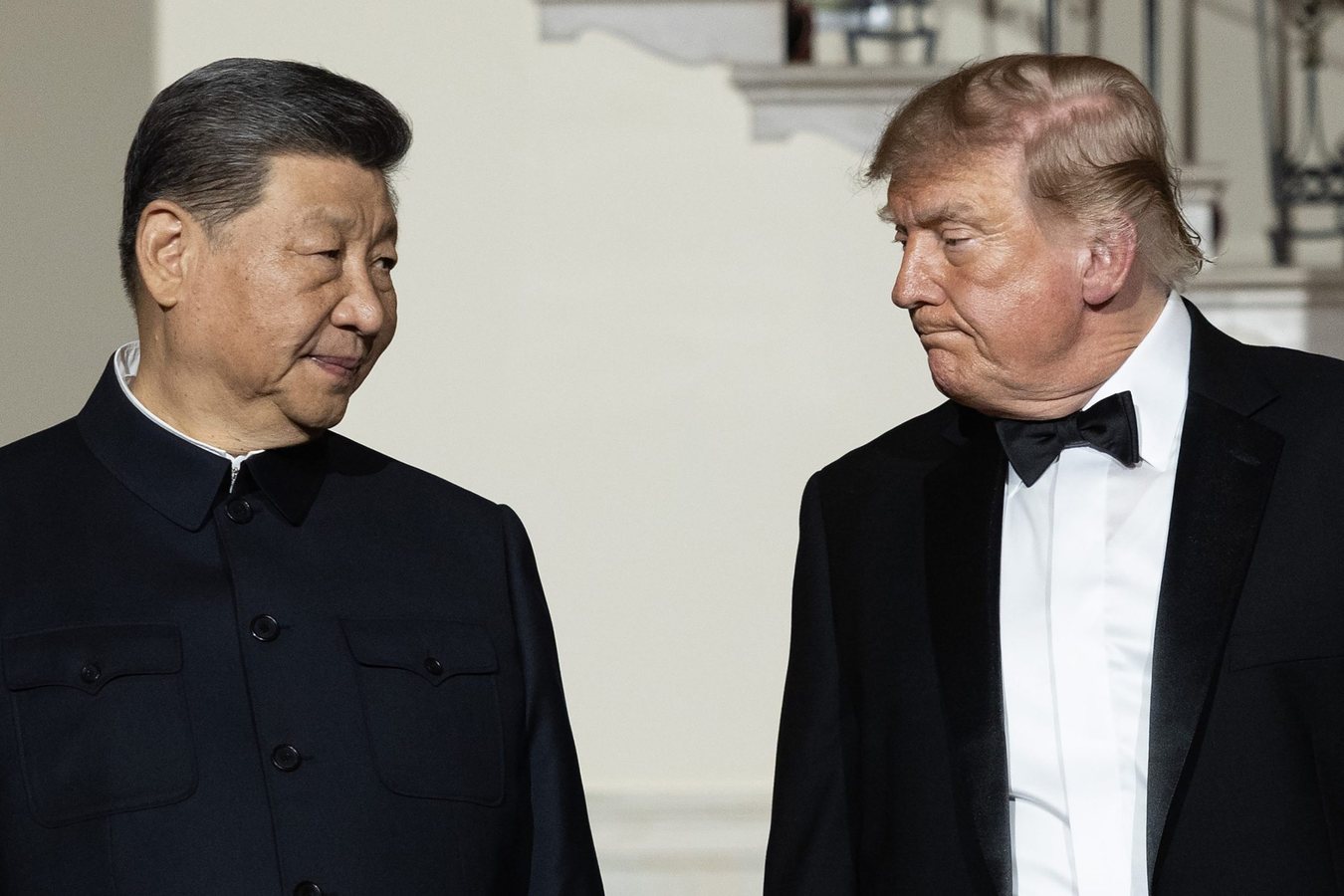
China's economy is growing faster than the United States' and its budget deficit is narrowing, even as President Donald Trump's tariffs have hit its exports. When Trump announced his tariff plan about 18 months ago, he said foreign exporters would absorb the increased costs, and he warned that China was headed for « big trouble » if it did not engage in a « two-way street » of trade. The results so far have not matched that prediction.
Goldman Sachs economist Hui Shan said China's real gross domestic product grew 4.5 percent year on year in the third quarter, slightly above the consensus forecast of 4.4 percent. September activity data were also firmer than expected, with industrial production accelerating to 5.5 percent year on year and retail sales beating forecasts. Shan said the government's growth target of 4.5 to 5 percent appears on track. By comparison, U.S. GDP grew 2.5 percent in the first quarter and 2.2 percent in the second, according to the Bureau of Economic Analysis.
The comparison has limits. The United States remains the largest economy in the world, and its GDP per capita far exceeds China's. The International Monetary Fund puts China's GDP per capita at $15,370, while the U.S. figure is above $95,000. China also starts from a more unbalanced fiscal position. The United States, by contrast, is carrying a national debt of roughly $40 trillion.
On public finances, Shan said China's fiscal data showed effective tightening, contrary to the expectation of moderate loosening at the start of the year. In the first nine months of the year, combined revenues from the general public budget and government-managed funds rose 1.4 percent year on year, while expenditures fell 3.5 percent. Shan's estimate of China's augmented fiscal deficit narrowed from 11 percent of GDP in December 2025 to 9.4 percent in September 2026, measured on a 12-month moving average basis. Shan has lowered her full-year 2026 estimate to 10 percent of GDP, from 11.5 percent previously, while still expecting a looser fiscal stance in the fourth quarter following recent policy announcements.
The United States has not yet agreed on targets to reduce its deficit as a share of GDP. Congressional Budget Office long-term projections show total deficits averaging 7.2 percent of GDP over the next three decades, from 2026 to 2056.
Trade barriers between the two countries remain high, though lower than at their peak. According to the Peterson Institute for International Economics, Chinese tariffs on U.S. exports stood at 31.9 percent as of August 2026, and the levy on Chinese imports into the United States was 35.2 percent. Chinese government data released earlier this month showed exports rose 36.3 percent in September from a year earlier, their fastest pace since February. Census Bureau figures indicate U.S. imports from China are below 2024 levels, before the current tariffs were introduced, but have been rising since their February 2026 low.
3