
Memorandum
- From
- Delaney Sawyer
- Date
- Filed
- Society·5 min to read
- Re
What the Jewish American Security Act Would Change for Houses of Worship
ReWhat the Jewish American Security Act Would Change for Houses of Worship
The bill is built around Jewish security and antisemitism, but its grant and policing provisions could also affect other at-risk religious institutions.
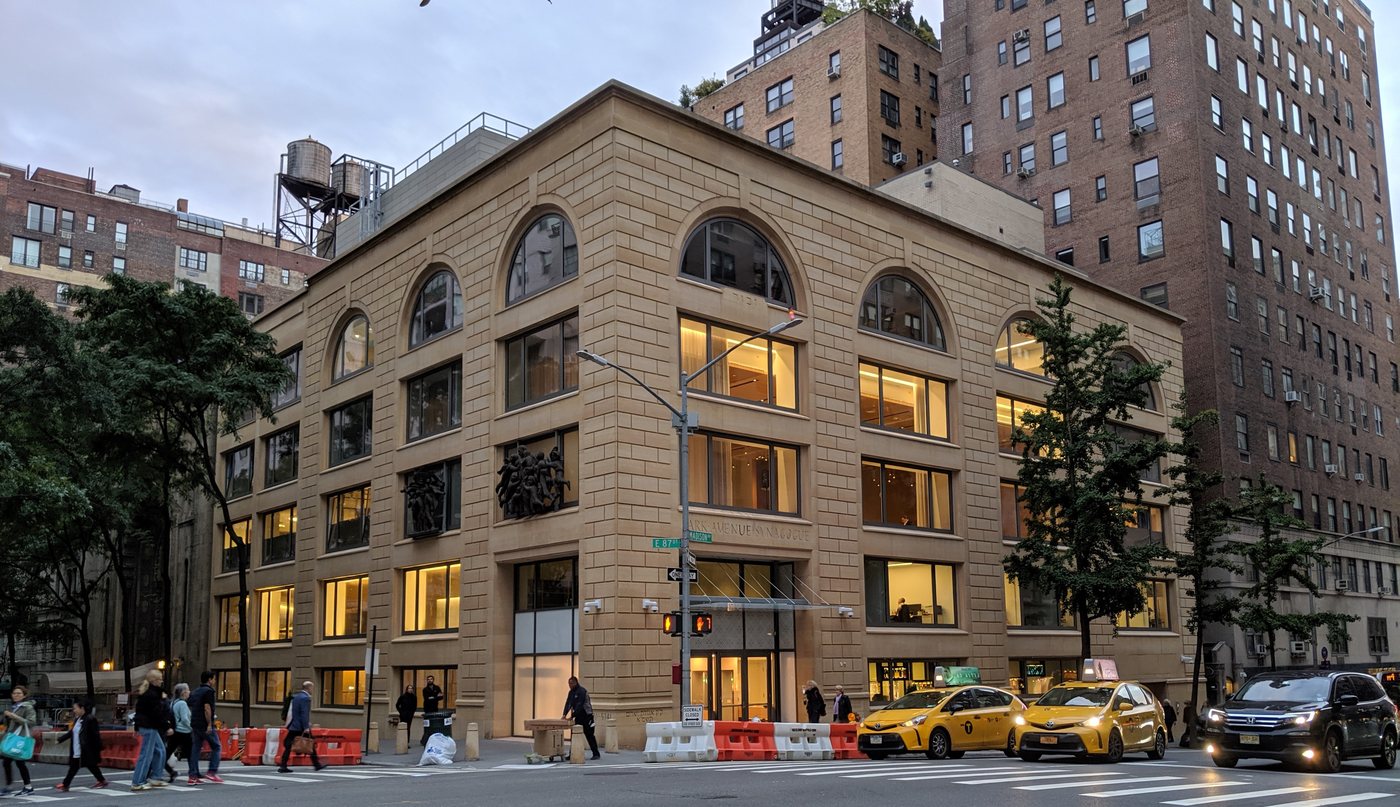
The question behind a new bipartisan bill in Congress is unusually concrete: What happens when people have a constitutional right to worship but still alter their lives because they fear what may happen on the way into a synagogue or community center?
The Jewish American Security Act attempts to answer that through money, policing, threat assessment, education policy and online-platform transparency. Sen. Jacky Rosen introduced the Senate version on May 19 with bipartisan original cosponsors, including Sen. James Lankford. Rep. Daniel Goldman introduced the House companion on June 9 with support from members of both parties.
The bill’s purpose is not framed broadly as protection for every faith. It explicitly seeks to strengthen federal efforts against antisemitism and protect the Jewish community. That focus matters, because some of its provisions are tailored to antisemitic threats while others use security programs that can serve a wider range of organizations.
The largest practical change would be an authorization of $1 billion a year for the Nonprofit Security Grant Program from fiscal 2027 through 2031. The bill would split that amount between the program’s urban and state components. Eligible nonprofits use the program to strengthen physical security against terrorism and other threats.
An authorization does not put $1 billion into accounts by itself. Congress would still have to appropriate money through the budget process. For congregations planning security upgrades, that means the headline number is a ceiling and policy signal, not a guaranteed pool of cash.
Another provision addresses what happens outside the front door. The attorney general would coordinate with state and local law enforcement to enhance security for religious institutions at risk because of threats or religious hate crimes. Grants could support additional police presence, patrols, training and other assistance. This is the part of the bill most directly connected to the fear of physically attending worship.
The legislation also tries to reduce the distance between local incidents and federal threat analysis. The FBI, Department of Homeland Security and National Counterterrorism Center would participate in recurring assessments of domestic and transnational antisemitic violent extremism, with public declassified versions where possible.
Schools and universities are another part of the package. The Education Department would have new coordinating responsibilities on antisemitism and Title VI, including a designated antisemitism coordinator and a federal clearinghouse for safety, security and best practices. The approach treats campus hostility and physical community security as related but distinct problems.
The online provisions target very large platforms. Services with at least 50 million monthly users in the United States would have to publish and submit to the Federal Trade Commission recurring reports describing how they detect and moderate antisemitic content, how automated systems are used and how algorithms may amplify material. The requirement is about transparency; it does not itself turn every disputed post into an illegal act.
The fear behind the legislation is visible in survey data. The American Jewish Committee reported that 55% of American Jews surveyed in 2025 had changed their behavior in at least one way because of fear of antisemitism. Thirty percent said they had avoided certain places, events or situations. The ADL recorded 6,274 antisemitic incidents in 2025, including 203 physical assaults.
Those numbers come from advocacy organizations and should be understood as their survey and audit measures. They nevertheless describe a social consequence that is hard to capture in crime totals alone: choosing not to go somewhere because being visibly Jewish feels risky.
The bill is not law yet. As of Aug. 13, the Senate version remains in the Homeland Security and Governmental Affairs Committee, while the House bill is still in committee and subcommittee review. Even if Congress passes it, lawmakers would still need to decide how much of the proposed security authorization becomes actual annual funding. Until then, its clearest effect is to place the everyday experience of worship under threat inside a broader federal policy debate.
64

Source: U.S. Government Publishing Office — Jewish American Security Act