Memorandum
- From
- Caroline Mercer via fox - Opinion
- Date
- Filed
- Society·5 min to read
- Re
Minnesota Softball Player Says She Lost State Title to a Male Pitcher, Now Speaks in Washington
ReMinnesota Softball Player Says She Lost State Title to a Male Pitcher, Now Speaks in Washington
A former Minnesota high school softball player says her team's state tournament run ended against a male pitcher, and she is now urging lawmakers to protect girls' sports after speaking at a Capitol Hill press conference.
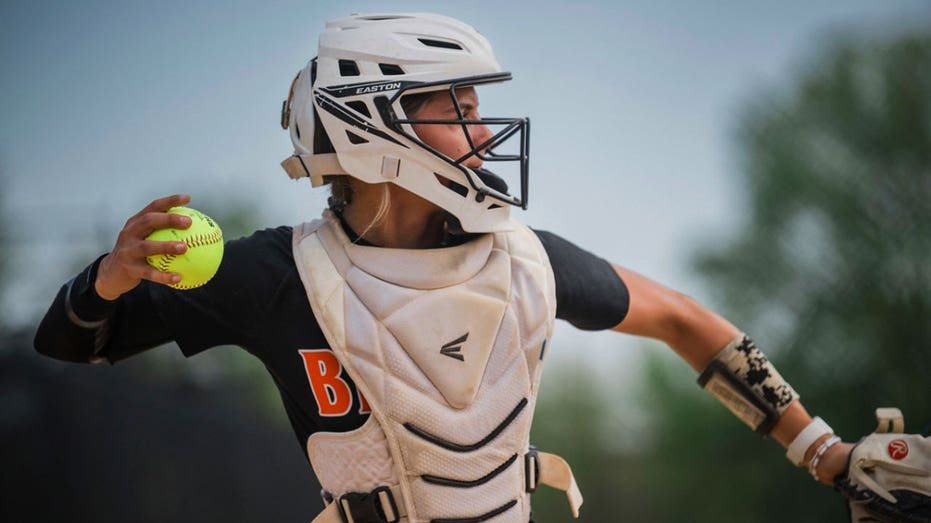
A former Minnesota high school softball player is speaking publicly about the loss that ended her senior season, saying her team was forced to compete against a male pitcher in the state tournament and that the adults responsible for protecting girls failed to do so.
The player, now a sophomore at Colorado Christian University, described the semifinal defeat as devastating not simply because her team lost, but because she could not understand how administrators, policymakers and legislators allowed a boy to take the mound in a girls' high school game. She said the opposing team went on to win the state championship.
She recalled sobbing with her parents and family after the game, a reaction she said surprised even herself because she had never been much of a crier. Her goal that season had been to reach the state tournament and play alongside her younger sister. The team made it and competed as underdogs before its run ended against a squad that used a male pitcher.
According to her account, the pitcher's parents had changed his legal documents to reflect the opposite sex when he was a young boy. She said the realization that adults around the team — including administrators, policymakers and legislators — allowed it left girls feeling tossed aside, hurt and abandoned.
The consequences, she argued, did not stop with her team. When a male athlete advances through a girls' state tournament, every girl who might have faced that team is affected. She said every roster spot, inning, championship, award and recruiting opportunity matters, and at the elite level a single tournament can change a player's future.
Her decision to speak out eventually brought her to Washington, D.C., where she spoke Wednesday at a press conference on Capitol Hill. The event followed a Senate Judiciary Committee hearing on opportunity, fairness and safety for female athletes.
She said the path to that moment has not been easy. Recruited to play Division I softball at Western Michigan University, she entered college hoping to find her voice and pursue her dreams as a student-athlete. Instead, she said, she felt isolated and shamed for speaking publicly about what she had experienced, and was even directed not to identify her university to the media.
The message, as she described it, was clear: keep quiet. She said she believed then and still believes that girls should not have to surrender roster spots, playing time or championships to boys because some adults have decided that the feelings of boys mean more than the feelings and opportunities of girls.
Her experience in the classroom compounded the pressure. In an introductory sociology class, she was assigned a paper explaining the difference between sex and gender. She received a zero. The professor told her to remove any bias and dive deeper into the difference between the two, which she understood as being told she was wrong to treat sex and gender as synonyms and that a person could identify as another gender by adopting stereotypes associated with the opposite sex.
She said she felt as though she was being asked to erase her own perspective and accept something she believed was untrue as fact. She rejected the idea that women can be defined by sexist stereotypes, noting that this was not just a classroom debate — she had lived it.
The lack of support from her coaches and the pressure in her coursework led her to transfer after her freshman season. Today she plays softball at Colorado Christian University, where she said she feels supported, encouraged to speak out and unashamed to tell the truth about what happened to her.
Now a sophomore, she said she still thinks about the girl crying after the state tournament. She thinks about her younger sister, her cousins and all the girls coming after them. She said she cannot change what happened on the field or give her team back the opportunity it lost, but she can refuse to let that loss teach the next generation of girls that they have to accept being pushed aside.
She wants her sister and little cousins to grow up knowing that when adults fail to protect girls, girls can still find the courage to protect one another. She added that she wishes they did not have to.
4