
Memorandum
- From
- Derek Weston via Yanko Design
- Date
- Filed
- Culture·4 min to read
- Re
Japanese Drawing Pad Finds Audience Beyond Artists
ReJapanese Drawing Pad Finds Audience Beyond Artists
A limited-edition drawing pad handmade by a Japanese bookbindery is being marketed as a daily tool for note-taking, planning, and brainstorming rather than a canvas for skilled artists.
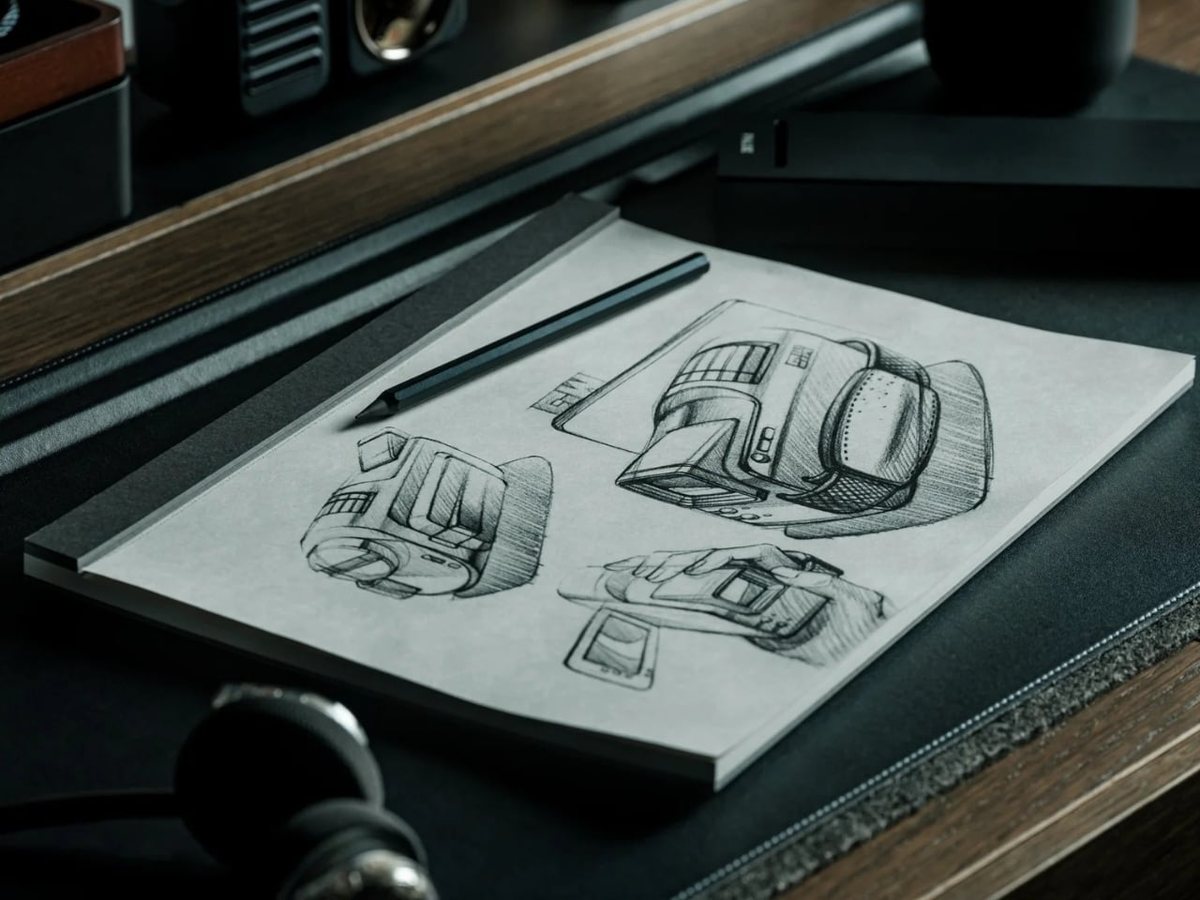
A drawing pad produced through a collaboration between the Japanese bookbindery ITO Bindery and the design publication Yanko Design is being positioned as a desk tool for people who have no intention of drawing seriously. The pad, which starts at $40, is designed for writing, planning, and organizing rather than for finished artwork.
The product is handmade by ITO Bindery, a Japanese bookbindery that has operated since 1938. Its binding glue is still applied by hand, and each microperforation is inspected for consistency by trained craftspeople rather than left entirely to machines. The pages use premium paper at 81.4 g/m² mounted on a sturdy recycled cardboard base, and each sheet is designed to tear away cleanly without leaving stray fragments behind.
Each edition is limited to 100 individually numbered pads per size, which gives the object the character of a small functional collectible rather than a disposable notepad. The pad is available in A6, A5, and A4 sizes, allowing users to choose how much space they need for different tasks. A launch promotion includes an all-metal pencil valued at $19.95 at no additional cost for a limited time.
The pad has no cover, so users reach a blank page immediately. That design choice supports quick, unstructured use, including the kind of rapid task dumping that people do when they need to get a list out of their head and onto paper. The tear-away pages make it easy to discard a completed list or post it somewhere visible.
Beyond to-do lists, the pad is presented as a surface for mood boards and visual planning. Users can brainstorm a trip itinerary, sketch an outfit for an upcoming event, or build a vision board for the months ahead. Because the microperforated pages tear easily and cleanly, the sheets can be arranged side by side on a wall or corkboard.
The product also targets meeting note-taking. Its gray paper and black base give it a more distinctive look than a standard notepad, which the makers argue makes it feel less like a routine chore to pull out during a long meeting. The unlined pages are also suited to mind-mapping and brainstorming, where branching ideas, bubbles, and connections need freeform space rather than ruled lines.
Journaling is another intended use. The pad can support habit tracking, junk journaling, or creative writing prompts, and the paper's premium feel is meant to make the ritual more satisfying. Torn-off pages can be attached to other journals or used as loose-leaf sheets to build a custom journal.
The pad can also serve as a lesson space for children learning to write letters, numbers, or shapes, offering a low-pressure surface with no stakes attached. The same function applies to adults learning a new language that uses unfamiliar characters, giving them a place to practice without the pressure of a formal workbook.
For stress relief, the pad accommodates doodling even for people who cannot draw well. Sketching a meal, inventing an imaginary creature out of boredom, or scribbling abstract shapes all work because the pad puts no pressure on the user to be good at drawing. It functions as a tactile outlet rather than a test of skill.
The broader pitch is that a well-made analog object earns its place on a desk simply by being available for the next to-do list, doodle, or half-formed idea. In a digital-analog hybrid life, the pad asks only for a pen, a blank page, and a few free minutes. Whether it fills up with lists, mind maps, or stick figures, it is designed to become part of a daily routine.
2