
Memorandum
- From
- Connor Quincy via Fortune | FORTUNE
- Date
- Filed
- News·4 min to read
- Re
US Poised to Receive $600 Million in Seized Iranian Oil as Prize Law Returns to Foreground
ReUS Poised to Receive $600 Million in Seized Iranian Oil as Prize Law Returns to Foreground
Three seized Iranian-linked oil tankers are crossing the Atlantic toward the United States, carrying nearly six million barrels of crude worth about $600 million, as the Trump administration revives an ancient maritime legal doctrine known as prize law to justify the seizures.
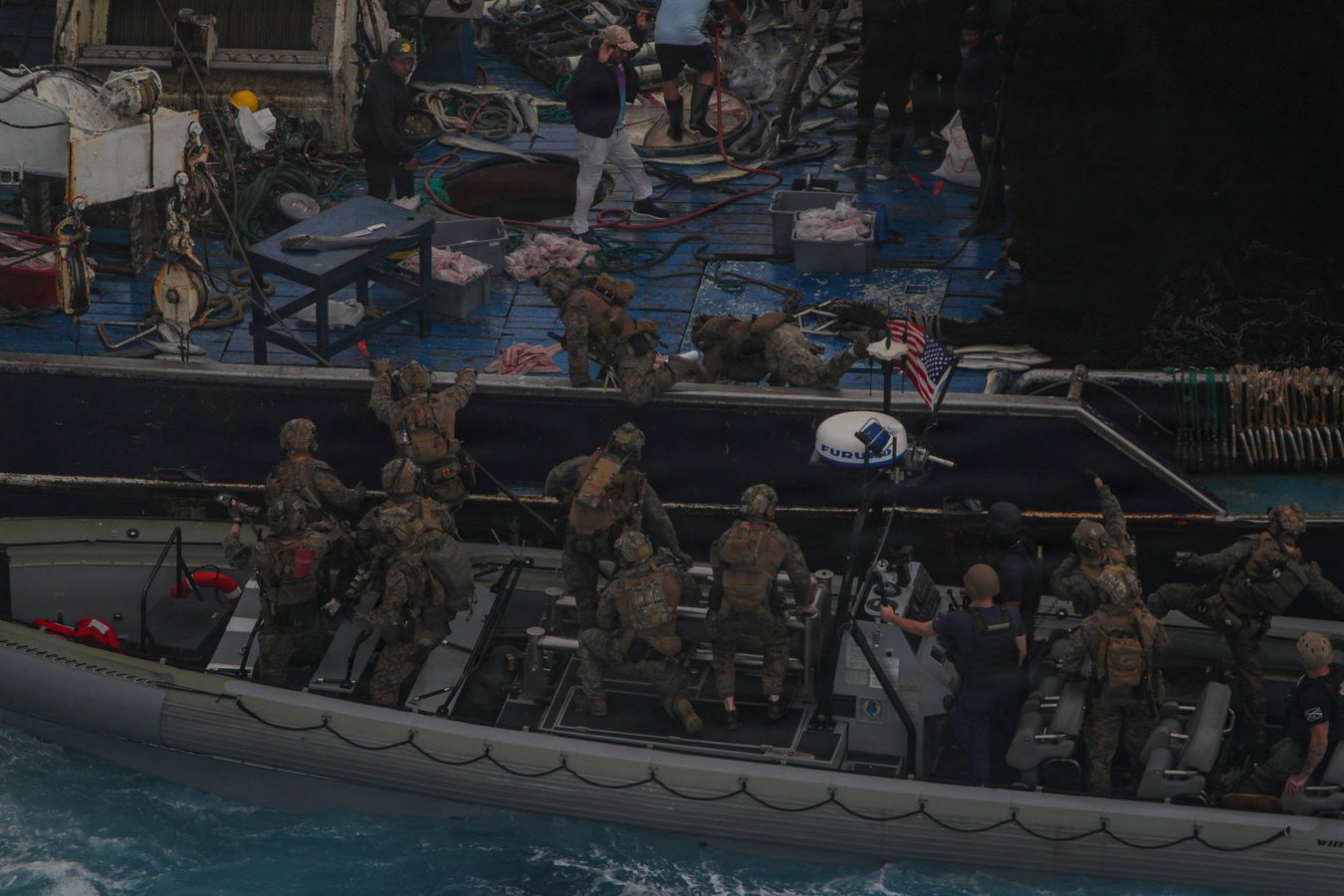
Three oil tankers linked to Iran are making their way across the Atlantic toward the United States after being seized by naval forces, carrying nearly six million barrels of crude oil valued at approximately $600 million. The vessels were interdicted in the Indian Ocean earlier this year as part of a U.S. naval blockade targeting ships entering or leaving Iranian ports.
The tankers Tifani and Majestic X were boarded in April and are now positioned off the coast of Brazil, according to shipping monitors. A third vessel, known variously as the Lenore and the Davina, was interdicted in June and has just cleared the Cape of Good Hope at the southern tip of Africa, heading west into the Atlantic. All three are very large crude carriers, each capable of holding two million barrels. With Brent futures trading at about $106 per barrel, the combined cargo represents a significant financial prize.
«Nearly six million barrels (valued at nearly $600M) of seized Iranian crude oil are quietly crossing the Atlantic Ocean towards the United States of America,» the monitoring group Tanker Trackers posted on X on Wednesday.
The U.S. initiated its naval blockade in April, applying it to ships attempting to enter or leave Iranian ports as well as Iran-linked vessels anywhere in the world, including the Indian and Pacific Oceans. After a brief ceasefire lifted the blockade over the summer, President Donald Trump reimposed it weeks later, pivoting toward economic warfare and away from direct military strikes.
The legal mechanism the administration is using to seize the tankers and enforce forfeiture is known as prize law, a body of maritime jurisprudence with roots in the Middle Ages. Unlike civil seizure laws that require the government to identify a statutory violation and establish jurisdiction, prize law does not require a captor to have a warrant or tie a vessel's seizure to a violation of an existing statute. Rather than law enforcement authorities like the Coast Guard carrying out the seizure under civil law, the Defense Department can seize an enemy vessel directly.
In the United States, prize law appears in the Constitution, which outlines rules for capturing and confiscating enemy vessels during times of war in its Captures Clause. During the Civil War, President Abraham Lincoln used the Prize Act of 1812 to blockade Confederate seaports. That law was most recently invoked during the Spanish-American War.
If the tankers carrying the Iranian oil do end up at a U.S. port, it would likely be along the Texas coast, home to top refiners and the Houston-based U.S. Attorney for the Southern District of Texas. The office, headed by Aaron Reitz, told Bloomberg it is ready to represent the U.S. «in adjudicating prizes» brought to Texas through federal courts.
In a statement last month, Reitz did not specify whether the Justice Department will invoke the Prize Act of 1812, the Captures Clause, or another law. «Our national security interests may require the United States military to seize vessels or cargo supporting the enemy during military conflict. If that happens, our federal courts must be ready to adjudicate the disposition of these captured vessels and cargo,» he said. «Prize law is an ancient body of maritime law—already codified in statute but which we are now reviving—that sets the rules for how seized maritime property is condemned, returned, or disposed of.»
The revival of prize law marks a notable shift in how the United States conducts economic warfare, blending centuries-old legal doctrine with modern naval enforcement. The tankers' arrival on American shores would test both the legal framework and the logistical capacity of federal courts to process such unusual cases.
2