
Memorandum
- From
- Derek Weston via FOX News
- Date
- Filed
- Society·6 min to read
- Re
Reparations Advocates Reject 'Handout' Label, Point to Past Government Remedies
ReReparations Advocates Reject 'Handout' Label, Point to Past Government Remedies
Advocates for direct cash reparations for Black descendants of American slavery are pushing back against critics who call such payments handouts, citing past federal compensation programs for other groups. The debate intensifies as state and local governments explore their own reparations initiatives.
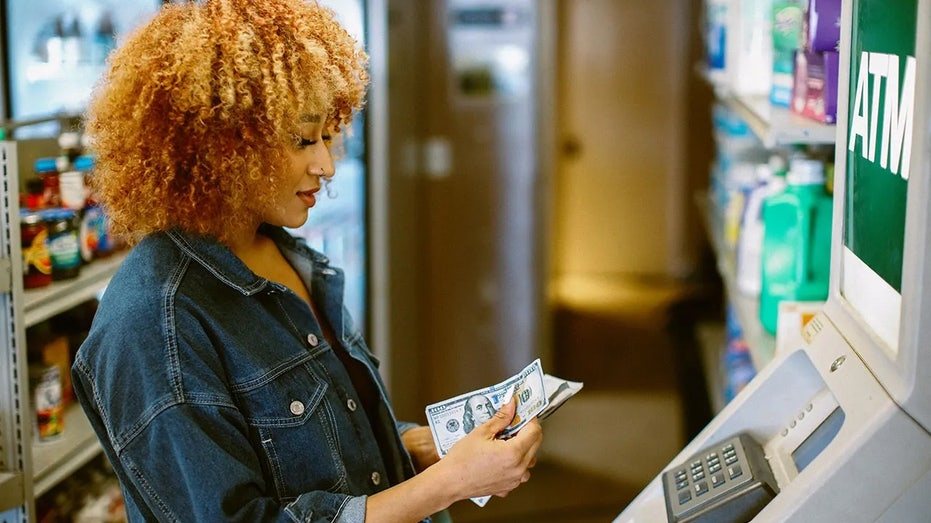
Advocates for reparations are insisting that the federal government provide direct cash payments to Black descendants of American slavery, rejecting characterizations of such compensation as handouts and pointing to past government remedies for other groups. The push comes as several state and local governments explore their own reparations initiatives and as resistance from conservatives and the Trump administration grows.
Rev. Phyllis Coachman, a supporter of the U.S. Freedmen Project, told Fox News Digital that cash payments are essential to any meaningful reparations program. «Cash payments — that’s just a little solution to it, but it’s a big solution because without cash payments, there’s no reparations,» Coachman said. She emphasized that the harms of slavery did not end with emancipation in 1865, citing the collapse of Reconstruction, Jim Crow laws, legal segregation, disenfranchisement, lynching, racial terror, destruction of Black property and communities, housing discrimination, redlining, discriminatory lending, barriers to wealth building, the war on drugs, and mass incarceration.
The U.S. Freedmen Project, which describes itself as a nonpartisan organization representing self-identified «foundational Black Americans,» works to educate the public on the distinctions between Black Americans who are direct descendants of enslaved persons in the U.S. and those who immigrated voluntarily. The group seeks to fulfill the abandoned missions of the 19th-century Freedmen’s Bureau and the Freedmen’s Savings and Trust Company. Supporters argue that broader reparations bills risk violating constitutional principles and contend that eligibility criteria must be based strictly on lineage.
Reparations advocate Annette Wilcox pushed back against critics who frame direct monetary payouts as government handouts, arguing the term is used selectively to delegitimize Black claims. «My thoughts about people who say cash payments are handouts is this is a government that has given trillions of dollars to all sorts of people as reparations,» Wilcox said. She cited reparations for 9/11 and programs after the crash and the Depression, noting that an estimated $5 trillion in programs, money, and remedies were given to people, with 90% going to White people at that time. «So, handouts are, you know, just, frankly, an insult that people give to Black people,» she said. «The government has a responsibility for what it did to the citizens — the Black people who were enslaved in this country — and it needs to own up to it just like it owned up to what it did to the Native Americans, the Japanese and many other groups that it has given reparations to.»
The debate has played out at public hearings, including one hosted by the New York State Community Commission on Reparations Remedies at Hempstead High School on Long Island. Residents warned panel officials that expanding the definition of reparations to include recent immigrants or other marginalized groups risks co-opting the movement. The New York commission was established after Gov. Kathy Hochul signed legislation in December 2023 creating a state panel to examine the legacy of slavery in New York and evaluate potential remedies.
Among those who testified, U.S. Freedmen movement supporter Aubrey Muhammad called for an explicit payout amount of $800,000 per eligible individual. «We need $800,000 for each foundational Black American. That’s simple,» Muhammad said. «In New York, that’s about the cost of living that’ll get you a home, a small business, or help you recover from financial duress.» However, Devine Prince, president of the U.S. Freedmen Project, noted that such figures reflect broader efforts to address the national wealth gap rather than standard baseline figures. Still, Prince maintained that direct compensation remains non-negotiable. «If you count yourself as a true American, then there should be no pushback and no rebuttals for direct monetary compensation for the harm that was done,» Prince said. «That needs to be repaired through direct monetary compensation to American freedmen.»
The debate over reparations has also taken shape at the local level. Evanston, Illinois, a Chicago suburb, became the first U.S. city to offer direct remedies, providing up to $25,000 in homeownership grants and cash payments to eligible Black residents to address legacy housing discrimination. The program has been closely watched as a potential model for other municipalities.
As more states and cities consider reparations proposals, the question of who qualifies and what form compensation should take remains central. Advocates like Coachman, Wilcox, Muhammad, and Prince argue that without direct cash payments, reparations are incomplete. Critics, meanwhile, continue to challenge the concept, setting the stage for ongoing political and legal battles across the country.
4