Memorandum
- From
- Delaney Sawyer via Fortune | FORTUNE
- Date
- Filed
- Business·5 min to read
- Re
Verizon CEO Predicts AGI Within 18 Months, Warns of Rapid Disruption
ReVerizon CEO Predicts AGI Within 18 Months, Warns of Rapid Disruption
Dan Schulman told a Detroit audience that artificial general intelligence could arrive within six to 18 months, followed by quantum computing and humanoid robotics, and urged leaders to prepare workers for sweeping change.
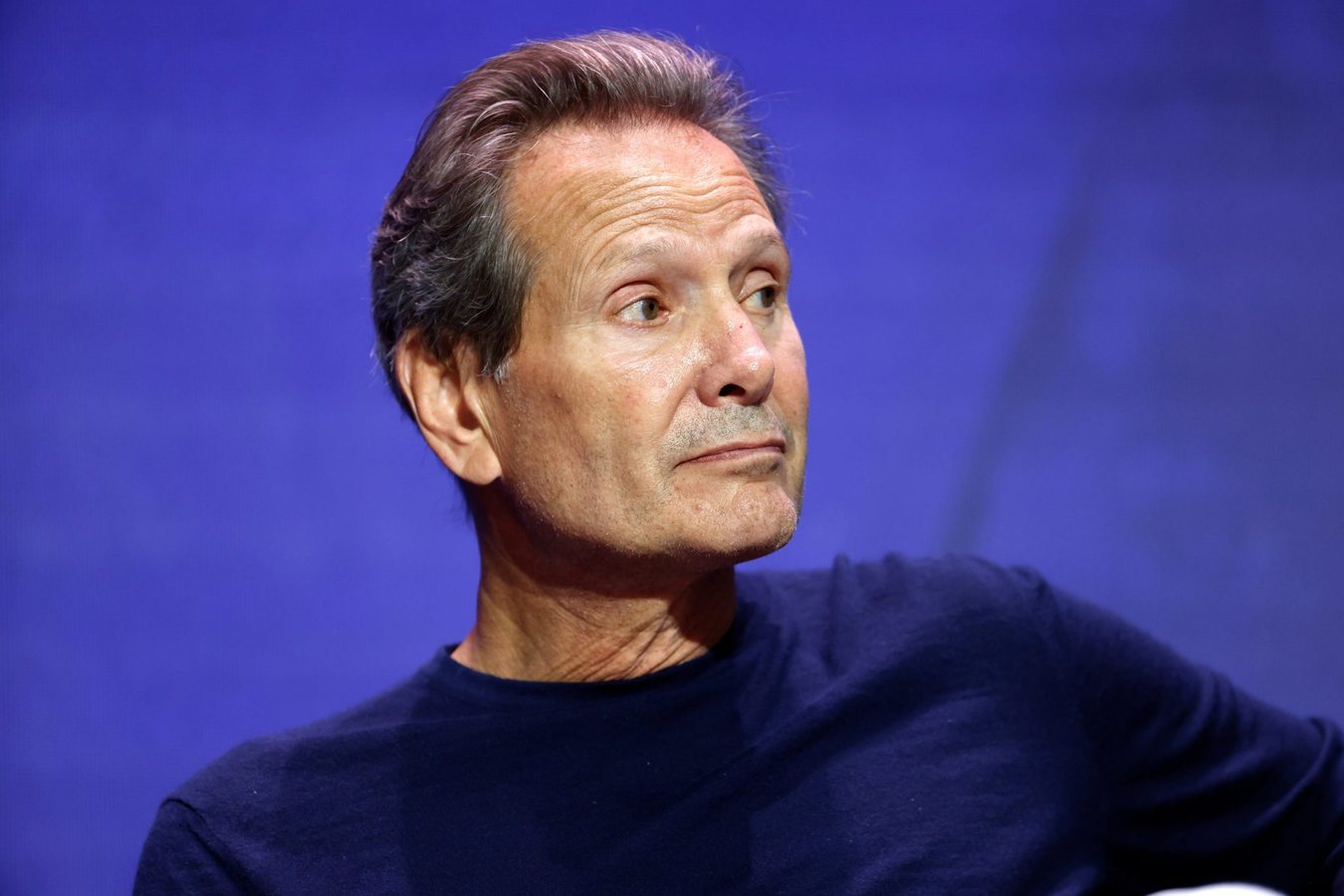
Verizon CEO Dan Schulman predicted that artificial general intelligence could arrive within six to 18 months, a timeline far more aggressive than most corporate forecasts, and warned that the economic and social consequences will unfold faster than institutions can absorb them.
Speaking at the Ford Pro Accelerate event in Detroit, Schulman said the AI models in use today are the weakest they will ever be. «The models that we see today are the worst models we'll ever use in our lives,» he said. «Every two months, there's a step function change in the power of the models. I think we get to some form of AGI in the next six to 18 months. I think it's right on us.»
AGI generally refers to systems that can reason and perform broadly across domains rather than excel at narrow, discrete tasks. Schulman said the technology will soon be able to handle many tasks better than humans do today, and he argued that the usual mechanisms for absorbing technological change — training systems, labor markets, corporate restructuring and public policy — will not keep pace.
He described a sequence of advances: roughly two years after AGI arrives, the era of quantum computing, which he characterized as «everything today times 1,000,» and by 2030 or 2035, a capable form of humanoid robotics. «We've got a decade of intense change ahead of us,» he said.
Schulman framed the shift in stark terms, saying the progress that would normally take a century will be compressed into five to 10 years. «I don't think we can really imagine how powerful the technology and how fundamental it will be,» he said.
The changes will reach Verizon itself, which has more than 250,000 employees and contractors. Schulman said the company must move from a workforce organized around defined roles and functions to a much more fluid organization. Last week, Verizon announced a $70 million initiative to provide free AI training for American workers, not only its own employees but workers in communities across the country, alongside career development work with local organizations.
He urged corporate leaders and policymakers to plan for difficult scenarios rather than assume the labor market will adjust on its own. «Everybody's job is going to shift,» Schulman said. «I don't think everybody will land just magically in a better place per se.»
Other executives on the panel described different constraints on the AI future. PG&E CEO Patti Poppe said an increasingly digitized grid will require workers who combine physical skills with technological fluency. She described a worker being lowered by rope from a helicopter onto a transmission tower in mountainous California, and said the same people who hang on the end of the rope will need to get smarter about sensors, remote-edge computing and predictive systems. «I'm still going to need those people,» she said. «Somebody's still going to have to connect that wire to the pole.»
Dave Regnery, CEO of Trane Technologies, compared current anxieties about AI to fears surrounding the arrival of personal computers four decades ago, saying the concerns are nearly identical. Trane uses data and AI to manage heating, ventilation and air-conditioning systems according to how buildings are actually used, rather than only their original design specifications. Regnery said buildings account for about 30% of all energy, and roughly 30% of that is wasted. He said the company can make buildings operate about 15% more efficiently than their design baseline, improving customer economics while creating demand for technicians who can install, service and operate increasingly sophisticated systems.
Chris Nelson, CEO of Stanley Black & Decker, described a similar transition on job sites. His company has developed AI-enabled autonomous drilling robots that use digital construction plans to drill holes for racks in data centers and other projects. The technology is designed to take over repetitive physical tasks rather than replace the electricians and skilled tradespeople needed to complete the work.
Together, the executives sketched a future in which AI reshapes both white-collar and blue-collar work, creating new demands for training and safeguards even as it displaces some roles. Schulman's message to leaders was that preparation cannot wait for the disruption to arrive.
4