Memorandum
- From
- Caroline Mercer via Yanko Design
- Date
- Filed
- Culture·5 min to read
- Re
Amman Design Week Returns After Seven Years With 220 Designers and 204 Events
ReAmman Design Week Returns After Seven Years With 220 Designers and 204 Events
The fourth edition of Amman Design Week opens October 2 under the theme «Accumulations», spanning five districts in and around Amman plus Aqaba for the first time, with 59 participating spaces and four permanent urban interventions left behind after October 17.
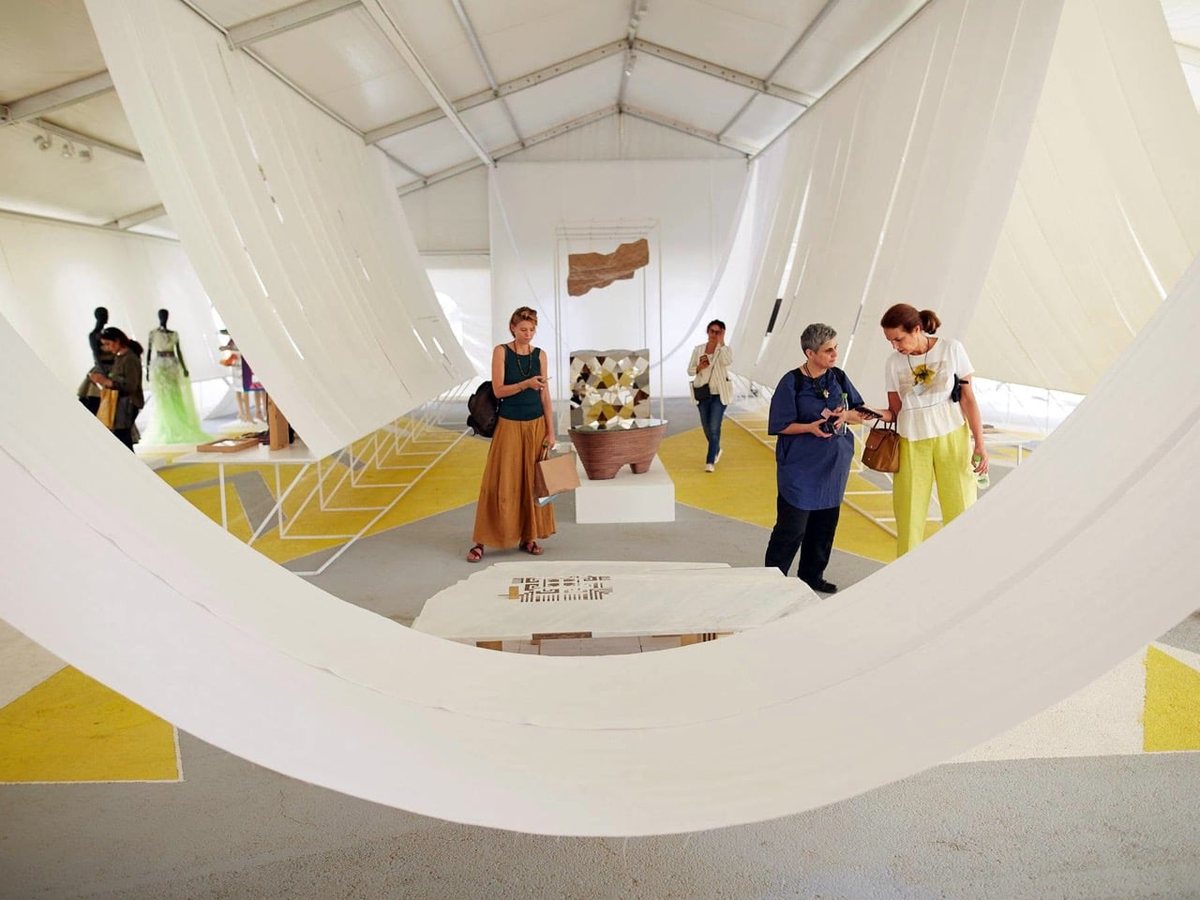
Amman Design Week is back after a seven-year absence, opening its fourth edition on October 2 under the theme «Accumulations». The event, founded in 2016 by Her Majesty Queen Rania Al Abdullah, last ran in 2019 with an edition titled «Possibilities». It now returns to a region reshaped by a pandemic, multiple conflicts, and population displacement on a scale that altered the demographic reality of an entire neighborhood of countries.
Running through October 17, the 2026 program brings together more than 220 designers across 59 participating spaces and 204 events. It unfolds across five districts in and around Amman and, for the first time, extends to the Red Sea city of Aqaba. The biennial has long carried civic ambitions, and previous editions helped rehabilitate communities and expand access to creative tools across Jordan.
The curatorial team anchors the theme in a verse from the Abbasid poet Ibn al-Mu'tazz: «Do not dismiss the small; mountains are made of pebbles.» The image frames accumulation as a process by which knowledge grows, traditions develop, industries take shape, and cities are made, layer upon layer and decision upon decision. The curators also acknowledge the darker reading, noting that problems accumulate, waste builds up, and what builds can also bury.
The program approaches the theme through three registers. «Reserves and Repositories» considers what gathers and is held. «Systems and Structures» examines how layers of rules, decisions, and relationships shape how people live. «Practices and Processes» turns to the tools and ways of making available, and the knowledge accumulated within them over time. Each project in the exhibitions is presented as a diptych in dialogue with a trace — a selected artifact, archival document, or oral history — foregrounding the history of each work and the often-unseen scaffolding behind designed environments.
Exhibitions Curator Faysal Tabbarah, born in Aleppo and based between Sharjah and Ottawa, brings a practice built around regional, environmental, and architectural imaginaries. Programs Curator Khaled Al-Bashir, Arts and Culture Director at Darat al Funun in Amman, trained at the Architectural Association in London and has worked across Jordan, Palestine, and internationally, exploring how space, culture, and political structures shape the production of knowledge.
This year the event introduces four permanent urban interventions — a shade structure, a lamp post, a public garden, and a playground — all placed in public space and left for the community after October 17. Designer Mohamad Nahleh drew on the structural history of Jerusalem's Dome of the Rock, treating it not through its religious symbolism but as a record of nearly thirteen centuries of repairs, reinforcements, and rebuilding under successive historical periods. The result is a half-scale sculptural fragment in wood and steel, installed as a functioning lighting pole above a small stone seat.
Elsewhere in Ras El Ain Park, designer Abeer Anabtawi transforms a large patch of bare concrete at the park's center into a basketball court decorated with the vegetation found on produce carts and dinner tables across Amman: tomatoes, chamomile, mallow leaves, and wheat. «Ard al Sahn» by L.E.FT and collaborators redesigns an inaccessible street intersection outside the Shariah Mosque using local stone waste, with the floor oriented toward the Qibla. Civil Architecture's shade structure threads a ceramic-tile roof between existing tree trunks in the same park, closing gaps in the canopy overhead, with tiles developed and manufactured in Jordan.
The full program, route planning, and updates are available through the event's official channels. The edition arrives carrying the weight of everything that filled the years since 2019, and its curatorial architecture suggests the conversation is starting from what has actually changed rather than picking up where it left off.
11