
Memorandum
- From
- Delaney Sawyer via Fast Company
- Date
- Filed
- Society·4 min to read
- Re
157 U.S. Cities Push Climate Action as Federal Government Retreats
Re157 U.S. Cities Push Climate Action as Federal Government Retreats
A new University of Maryland database tracks more than 1,400 climate policies from 157 cities, showing local governments are continuing climate work even as the Trump administration rolls back federal programs.
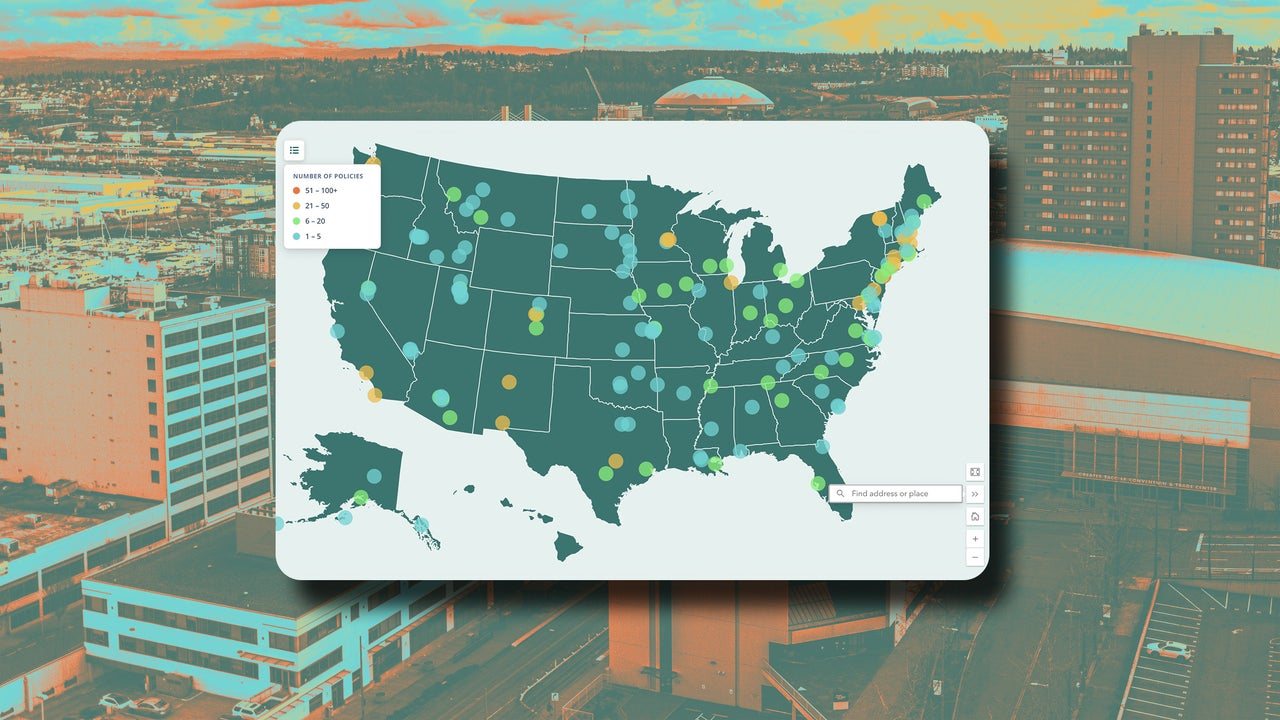
More than 150 U.S. cities are pressing ahead with their own climate policies even as the Trump administration dismantles federal climate programs, according to a new database from the University of Maryland's Center for Global Sustainability.
The U.S. City Climate & Energy Policy Database catalogs more than 1,400 policies and programs from 157 cities across the country. It includes a map showing which cities have the most climate policies and a dataset that categorizes each action by location, sector, and policy area — such as transportation, electricity, or waste — and links to city plans.
The tool arrives at a moment when federal climate action is contracting sharply. In June 2026, the Trump administration told states they could not use billions of dollars in Inflation Reduction Act federal rebates to help homeowners switch from fossil fuel appliances to climate-friendly heat pumps. That move, however, did not affect a heat pump rebate available in Tacoma, Washington, which is run by the city and its local power utility — an example of how local leaders can continue climate progress with their own policies.
«This database gives us the clearest picture yet of how cities across the country are responding to the current moment with policy,» Nate Hultman, director of the Center for Global Sustainability at the University of Maryland, said in a statement. «What stands out is both the breadth of action and the opportunity it reveals: cities and states are pursuing clean energy and energy efficiency, and understanding that landscape is the first step toward accelerating action where it is needed most.»
The database highlights a range of local efforts. Cleveland has a climate plan introduced in 2025 to cut emissions 63.3% by 2030, which would save residents $2.3 million in energy costs and create more than 1,200 jobs per year. The city also plans to overhaul city facilities with renewable energy and efficiency upgrades.
In Phoenix, which saw its second-hottest summer on record this year, officials are already adding shade to combat extreme heat. In 2024, the city launched a Shade Phoenix initiative to add 27,000 new trees and 550 new shade structures over the next five years.
Not every policy in the database is recent; some date back a decade. But because they operate at the local level, they are protected from the Trump administration's efforts to tear down federal climate programs.
Hultman said the data show that local leadership is real, widespread, and providing the groundwork for a better pathway. The database's release underscores a broader dynamic in U.S. climate policy: even when the federal government steps back, city and state governments can still take impactful actions on clean energy, energy efficiency, and climate resilience.
For residents, the database offers a way to see what their own city is doing. It categorizes actions across sectors and policy areas, making it possible to compare approaches and identify where more work is needed. The tool's creators say understanding this landscape is a first step toward accelerating action where it is needed most.
6