Memorandum
- From
- Delaney Sawyer
- Date
- Filed
- Politics·5 min to read
- Re
Why Chornobyl now sits inside Ukraine’s long-term northern defense
ReWhy Chornobyl now sits inside Ukraine’s long-term northern defense
Ukraine’s fortification of the Belarus frontier is a policy shaped by the 2022 invasion rather than evidence of an imminent new attack. Chornobyl is now where border security, nuclear safety and deterrence meet.
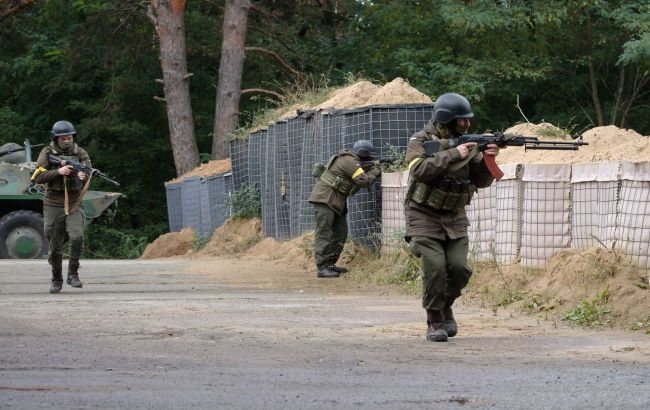
The most useful way to understand Ukraine’s new defenses around Chornobyl is not as a response to a single intelligence alert, but as an institutional answer to a strategic failure exposed in 2022. Russia used Belarus as a staging ground, crossed the northern frontier and moved through the exclusion zone toward Kyiv. Ukraine is now redesigning that route so it cannot function the same way again.
A 2024 presidential decree makes the long-term nature of the policy unusually clear. Ukraine changed the boundaries of the Chornobyl Radiation and Ecological Biosphere Reserve and transferred 695.2 hectares along the state border to Border Guard units. The stated purpose was permanent engineering and fortification infrastructure, including barriers, border clearings and communications. That is a land-management decision, not a temporary battlefield workaround.
The physical layer continued to expand in 2026. Ukrainian border officials said defensive and fortification lines along the Belarus border were being strengthened and mine-explosive barriers increased in the most dangerous directions. Associated Press reporting in July described mines, anti-tank obstacles, razor wire and anti-drone measures along the frontier. Patrols operate around the clock with drones and other surveillance systems.
This creates a classic layered defense at the strategic level: obstacles complicate movement, fortifications create protected positions, mines deny or channel dangerous approaches, and persistent surveillance is meant to provide warning. Public reporting does not reveal where each element is placed, and it should not. The important point is that Ukraine is no longer relying on terrain or the exclusion zone’s special status as passive protection.
There is also a fact-checking boundary worth preserving. Claims that every road and forest in the Chornobyl zone has been densely mined go beyond what public evidence shows. The credible record supports minefields and the expansion of mine barriers in vulnerable directions. Similarly, AP confirms 24-hour patrols across the Belarus border using drones and surveillance systems, but that is not the same as a publicly documented map of a dedicated Chornobyl observation-post network.
Why commit resources to a front where there is no visible attack force? Because deterrence and preparedness operate before an enemy concentrates. In June, Ukraine’s State Border Guard Service said it was not seeing a force near the Belarus frontier capable of launching an invasion. AP reported in late July that officials still saw no signs of a Russian troop buildup in Belarus. The current defense effort therefore represents insurance against a future option, not proof that Moscow has activated that option now.
Chornobyl also changes the risk calculus because this is not ordinary terrain. AP reported that Russian troops dug positions in contaminated soil during the 2022 invasion and that military activity contributed to forest fires. The exclusion zone remains a complex environmental system where radiation levels vary and where fire, excavation and infrastructure damage can have consequences outside the immediate military problem.
The nuclear site makes the overlap even sharper. The New Safe Confinement over the destroyed Unit 4 was damaged by a drone strike in February 2025. Chornobyl NPP said in April 2026 that the arch could no longer fully maintain the leak-tightness of its internal volume, although the site remained controlled, radiation readings stayed within established levels and no releases above limits had been detected. Restoration work was continuing.
That means Ukraine has to solve three problems in the same geography. It must deny a military corridor from Belarus, maintain control over a contaminated landscape and protect nuclear facilities whose safety has international implications. Each task can complicate the others: more military infrastructure changes land use, while the radiation environment constrains how people work and how emergencies are handled.
The broader policy lesson is that Chornobyl has moved from the edge of national-security planning to its center. The zone’s old function was exclusion — keeping people away from danger created by a reactor accident. Its wartime function adds another kind of exclusion: denying an adversary an avenue toward Kyiv. Ukraine’s northern defense is now designed around the assumption that geography, legal status and historical taboo are not enough. Only maintained physical defenses and persistent monitoring can close the route reliably.
75