
Memorandum
- From
- Caroline Mercer
- Date
- Filed
- Politics·5 min to read
- Re
What Trump’s Secret C-32A Flight From Turkey Actually Changed
ReWhat Trump’s Secret C-32A Flight From Turkey Actually Changed
A decoy Air Force One, a catering truck and a smaller military VIP jet turned the president’s July departure into a security operation hidden from the press pool.
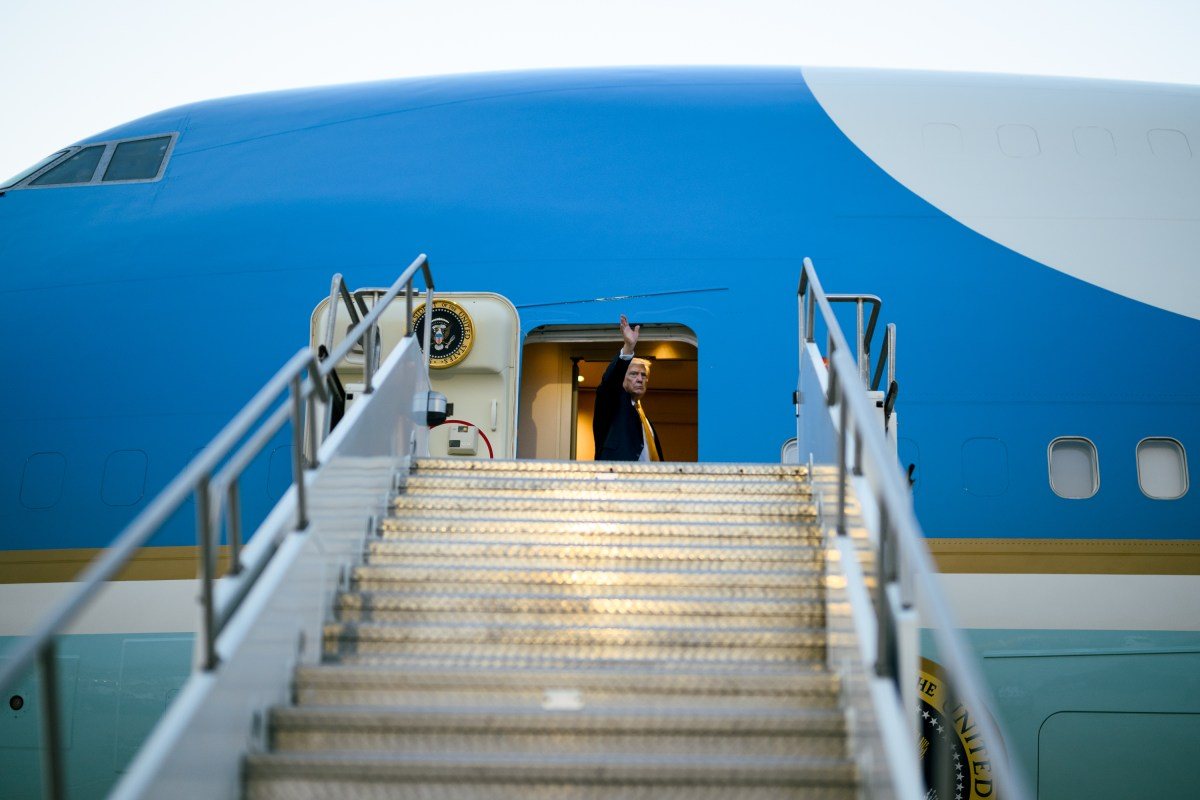
The story of President Donald Trump’s July 8 departure from Ankara has changed in stages. First, the White House and traveling press understood that Trump had left the NATO summit on an older Air Force One rather than the newly introduced Boeing 747-8 donated by Qatar. Then questions emerged about why reporters had been told to close their shades and why the president had changed aircraft. Now a third plane has become the central fact.
The Washington Post reported that Trump publicly boarded the older Air Force One but did not remain on it. Minutes later, he was moved in an airport catering truck to an Air Force C-32A and departed Turkey on that smaller aircraft. The old presidential 747 continued as a decoy with reporters and some White House staff who believed Trump was traveling with them. The Associated Press and The Wall Street Journal subsequently reported matching accounts.
The reason was an Iranian threat against the president and Air Force One, according to officials cited by the news organizations. The Wall Street Journal reported that Israel supplied intelligence to the United States that included a potential shoulder-fired missile scenario. Public reporting does not establish how imminent the threat was, who might have carried it out, or whether the suspected attackers were positioned near Ankara. It does establish that U.S. security officials considered the information serious enough to abandon a normal presidential travel pattern.
That distinction matters. A presidential flight is normally protected by layers of secrecy even when its broad route is public. This operation went further by creating an intentionally false visual narrative. Trump was photographed boarding one aircraft. The press pool boarded that same aircraft. The plane departed on the expected route. Yet the president had been transferred to another jet through a piece of ground equipment that looked like routine airport service.
The C-32A helps explain why the plan was practical. The Air Force identifies the C-32 as a specially configured military version of the Boeing 757-200 used to transport U.S. leaders. It is often used for the vice president, cabinet officials and other senior travelers. It has the communications and accommodations needed for government missions but lacks the instantly recognizable profile of the presidential 747.
The earlier public account was not entirely fabricated. Both the older Air Force One and the newer Qatari-provided 747 did travel through Britain, and Trump continued his trip home on the new plane after the stop at RAF Mildenhall. What was hidden was the segment between Ankara and Britain, during which the C-32A carried the president while the larger aircraft served as the visible target.
The timing also connects the operation to a broader security problem. NATO’s Ankara summit took place July 7 and 8 amid heightened U.S.-Iran confrontation. Trump had said Iran wanted him dead and, when asked after the trip about a possible threat to Air Force One, said he faced threats constantly and was Iran’s top target. He nevertheless denied at the time that security was the reason for the plane switch.
The Qatari 747 became part of a separate controversy. The aircraft, valued at about $400 million, had been quickly modified for temporary presidential use while Boeing’s purpose-built replacement Air Force One program remained delayed. Reporting raised questions about whether the donated plane had all the defensive countermeasures of the older fleet. Trump later said it would undergo additional upgrades and stopped flying on it while those changes were made.
The new disclosure therefore connects three issues that previously looked separate: an Iranian threat, uncertainty around a newly introduced presidential aircraft, and unusually strict secrecy surrounding the press pool. The next useful piece of information will not be another image of the catering truck. It will be an official explanation, likely in a classified congressional setting, of how the threat was assessed and why the decoy arrangement was judged safer than other options.
70