Memorandum
- From
- Connor Quincy
- Date
- Filed
- Politics·5 min to read
- Re
What Poland’s Volhynia demand means for Ukraine’s EU accession
ReWhat Poland’s Volhynia demand means for Ukraine’s EU accession
The Polish speaker’s statement does not rewrite EU membership rules, but unanimity gives Warsaw leverage. The dispute now sits alongside Ukraine’s formal negotiating work.
A new political condition has entered the public conversation around Ukraine’s path to the European Union, but it is important to separate three different levels: what Poland’s parliamentary speaker wants, what the EU formally requires, and what Poland can ultimately influence.
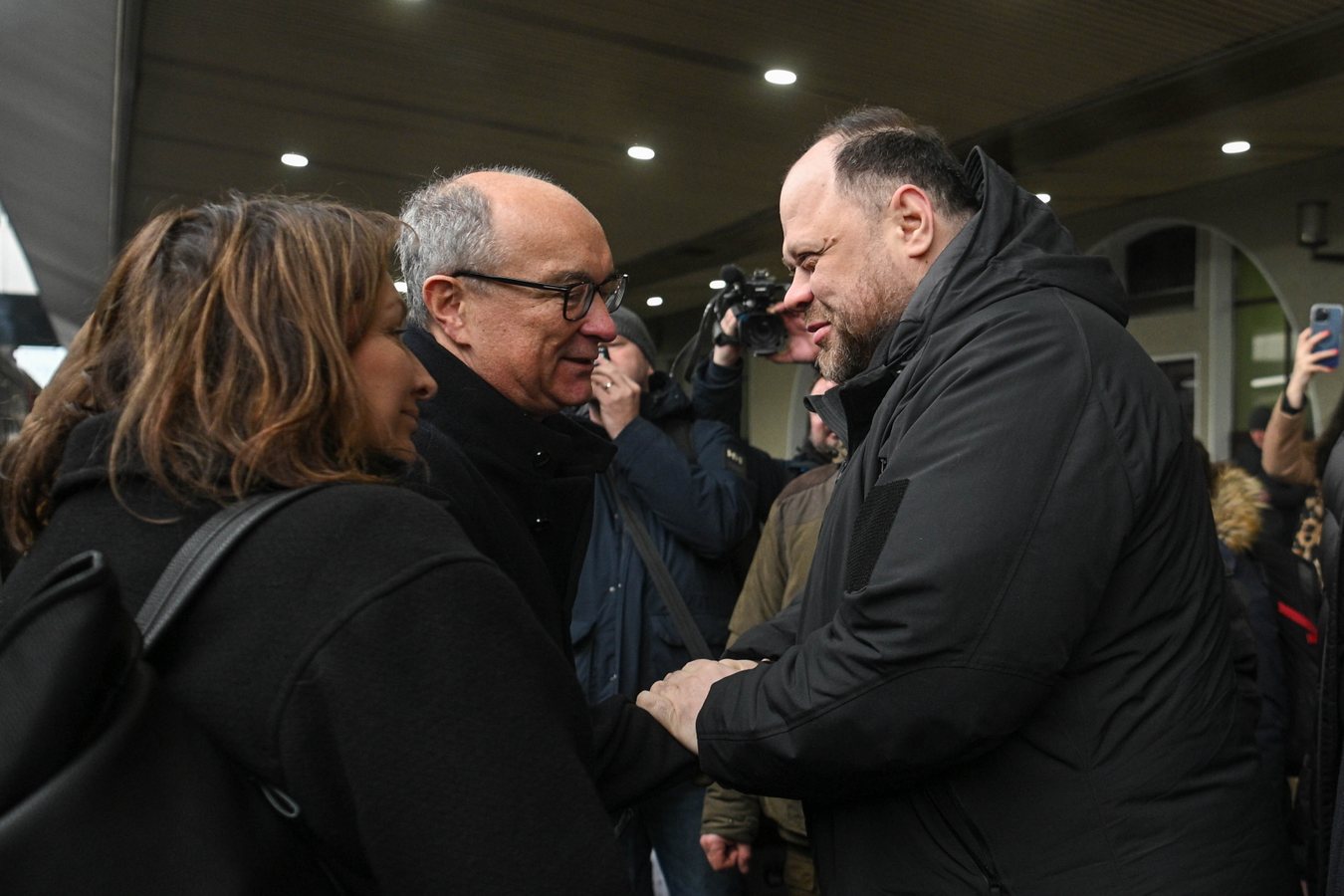
On August 10, Sejm Speaker Włodzimierz Czarzasty said after talks with Verkhovna Rada Chairman Ruslan Stefanchuk that Ukraine’s accession would require a broader reckoning with its history. In that context he said genocide must be called genocide, referring to Poland’s official characterization of the Volhynia killings. At the same time, he reiterated that he supports Ukraine joining the EU.
That is not the same as a new accession criterion. The EU’s formal membership requirements remain centered on democratic institutions, the rule of law, human rights, a functioning market economy and the ability to implement EU law. Ukraine’s negotiations are active: two of six clusters had been opened by July 14, covering fundamentals and external relations.
The reason Czarzasty’s demand still matters is institutional. EU membership requires unanimous approval by the member states. A bilateral historical dispute does not have to appear in the Copenhagen criteria to affect a national government’s willingness to consent. In practical terms, Poland can turn an issue of memory into a negotiating variable even if Brussels never labels it a separate legal benchmark.
Polish domestic politics makes that possibility more credible. On July 17, the Sejm adopted a resolution by 441 votes to zero commemorating victims of crimes by Ukrainian nationalists and using the term genocide. No member voted against it or abstained. A separate parliamentary initiative explicitly opposing Ukrainian EU membership over the glorification of Volhynia perpetrators was sent to committee.
That does not mean every Polish institution is demanding an immediate blockade. Czarzasty himself illustrates the tension. In February, he and Stefanchuk signed a declaration of parliamentary support for Ukraine’s EU membership. In June, he described that membership as a vital Polish interest and argued that Poland and Ukraine should avoid escalating historical disputes.
His August position can therefore be read as a shift from unconditional strategic support toward conditional strategic support. Poland still wants Ukraine anchored in the EU, but its leading politicians increasingly say that the historical relationship has to be addressed along the way.
Ukraine is not doing nothing on the historical file. The Ukrainian Institute of National Memory announced exhumation-related work in Ostrivky and Volia Ostrovetska in Volyn during July and early August. After the Polish Sejm’s July resolution, Ukraine’s Foreign Ministry, according to European Pravda, emphasized that Ukrainian and Polish officials had jointly honored innocent victims from both communities.
These steps matter because the conflict has both symbolic and material dimensions. One dispute concerns the terminology used to describe the violence of 1943–44 and the legacy of nationalist organizations. Another concerns access to burial sites, searches, exhumations and reburials. Progress on the second track can create evidence and trust even when the first remains politically difficult.
Czarzasty also framed the current crisis as a problem of social relations. He warned that trust between Poles and Ukrainians had eroded, condemned mistreatment in both directions and called for a permanent communication channel between the two parliaments. His message was therefore not simply punitive: historical recognition and renewed cooperation were presented together.
For readers trying to understand what happens next, the key question is not whether Ukraine has suddenly failed a new EU test. It has not. The key question is whether Warsaw will attach concrete historical demands to future unanimous decisions in the accession process.
That makes Volhynia a political risk to the timetable rather than a formal legal barrier today. Ukraine’s reform performance will still determine much of the negotiations, but the process is not technocratic. National governments retain power, and the Polish-Ukrainian relationship has now become one of the variables that can influence how quickly technical progress translates into political consent.
67