
Memorandum
- From
- Derek Weston
- Date
- Filed
- Politics·6 min to read
- Re
What Paul Biya’s two-month absence says about Cameroon’s political system
ReWhat Paul Biya’s two-month absence says about Cameroon’s political system
The 93-year-old president is in Geneva and officials say he remains at work. The deeper issue is a succession system that has a newly restored vice presidency but no vice president.
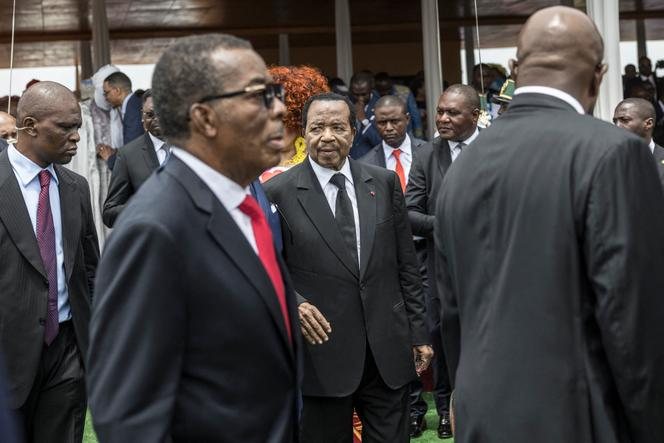
The essential fact in Cameroon’s latest political controversy is straightforward: President Paul Biya left Yaounde on June 7 and has remained abroad for more than two months. His office described the trip at the time as a “brief private stay in Europe.” The government later confirmed that the 93-year-old leader is in Geneva, Switzerland. It has not announced a date for his return, and there has been no independently confirmed public appearance by Biya since he left.
What matters is not simply the length of a presidential trip. The episode connects three structural questions that Cameroon has postponed for years: how much of the state depends on one leader, what happens when that leader is physically absent, and whether the country has a credible succession mechanism. Biya has governed since 1982, making him the world’s oldest sitting president and one of the longest-serving national leaders anywhere.
First, the government says continuity is intact. Communications Minister Rene Emmanuel Sadi has said Biya is in good health and working from Geneva. Other officials have said documents continue to be sent to the president. In early August, Biya changed the leadership of four of Cameroon’s five joint military regions and promoted senior officers. Those actions demonstrate that presidential authority is still being exercised, at least formally, while he is outside the country.
Second, the public information environment is unusually thin. Reports alleging that Biya was hospitalized or underwent medical treatment in Switzerland have circulated, but Cameroon’s government formally denied the hospitalization claims. His civil-cabinet director told Le Monde that the president had not been hospitalized or operated on and was working from his hotel. Without independent medical evidence, claims about treatment remain disputed. They cannot responsibly be used to declare the president incapacitated.
Third, Cameroon’s constitutional structure leaves room for ambiguity. The constitution does not set a specific maximum period for a president to remain abroad. In April 2026, a vice-presidential office was restored as part of constitutional changes, potentially creating a clearer mechanism for succession if the president cannot serve. Yet Biya has not appointed anyone to that job. The institution exists on paper, but the chair is empty.
That gap explains why opposition parties have focused on the language of an “institutional vacuum,” “remote control” and a country on “autopilot.” These are partisan descriptions rather than legal determinations. Still, they identify a genuine governance question: a constitutional system can function through signatures and delegated administration while remaining vulnerable if nobody knows who has undisputed authority in an emergency.
The problem is magnified by Biya’s political history. He took power in 1982. A constitutional amendment in 2008 removed presidential term limits. Late in 2025 he began an eighth term after an election whose result was contested by opposition groups. Cameroon therefore has little recent experience with an actual transition at the top. Stability has largely meant continuity under the same president rather than repeated, tested transfers of executive power.
The demographic context points in the opposite direction. More than 70% of Cameroon’s population of nearly 30 million is under 35. Most citizens have never lived under another president. Younger Cameroonians face economic stagnation, unemployment and weak infrastructure, while the country also confronts Boko Haram violence in the north and an English-speaking separatist conflict in the west. These are challenges that demand predictable institutions regardless of a leader’s location or health.
There is an important distinction between governance capacity and political legitimacy. The military reshuffle shows that decisions can still move through the presidency from Geneva. It does not, by itself, answer whether the public has enough information about who is making those decisions, how they are reviewed and what would happen if Biya suddenly became unable to continue. The current absence has turned those previously abstract questions into practical ones.
So the useful way to read this story is not as a rumor-driven mystery about a missing president. Biya’s location is officially known. The unresolved issue is whether Cameroon has built institutions strong enough to make a leader’s prolonged absence routine rather than destabilizing. A filled vice presidency, clearer procedures and more regular public communication could reduce that uncertainty. Until then, every additional week in Geneva will continue to test a political system designed around a president who has been at its center for more than four decades.
63