
Memorandum
- From
- Connor Quincy via FOX News
- Date
- Filed
- Politics·5 min to read
- Re
US and Venezuela interim government sign oil partnership covering 65 billion barrels
ReUS and Venezuela interim government sign oil partnership covering 65 billion barrels
The United States and Venezuela's interim government have reached a major oil agreement covering 17 strategic fields with more than 65 billion barrels of reserves, a production target above 1.5 million barrels per day, and over $100 billion in private investment, according to officials.
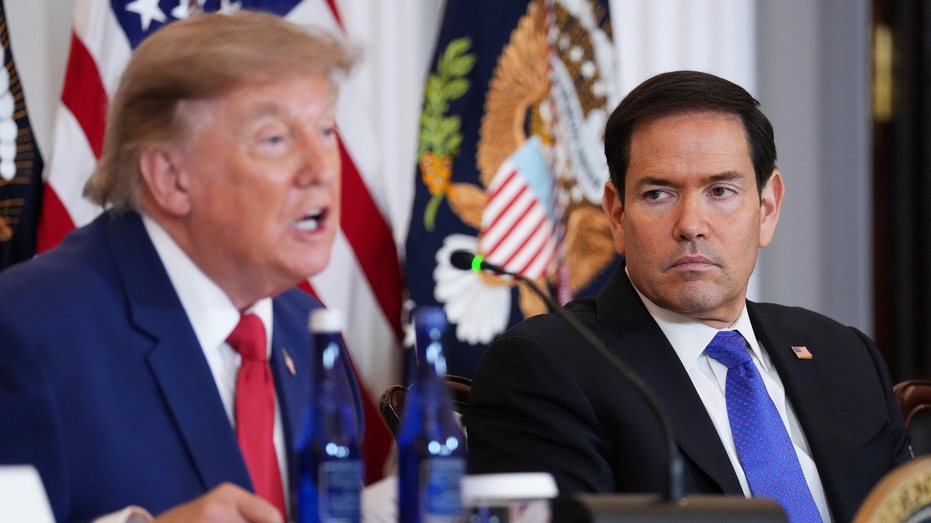
The United States has reached a sweeping oil partnership with Venezuela's interim government, a deal that officials say gives Washington a secured interest in the resource that once financed communist expansion across Latin America. President Trump announced the agreement last week after negotiations led by Secretary of State Marco Rubio and Secretary of War Pete Hegseth.
Interim President Delcy Rodríguez confirmed the core terms: 17 strategic fields holding more than 65 billion barrels of oil, a production target above 1.5 million barrels a day, more than $100 billion in private investment, and substantial fiscal flows to Venezuela. Whether the final arrangement grants the United States a generational or century-scale stake, the strategic meaning is the same, according to administration supporters.
The agreement comes after the capture of Nicolás Maduro in January and represents a shift from decades of failed engagement with the socialist regime. For more than 25 years, Venezuela was effectively captured by Cuban communist intelligence services, with Russian arms and Chinese loans stripping the country of sovereignty while the Chávez–Maduro regime looted state resources, wrecked the currency, and filled prisons with political opponents.
Critics have attacked the deal from multiple directions. Left-leaning observers call it colonialism, hard-line Chavistas call it betrayal, and parts of the opposition say it is illegitimate because an interim government signed it. Democratic Socialists who treated Maduro as a diplomatic inconvenience have suddenly discovered constitutional concerns about hydrocarbon agreements, supporters of the deal note.
Administration officials argue that a vacuum in Venezuela would not be filled by democratic forces but by Cuban, Russian, and Chinese intelligence agencies, along with criminal networks such as the Tren de Aragua that grew under the socialist regime and extended throughout the Western Hemisphere. That axis produced torture chambers, a refugee crisis, and political prisons, they say.
A long-term American commercial stake, backed by U.S. security interests, is described as insurance against a second communist capture. It raises the cost of any future attempt to re-nationalize the industry overnight and resume shipping crude to Cuba in exchange for rebuilding the repressive apparatus. American companies originally built much of Venezuela's oil industry in the twentieth century before Chávez confiscated it.
Secretary Rubio has stated clearly that the United States will not occupy Venezuela but will use leverage instead. The plan has three overlapping phases: stabilization to prevent the country from collapsing into war, recovery so Western firms can enter on fair terms and rebuild the wrecked industry, and transition so Venezuelans recover a government that is representative and no longer an outpost of the Castro regime.
Early results on the ground include Maduro's departure, oil sales being pulled toward market terms instead of discounted rates for U.S. adversaries, and the release of hundreds of political prisoners, a feat that years of diplomatic engagement failed to accomplish. An amnesty process now exists to rebuild a nation fractured by socialist dictatorship.
The oil agreement is described as a foundation rather than a finish line. Every remaining political prisoner must be released, as human-rights groups still count hundreds behind bars. Venezuela should also complete the dollarization that its citizens are vocally calling for, since Venezuelans abandoned the Bolívar because socialism destroyed it. Formal dollarization would lock in stability, invite diaspora capital home, and make it harder for a future government to finance repression. Oil proceeds must be fenced off from the old patronage machine and audited, and stabilization cannot become a permanent excuse for delaying an electoral calendar and independent courts.
287