Memorandum
- From
- Derek Weston via FOX News
- Date
- Filed
- Politics·7 min to read
- Re
Two Special Elections Test Party Coalitions in Georgia and South Dakota
ReTwo Special Elections Test Party Coalitions in Georgia and South Dakota
Tuesday's elections in Georgia and South Dakota test Republican and Democratic coalitions with a special House race and a gubernatorial runoff.
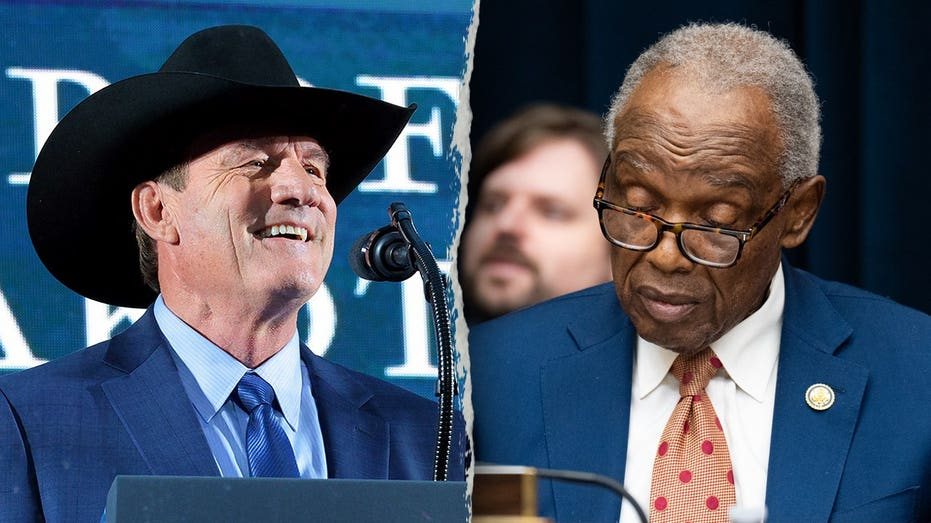
Two elections taking place Tuesday in vastly different parts of the country are testing the durability of both Republican and Democratic coalitions, offering a rare split-screen view of American political dynamics. In Georgia, a special election will fill the seat left vacant by the death of longtime Democratic Representative David Scott, while in South Dakota, a gubernatorial runoff between incumbent Republican Larry Rhoden and outsider Toby Doeden will determine the party's nominee for the state's top office. These races come at a time when both parties are grappling with internal divisions and demographic shifts, making the outcomes closely watched by political strategists nationwide.
The Georgia race centers on the 13th Congressional District, a heavily Democratic area covering Atlanta's southern and eastern suburbs including Stockbridge, Conyers, and Snellville. Scott died in April at age 80 after serving 12 terms in the House. His passing set off a competitive primary that includes his daughter, who is running to continue his legacy, along with former Gwinnett County school board member Everton Blair and former Mississippi judge Carlos Moore. Scott was notably related by marriage to Braves slugger Hank Aaron. The winner of Tuesday's contest will serve out the remainder of Scott's term, with the general election already decided in favor of a Democrat for the November ballot. Blair, a millennial candidate, framed his campaign as a call for renewal, arguing that older lawmakers have not kept pace with the needs of their constituents. He pointed to a past confrontation with Scott at a Gwinnett County town hall as a catalyst for his bid. According to reports, Blair asked Scott about legislative strategy for safeguarding federal funds, and Scott responded with agitation, saying, «I don’t know who sent y’all, but we got these folks here who are providing answers. That’s what I’m doing.» That encounter prompted Blair to launch his primary bid. He also noted that two other elderly Democratic members had recently died in office «at a time when every vote counts.» This wave of millennial candidates seeking to replace aging Democrats was dubbed the «Biden effect» after President Joe Biden’s disastrous debate performance in 2024 led him to step aside. Scott's daughter, meanwhile, emphasized continuity, pledging to retain her father's staff and see through ongoing district projects. She told the Georgia Recorder that finishing out his year strongly and ensuring money reaches the district is her priority. Moore, who was previously suspended from the bench in Mississippi for mishandling a wrongful death settlement, positioned himself as a reformer willing to challenge the status quo, even comparing his legal troubles to Trump’s indictment.
The South Dakota governor's race presents a contrast. Rhoden became governor after President Donald Trump tapped former Governor Kristi Noem to serve as Homeland Security secretary in his second term. However, Rhoden failed to secure the Republican nomination outright in the June primary, forcing a runoff with Doeden, a self-made millionaire bitcoin investor. The runoff is seen as a classic establishment-versus-outsider battle. Rhoden holds a significant polling advantage, but Doeden surprised observers by finishing first in the June primary, fueled by strong support in Minnehaha County, home to Sioux Falls, and in Pennington County in the western part of the state. These counties will be key to watch on Tuesday. South Dakota has not elected a Democratic governor since the 1970s, making the general election heavily favorable to the Republican nominee. The last Democrat to hold the office was Harvey Wollman, who completed the final six months of Richard Kneip's term after Kneip was appointed ambassador by President Jimmy Carter.
These two races underscore the shifting ground within each party's coalition. In Georgia, the Democratic primary reflects a generational tension between long-serving incumbents and a younger wave of candidates. Scott's confrontational style had drawn criticism in recent years, including an incident last year when he shouted expletives at a Politico photographer as he was wheeled through the Capitol. «Who gave you the right to take my picture, a--hole,» Scott shouted at photographer Francis Chung in late 2025. That demeanor was similar to what led Blair to enter the race. In South Dakota, the Republican runoff highlights ideological divisions within a reliably red state. Doeden's pitch as an outsider with a business background has resonated with a segment of the electorate, but Rhoden's establishment credentials and incumbency give him a clear advantage. The race also tests the influence of Trump’s endorsement, as Rhoden is seen as the establishment figure while Doeden appeals to populist and libertarian-leaning voters.
Both contests carry implications beyond their immediate outcomes. In Georgia, the winner of the special election will serve for the remainder of the year, but the seat is expected to stay in Democratic hands regardless. In South Dakota, the runoff winner will become the heavy favorite to win the governorship in November. The results Tuesday will provide early signals about the strength of each party's organizational and electoral machinery heading into the 2026 midterm elections. Voter turnout and the performance of different factions within each party will be closely analyzed as both Democrats and Republicans seek to build momentum for the next cycle.
74