
Memorandum
- From
- Derek Weston via FOX News
- Date
- Filed
- Politics·5 min to read
- Re
Trump puts 2026 election officials on notice, but needs clear agenda, analyst says
ReTrump puts 2026 election officials on notice, but needs clear agenda, analyst says
President Donald Trump's recent White House address warned against foreign election interference and put officials on notice for the 2026 midterms, but political analyst Doug Schoen argues the president still needs a clear agenda to address voter concerns and unite Republicans.
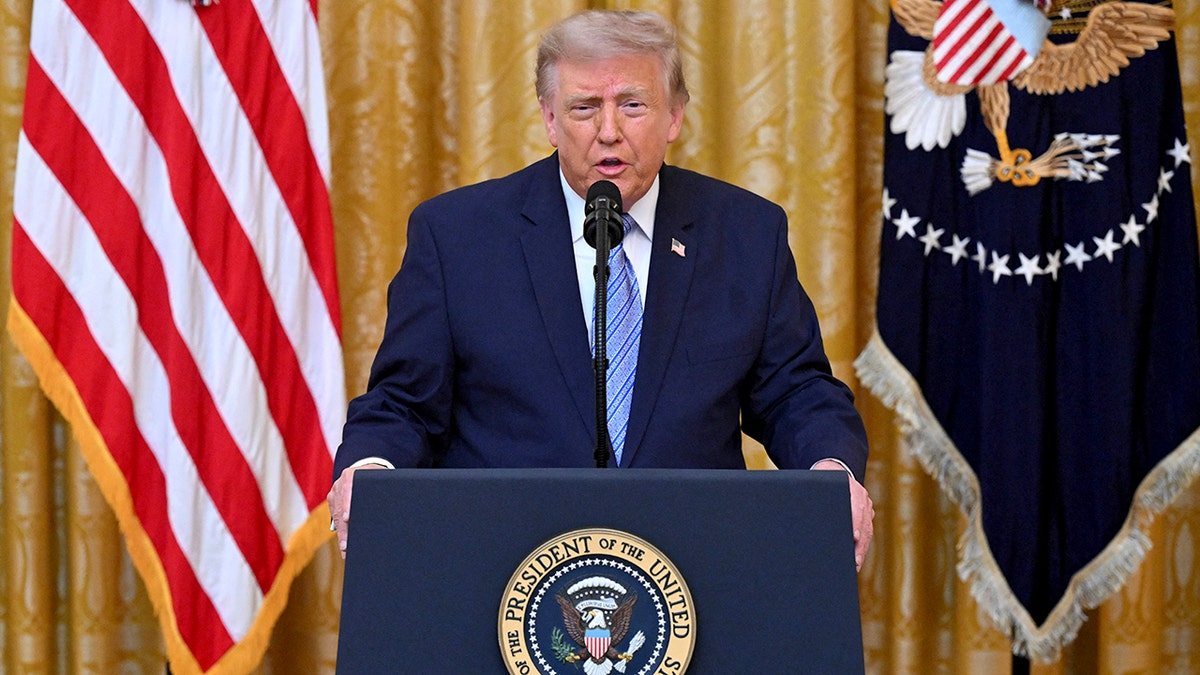
President Donald Trump used his recent White House address to sound the alarm on foreign interference in U.S. elections, singling out Russia, China, Iran and North Korea as potential threats to the integrity of the electoral process. Political analyst Doug Schoen, writing in an opinion piece, emphasized that the president's warning should extend globally, as any foreign attempt to influence or intrude upon elections undermines a process that must remain sacrosanct. Schoen argued that law enforcement and both chambers of Congress must follow up on these allegations, particularly those concerning the People's Republic of China, to ensure that malign actors are held accountable.
While Trump's speech highlighted economic growth, lower inflation and record-high stock markets, Schoen noted that the address did not provide a sustained policy argument aimed at influencing the outcome of the 2026 midterm elections. The president did not present clear evidence that the war in Iran would end soon or offer a detailed plan to address affordability, a key concern for many American voters. Instead, Trump put election officials across the country on notice that the 2026 midterms would face close scrutiny and that he would personally hold them accountable for any irregularities.
Schoen, a Democratic strategist, pointed out that the challenge for Trump now is to develop a compelling narrative for the midterms that underscores Republican successes both domestically and internationally. This narrative should argue that the Democratic Party, particularly its socialist wing, is unable to meaningfully improve American life. However, Schoen acknowledged that Republicans have yet to offer a clear, affirmative agenda of their own, leaving a policy vacuum that could be exploited by either party.
The analyst also highlighted a profound crisis of confidence in the U.S. system of government, noting that voters in both parties have less trust in their leaders and in the ability of the government to address pressing societal problems. Schoen called on Trump and congressional leaders to work on a bipartisan basis to tackle affordability, overseas challenges and the nation's role as a beacon of freedom and liberty. He expressed hope that the next five months would bring competing agendas from both parties, as well as greater bipartisanship in Congress, but he admitted he would not bet on it.
Meanwhile, the Democratic Party remains divided and polarized, without an affirmative agenda of its own, according to Schoen. This internal strife could complicate the party's efforts to mount a unified challenge to Trump and the Republicans in the 2026 midterms. The analyst warned that if both parties fail to present clear policy platforms, voters may become even more disillusioned with the political process, further eroding confidence in democratic institutions.
Trump's address also touched on allegations that the intelligence community bragged about hiding Chinese meddling in U.S. elections, a claim that has sparked debate about transparency and accountability within the government. Schoen argued that the issue is not only whether foreign actors were able to rig the outcome of an election, but also whether they attempted to influence a process that must remain free from outside interference. He urged law enforcement and Congress to investigate these allegations thoroughly to restore public trust.
As the 2026 midterms approach, the political landscape remains uncertain. Trump's ability to rally his base and present a clear agenda will be crucial for Republican success, while Democrats must overcome internal divisions to offer a credible alternative. Schoen's analysis underscores the need for both parties to move beyond rhetoric and develop substantive policies that address the concerns of ordinary Americans, from affordability to national security. Without such efforts, the crisis of confidence in American governance is likely to deepen, with potentially far-reaching consequences for the country's democratic future.
69