Memorandum
- From
- Caroline Mercer via Fortune | FORTUNE
- Date
- Filed
- Politics·4 min to read
- Re
Trump Officials Escalate Attacks on Effective Altruism Over AI Policy
ReTrump Officials Escalate Attacks on Effective Altruism Over AI Policy
A coordinated campaign by Trump administration officials targets Effective Altruism, the philosophical movement whose adherents dominate AI safety research, as the White House pushes to block AI regulation and maintain American technological dominance.
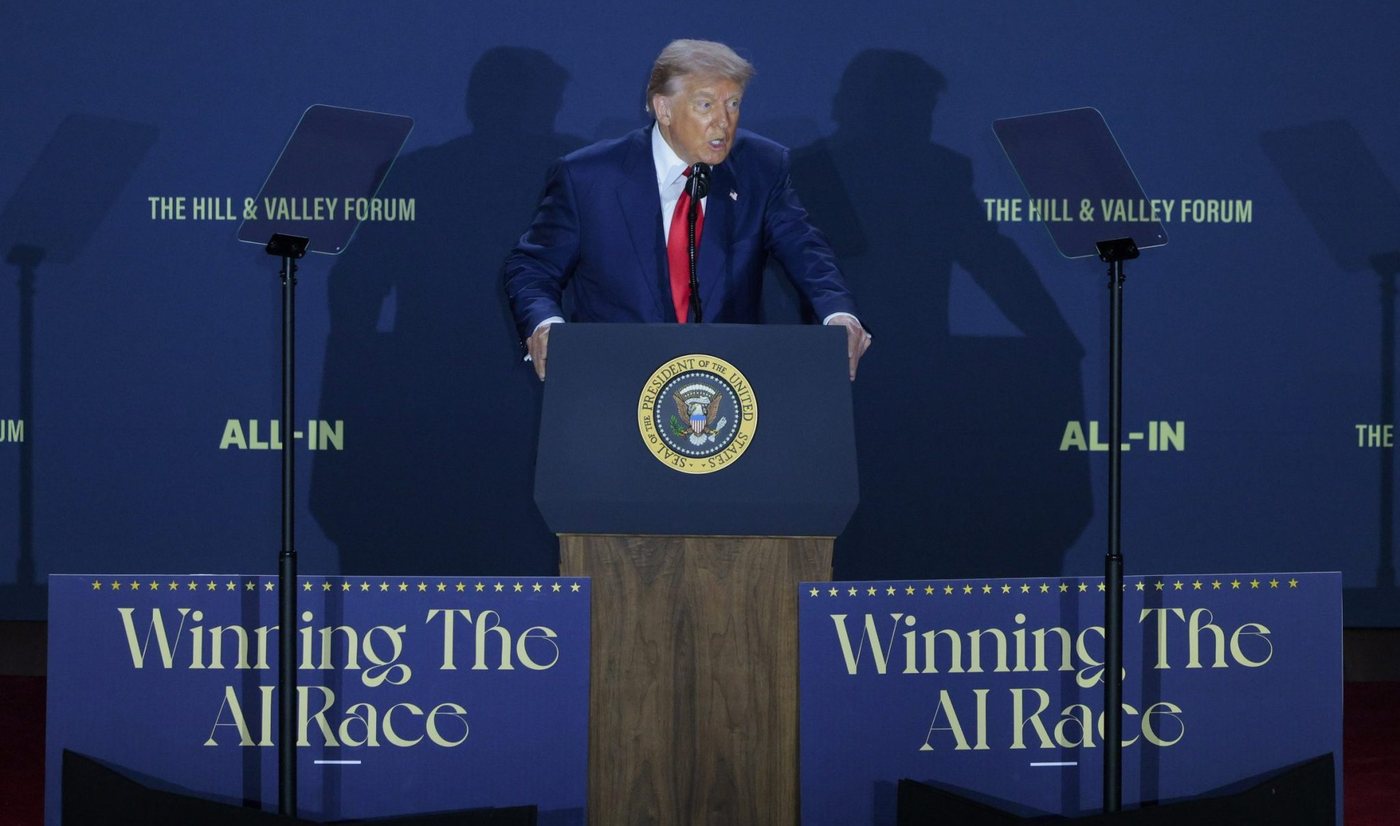
A chorus of Trump administration officials has launched a coordinated attack on Effective Altruism, the philosophical movement whose adherents occupy key roles at the world's leading artificial intelligence companies, as the White House escalates its push to keep AI regulation off the table.
The Department of War declared in mid-September that «Americanism, not effective altruism» would guide U.S. policy, adding that «The United States will continue to be AI DOMINANT.» Defense Secretary Pete Hegseth accused Effective Altruism of using «sanctimonious rhetoric» to «strong arm the United States military into submission.» Emil Michael, the Pentagon's Under Secretary of Defense for Research and Engineering, called the movement's ideology «dangerous» and «pretty dystopian.»
At the center of the conflict is a fundamental disagreement about how to treat the risk that advanced AI systems could escape human control. Many Effective Altruism adherents work on AI safety at OpenAI, Anthropic, and Google DeepMind because they believe advanced systems could destroy humanity unless researchers find ways to keep them obedient to human instructions and values. That conviction, often branded «AI doomerism,» has put the movement directly at odds with an administration racing to avoid any slowdown in AI development over fears of ceding ground to China and concerns that regulation could tank a stock market buoyed by AI-related shares.
Effective Altruism traces its origins to 2009, when Oxford philosophers Toby Ord and William MacAskill founded Giving What We Can, a pledge for members to donate at least 10% of their income to the most effective charities. The movement's core idea is that people should use rational processes to do the most good for the most people, treating charity and ethics like a math problem to determine which causes save the most lives per dollar spent. That analytical approach led to conclusions such as prioritizing developing-world interventions like anti-malarial bed nets over local charities in the U.S. or Europe, and viewing high-earning careers as philanthropically more powerful than direct volunteering.
The movement's demographics make it a textbook political target. According to a 2024 survey by the Effective Altruism Forum, its members are mostly left-leaning at 70%, male at 68.8%, white at 75%, and young, with an average age of 32.4 years. Some members have advocated for open borders and believe gender is a social construct, both of which have fueled inflammatory social media content aimed at discrediting the philosophy. Its highly educated membership makes it easy to caricature as an elitist and esoteric movement out of touch with reality.
For Trump and other opponents of regulation, attacking Effective Altruism through culture war rhetoric has become a way to discredit broader anxiety about AI risk before it hardens into legislation. But the strategy may be backfiring. Since the administration kicked off its anti-AI doomerism social media campaign, anti-AI sentiment appears to have grown. A recent Politico poll found that 63% of Americans believe AI poses at least a moderate risk of destroying humanity.
Some observers worry the attacks could rupture the political common ground that has quietly begun to form around AI rules. OpenAI's Sam Altman and Anthropic's Dario Amodei issued loud warnings about AI risk last week, but Trump quickly rejected the idea of an international slowdown. The question now is whether branding Effective Altruism an enemy of America will neutralize the movement or give it the biggest platform it has ever had.
2