Memorandum
- From
- Derek Weston
- Date
- Filed
- Politics·6 min to read
- Re
Stopping the Clock Change Does Not Settle America’s Time Debate
ReStopping the Clock Change Does Not Settle America’s Time Debate
The House has voted to end seasonal clock changes by choosing permanent daylight saving time. Sleep scientists prefer a different endpoint: permanent standard time. The Senate now faces the question hidden behind a popular slogan.
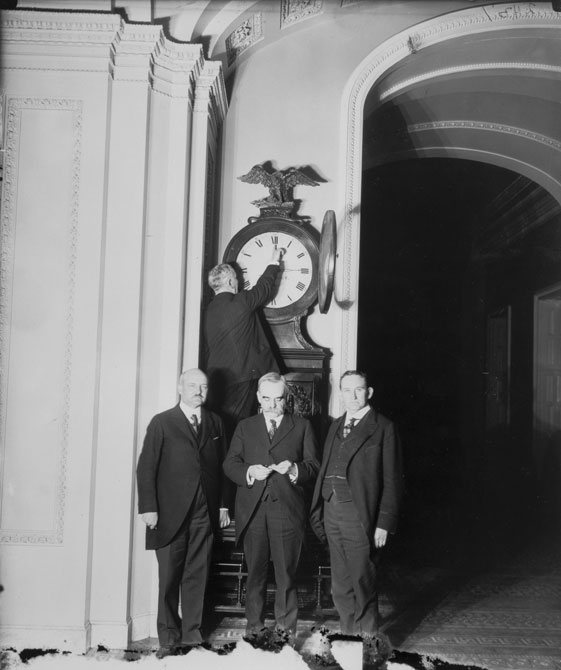
Americans may be closer than they have been in years to ending the ritual of changing the clocks twice annually. On July 14, the House of Representatives passed the Sunshine Protection Act by 308 votes to 117. The bill went to the Senate the next day.
That vote settled one political question in the House: a large bipartisan majority wanted to stop the seasonal switch. It did not settle the more consequential question of what should replace it.
The House bill chooses permanent daylight saving time for most of the country. In practical terms, the legal clock would stay one hour ahead of standard time through winter as well as summer. Evening light would arrive later by the clock, but winter mornings would also remain darker for longer.
A broader Science Official investigation into daylight saving time explains why this distinction matters. Stopping the clock changes is not a single policy. Permanent daylight saving time and permanent standard time solve the inconvenience of switching in opposite ways.
The popular part is ending the switch
The twice-yearly transition is easy to dislike. The spring change removes an hour from the social night. The autumn change alters schedules again. Phones and computers update automatically, but sleep, school routines and the human circadian system do not change with the same precision.
That creates an unusually broad coalition for reform. People can agree that moving clocks is disruptive without agreeing about whether mornings or evenings deserve the extra light.
The medical argument has become increasingly specific. The American Academy of Sleep Medicine recommends permanent standard time rather than permanent daylight saving time. Its position rests on light biology: morning light tends to move the circadian system earlier, while evening light tends to delay it. Standard time generally places daylight closer to the pattern the body uses to synchronize sleep and wakefulness.
This does not mean that every health claim made about daylight saving time is equally certain. The strongest evidence concerns acute disruption around the spring transition. A 2026 Australian study, for example, found later clock-time sleep schedules in daylight-saving states but did not find persistent reductions in self-reported sleep duration or daytime performance during the middle-to-late part of the daylight-saving period.
The important point for lawmakers is narrower. Ending the switch removes the acute transition. Choosing permanent daylight saving time creates a separate exposure: later winter morning light.
America has tried the winter-morning trade before
The United States has historical experience with extended year-round daylight saving time. During the 1970s energy crisis, Congress moved toward a longer continuous period of daylight saving in the hope of conserving energy.
The experiment quickly ran into the political reality of dark winter mornings. Congress restored several months of standard time after the first winter. Federal assessments found potential benefits, but energy and safety effects were modest or difficult to isolate from other changes occurring at the same time.
That episode does not mechanically predict what would happen now. Commuting patterns, lighting technology, air conditioning, remote work and school practices have all changed. It does show that a bright evening is not a free benefit. Civil time redistributes daylight rather than producing it.
The trade is visible in road-safety research as well. A 2016 study linked the spring transition to a short-run increase in fatal motor-vehicle crashes, with sleep deprivation as the main proposed mechanism. A 2025 study added a complication: after the spring change, fatal crashes involving motor-vehicle occupants increased while fatal pedestrian and bicyclist crashes fell. More evening light can improve visibility for some road users even as sleep loss raises other risks.
The Senate now has to choose a clock, not just abolish a ritual
The House vote gives the Senate a politically attractive proposition: stop making people change their clocks. But the legislation also embeds a permanent choice about the timing of daylight.
Permanent daylight saving time favors later clock sunsets and the social value of evening light. Permanent standard time favors earlier morning light and the alignment preferred by major sleep-medicine organizations. Keeping the current system preserves both summer evenings and winter morning light, but retains the biological and logistical shock of switching.
No clock can maximize all three.
That is why the next stage of the debate is harder than the slogan that brought it this far. If the Senate advances the bill, it will not merely decide whether Americans should stop changing clocks. It will decide which part of the day should permanently carry the cost.
59