Memorandum
- From
- Derek Weston via FOX News
- Date
- Filed
- Politics·6 min to read
- Re
Sondland backs Trump's Iran policy shift targeting allied trade
ReSondland backs Trump's Iran policy shift targeting allied trade
Former ambassador Gordon Sondland argues President Trump's new Iran strategy correctly pressures allies to choose between business with Tehran and access to American markets, calling the UAE's suspension of Iranian trade a model for broader enforcement.
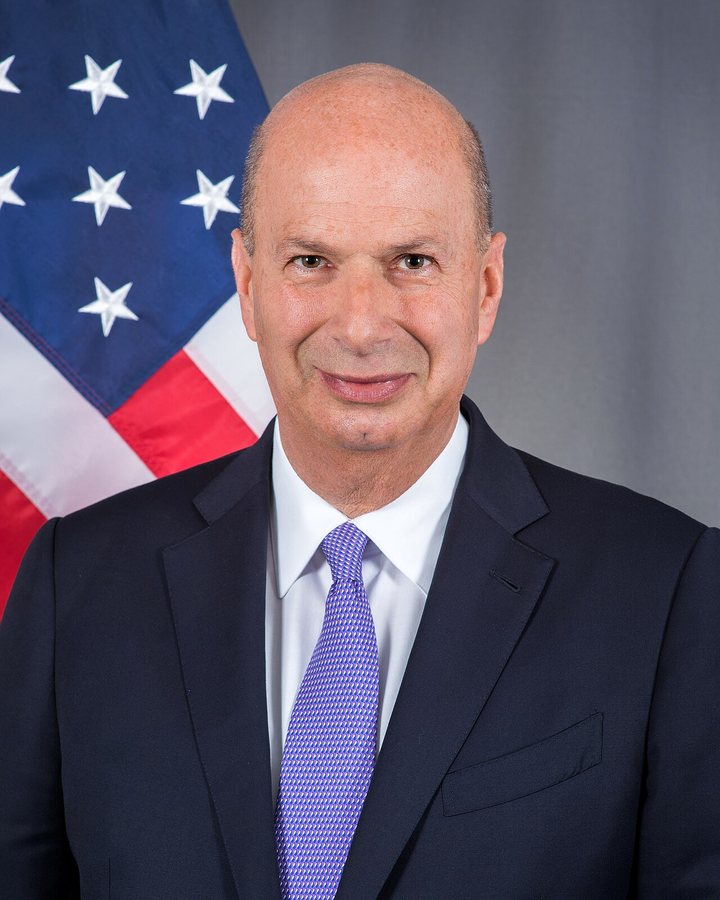
Former U.S. Ambassador to the European Union Gordon Sondland is defending President Donald Trump's renewed pressure campaign against Iran, arguing that the administration is finally forcing allies to choose between doing business with Tehran and enjoying the benefits of the American economy. In a new opinion piece, Sondland describes the approach as an "Economic D-Day" that targets not just Iranian officials but the foreign countries, banks, refiners, shipping companies, and middlemen that keep the regime financially afloat.
Sondland, who served as ambassador to the EU during Trump's first term, says European governments spent years avoiding serious sanctions enforcement while maintaining commercial ties with Iran. He recalls watching allies twist themselves into "diplomatic, legal and moral contortions" to avoid cutting off Tehran, citing energy contracts, corporate interests, and a desire to preserve diplomatic channels as reasons for their reluctance. According to Sondland, Europe claimed commerce created leverage over Iran, but in practice Tehran received the money while rarely facing consequences.
The former ambassador argues that Iran used those funds to finance proxies, expand its missile program, oppress its population, and advance its nuclear capabilities. When crises erupted, he says, European allies looked to Washington to solve them. That arrangement, he writes, allowed allies to profit while America bore the burden of containing Iran.
Sondland points to the United Arab Emirates' recent decision to suspend trade and financial transactions with Iran as a significant development. Dubai, he notes, has served as more than just a trading partner; it has been a gateway for re-exports, currency conversion, trade finance, shell companies, and goods that sanctions were designed to keep out of Tehran's reach. Closing that door will hurt, he acknowledges, but he insists the UAE must become the model for other nations rather than an exception.
The former ambassador calls on Trump to press allied leaders directly on whether they are prepared to close their own commercial and financial channels with Iran. He emphasizes that the request is not for military action or troops, but for cooperation in choking off the economic lifelines of what he calls the "axis of evil." Sondland argues that countries benefiting from American security guarantees, favorable trade deals, and access to the world's most valuable economy have obligations in return.
He proposes concrete consequences for non-cooperation, including inferior trade terms, tighter visa restrictions, and greater scrutiny of financial institutions. Companies that knowingly facilitate Iranian trade, he suggests, should lose access to American government contracts, capital markets, and banking relationships. His message is straightforward: if allies help keep Iran open for business, America should become less open for business to them.
Sondland also recommends a transparency mechanism, calling on Congress to create a bipartisan "Naughty and Nice List" that identifies countries, banks, refiners, shippers, insurers, and intermediaries either helping isolate Iran or helping it evade pressure. The "nice" list would recognize those shutting down Iranian accounts, stopping oil purchases, exposing front companies, and enforcing sanctions honestly. The "naughty" list would name those moving Iranian money, disguising cargo, processing oil sales, or supplying dual-use technology. He suggests updating the list monthly and reading names publicly to create accountability.
While acknowledging the approach may seem theatrical, Sondland argues that attention creates accountability. He says governments and companies rely on complexity, deniability, and public boredom to maintain relationships they would rather not defend. Dragging those relationships into the daylight, he writes, imposes a reputational cost alongside the economic one.
Sondland singles out Europe for particular criticism, arguing that continued engagement with Tehran is not a neutral act. Money is fungible, he notes, and every commercial relationship providing Iran with hard currency strengthens its ability to finance the Islamic Revolutionary Guard Corps, missiles, and proxy warfare. He applies the same standard to Asian energy buyers, flag registries, ports, insurers, and banks, saying those who facilitate Iranian trade are part of Iran's economic infrastructure.
The former ambassador identifies China as the ultimate test, arguing that Beijing cannot receive the full benefits of access to American consumers and capital while providing economic support to Iran. His broader argument is that the United States should no longer allow allies to enjoy the benefits of American partnership while simultaneously financing a regime that threatens international security.
48