Memorandum
- From
- Delaney Sawyer via Fortune | FORTUNE
- Date
- Filed
- Business·5 min to read
- Re
AI Value in Big Companies Hinges on People, Not Technology
ReAI Value in Big Companies Hinges on People, Not Technology
At Fortune's inaugural AIQ Summit, executives and futurists agreed that upskilling employees and fostering adaptability matter more than the technology itself for successful AI adoption.
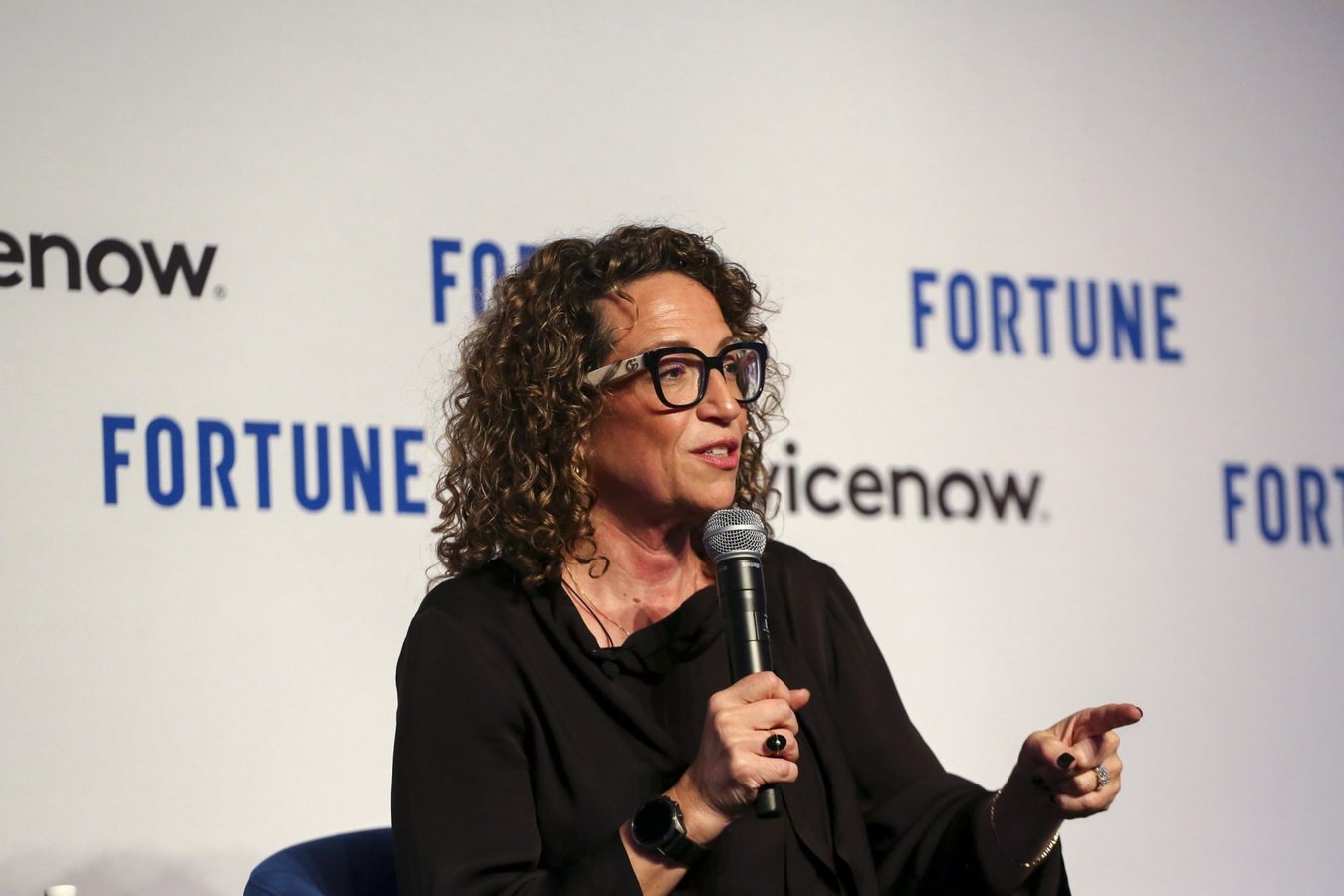
Companies that lead in artificial intelligence adoption are distinguished less by their technology stacks than by their investment in people, according to discussions at Fortune's inaugural AIQ Summit held at the New York Stock Exchange. The event, focused on how Fortune 500 companies are implementing AI at scale, surfaced a consistent theme: human factors are the decisive variable in whether AI initiatives deliver value.
Data from ServiceNow's Enterprise AI Maturity Index, which partly informs Fortune's AIQ List methodology, shows a stark divide between top-performing companies and the rest. Among so-called Pacesetters—those scoring in the top fifth of all companies on the index—57% are investing in upskilling their employees on AI, compared to just 4% of companies outside that bracket. The gap widens on talent strategy: 68% of Pacesetters have plans to attract, hire, and retain AI talent, while only 10% of other companies do. Pacesetters also stand out for developing long-term HR strategies specifically to support their AI goals and for conducting comprehensive assessments of AI skills across their organizations.
Diana David, a forward-deployed futurist at ServiceNow, shared these findings at the summit, underscoring that the most striking differentiator between leaders and laggards is not technological but human. Futurist Amy Webb echoed that view, arguing that many large companies complain about a lack of enterprise-wide AI value because they fail to train employees on how to use the technology effectively. She described a pattern of «learned helplessness» in large organizations, comparing it to taxi drivers who have become so reliant on GPS that they can no longer type an address into their phones.
Drew Holler, chief human resources officer at homebuilder Lennar, told Fortune editor-in-chief Alyson Shontell that employees must also take responsibility for their own development. «We're going to give you all the tools, but it's your responsibility to upskill yourself as well,» he said. «We're going to give you trainings, but you, as an individual, have to upskill.»
Beyond upskilling, speakers emphasized that adaptability may matter more than deep AI expertise. Webb noted that success is not about being «AI native» but about being flexible, and that any company can become more flexible if it builds the right mechanisms. Danielle Gonzalez, chief people officer at cybersecurity firm Palo Alto Networks, said the company looks for «agency» in candidates—people who can learn quickly and also unlearn assumptions to make room for new approaches. Palo Alto Networks now uses «observable interviews» and hackathons to assess how candidates solve problems firsthand, rather than relying on static interviews where applicants simply recount past accomplishments.
Notably, governance concerns took a back seat to deployment strategies at the summit, even amid recent news of «rogue AI» incidents. Webb observed a significant disconnect between CEOs and their boards on one side and chief information security officers and chief risk officers on the other, with the latter often blocking AI implementation out of a desire for safety and stability. She said these executives deserve a seat at the table when shaping AI strategy, but they need to «stop saying 'no' before they say 'tell me more.'» She added that they require the right incentives to ensure they do not become obstacles to AI adoption.
Another takeaway from the summit was that earlier fears of a «SaaSpocalypse»—the idea that AI-native companies would abandon traditional software-as-a-service vendors—appear overblown. Michelle Kwon, chief operating officer at AI startup Runway, said on stage that despite being as AI-native as possible and using AI extensively for coding and other work, the company still purchases plenty of off-the-shelf software from established SaaS providers. «We are not going to build our own payment system,» she said. «That probably is not the best use of our time. There are some fantastic payment processors and fintech companies we work with on that side.»
The consensus from the summit suggests that for large enterprises, extracting value from AI is less about chasing the latest model and more about cultivating a workforce that can adapt, learn, and integrate the technology into daily operations. Companies that pair AI tools with robust training and a culture of flexibility are pulling ahead, while those that neglect the human dimension risk falling further behind.
4