
Memorandum
- From
- Connor Quincy via Fortune | FORTUNE
- Date
- Filed
- Politics·6 min to read
- Re
SNAP enrollment drops 13% in a year as new work rules and paperwork take effect
ReSNAP enrollment drops 13% in a year as new work rules and paperwork take effect
Enrollment in the Supplemental Nutrition Assistance Program fell from 42.2 million to 36.6 million over 12 months, a decline far steeper than federal forecasts, as expanded work requirements and stricter documentation demands push people off the rolls.
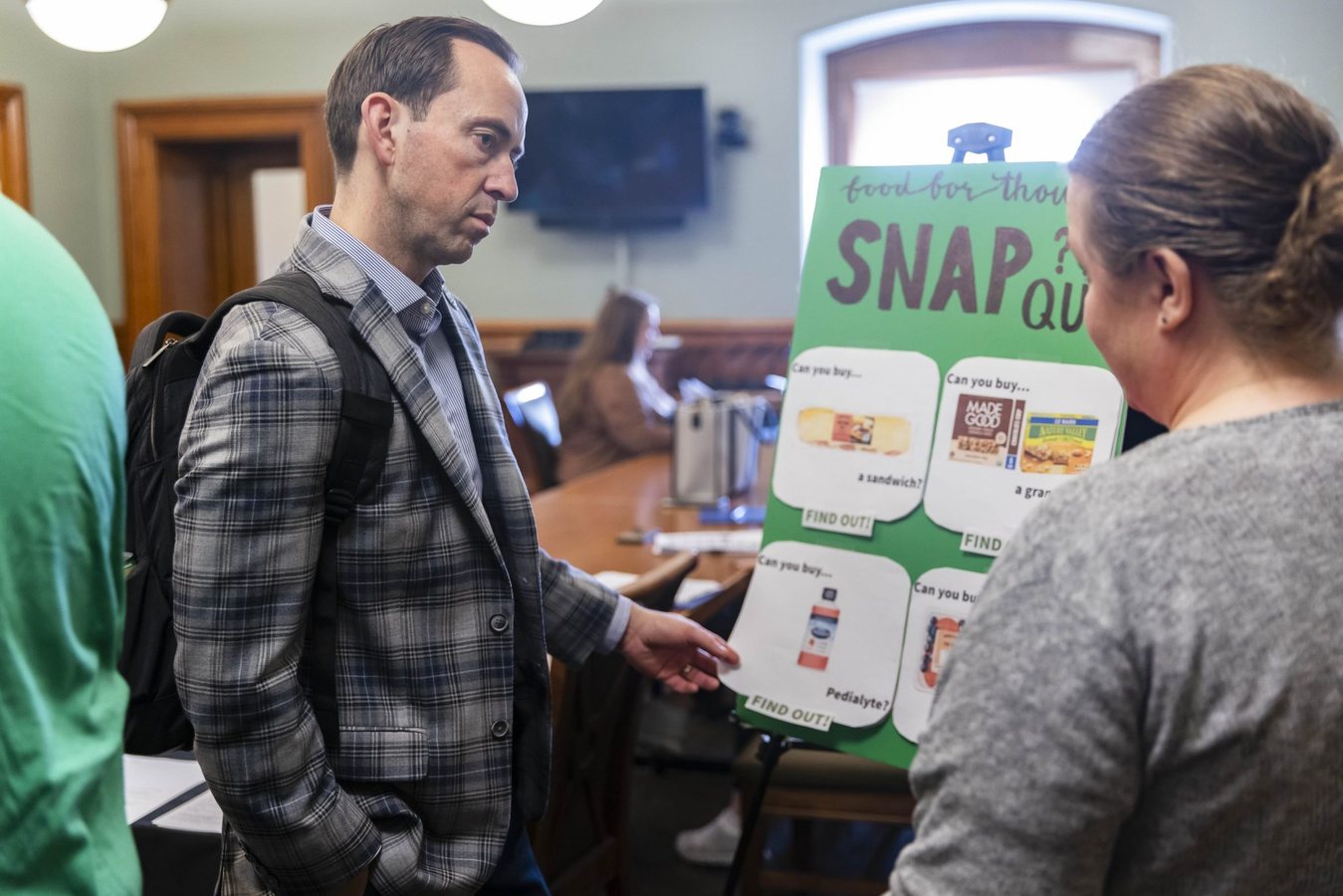
Enrollment in the Supplemental Nutrition Assistance Program, the largest federally funded food aid program in the United States, fell by more than 13 percent over a 12-month period — a decline far steeper than government estimates as expanded work requirements and new paperwork demands from President Donald Trump's recent legislation take hold across the country.
Newly released federal data shows SNAP enrollment dropped from 42.2 million beneficiaries in May 2025 to 36.6 million in May 2026. The May figures are preliminary and could be revised. Since 2010, average monthly enrollment has dipped below 40 million only twice — in 2019 and 2020. The rolls peaked at 43.3 million in October 2024 and have fallen much faster since implementation began last year for the tax and safety net overhaul known as the "one big beautiful bill."
The decline includes people who no longer meet tightened eligibility requirements, but advocates say it also includes people who qualify for help yet lose coverage because they miss deadlines or cannot produce required documentation on time. It remains unclear how many fall into each group, and some state agencies running the program say they are overwhelmed trying to keep up with the changes.
Tia Fields, who analyzes social safety net policies at the advocacy group Invest in Louisiana, said the main reason she sees people losing coverage is not failure to meet work requirements. "A lot of it is administrative paperwork," she said.
Proponents of welfare reform hope the reductions are driven by people earning too much to keep qualifying, a sign that the policy changes are working as intended for a program they argue is riddled with fraud. "If there are people that are leaving the welfare rolls because they're working and they're moving forward, that would be a step forward," said Rachel Sheffield, a research fellow at the conservative Heritage Foundation, which pushed for stricter SNAP requirements.
Arizona has seen the steepest decline so far, with a 12-month drop of more than 50 percent, according to data compiled by the U.S. Department of Agriculture, which administers SNAP. Enrollment fell by more than 20 percent in Georgia, Louisiana and Nevada. In Florida, the Department of Children and Families said in a statement that the decreasing number "is reflective of the state's strong focus on advancing opportunities for Floridians and their families to achieve economic self-sufficiency."
SNAP helps more than 1 in 10 people in the U.S. buy food, and most beneficiaries have incomes below the poverty line. The monthly benefit, delivered on debit cards usable only for groceries, averages $344 per household.
The expanded work requirement has now taken effect in most of the country, though some states will not begin enforcement until next year. Many adults 54 and younger without minor children have long been required to work to receive benefits. The new law extends that requirement to most people previously exempt, including those ages 55 to 64 and those with children ages 14 to 17. People 65 and older, those with children younger than 14, and those with health limitations remain exempt. Some groups that had been exempted, including homeless people, no longer are.
In February, the Congressional Budget Office projected that the new requirements and other factors would push SNAP enrollment below 34 million by 2036. But the nonpartisan office did not expect the drop to happen so quickly. By May, enrollment was already about as low as it was forecast to reach in 2030.
Experts expect another impact when states are required to pay part of the cost of benefits if their rate of payment errors — when recipients receive more or less than they should — exceeds 6 percent. Advocates say states may deny benefits to some people entirely rather than risk errors. The cost-sharing is scheduled to start in October 2027, though Congress has considered a delay.
In Arizona, enrollment plummeted by 55 percent from April 2025 to April 2026, the biggest drop in the country, with more than 400,000 fewer people receiving benefits. The state said the drop was driven largely by its own struggles implementing the new federal requirements. "Implementing the federally mandated changes triggered unprecedented call volumes and administrative hurdles, including additional verification requirements, creating real barriers for applicants," said Brett Bezio, a spokesman for the Arizona Department of Economic Security. Bezio said hiring more staff and introducing online document submission have stemmed the enrollment drop in recent months.
In Phoenix, LaDiamond Lopez lost her benefits in January after officials told her she needed more documentation about her income and household. She has been skipping meals and some bill payments to ensure her children have enough to eat. In her quest to be reinstated, she had previous employers sign forms confirming she no longer worked for them and added her children, ages 3 and 9, to her apartment lease. She expected payments to resume in August but does not know if they will last.
54