
Memorandum
- From
- Connor Quincy via FOX News
- Date
- Filed
- Politics·4 min to read
- Re
Senator Lindsey Graham Dies at 71, Leaving a Void in U.S. Foreign Policy
ReSenator Lindsey Graham Dies at 71, Leaving a Void in U.S. Foreign Policy
Senator Lindsey Graham, a key voice on national security and foreign policy, has died at 71. Known for his deep understanding of the Middle East, Iran, and Ukraine, he bridged gaps between intelligence and public understanding, influencing both Republican and Democratic administrations.
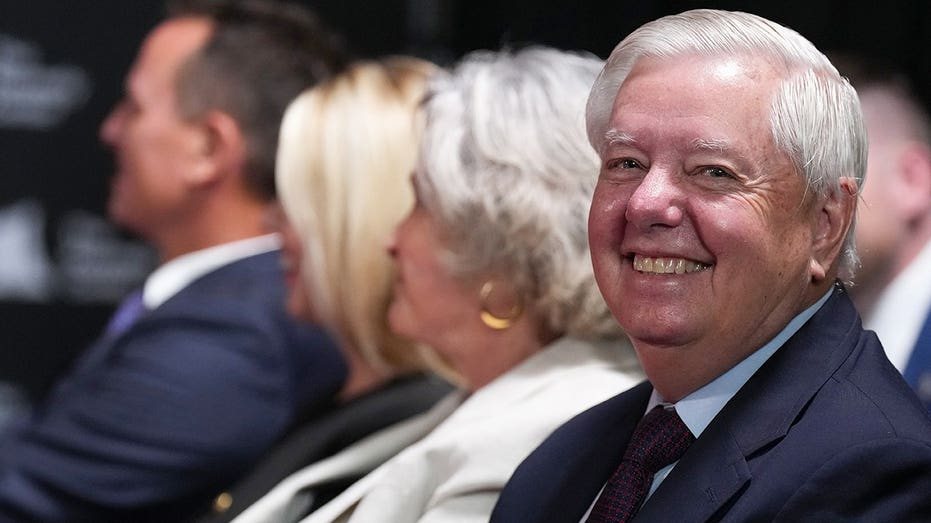
Senator Lindsey Graham, a prominent Republican voice on national security and foreign policy, has died at the age of 71. His passing marks the loss of a lawmaker who, in an era of political slogans, possessed a rare and nuanced understanding of America's role in the world. Graham had recently returned from Ukraine, one of many trips he made following Russia's full-scale invasion, underscoring his hands-on approach to international affairs.
Graham's expertise spanned critical regions and issues. He had a deep knowledge of the Middle East, particularly the nature of Iran's regime, which he argued would never relinquish its weapons or reform its rhetoric. He was a steadfast advocate for supporting Ukraine in its war against Russia and championed the expansion of the Abraham Accords, viewing them as a strategic revolution for regional stability. His ability to translate complex intelligence briefings into plain language for the American public set him apart from many of his colleagues, bridging a gap that often hampers effective foreign policy.
Beyond his policy work, Graham was one of the few individuals who had President Donald Trump's ear on national security matters. He used that access not for personal gain but to advocate for Ukraine, Israel, and the Iranian people. Iranian dissidents, both inside and outside the regime, affectionately called him «Uncle Lindsey» in appreciation for his advocacy. He named political prisoners on the Senate floor, met with their families, and engaged with exiled Crown Prince Reza Pahlavi, pushing for policies that prioritized American security while supporting human rights.
Graham's support for Israel was unwavering and rooted in a strategic vision. He viewed Israel as America's forward operating base for Western civilization in a volatile region, arguing that a strong Israel deters Iran, stabilizes the Persian Gulf, protects shipping lanes, and signals to adversaries that the United States does not abandon its allies. In an age of narrative warfare, where social media can quickly reshape public understanding of complex conflicts, Graham refused to yield to the mob. He believed moral clarity was a national security asset and that standing by allies and putting enemies on notice was part of America's DNA.
Throughout his three decades in Congress, Graham worked across the aisle when necessary and fought fiercely when it mattered more. He shepherded judicial appointments, helped rebuild the defense budget, and maintained relationships with both Senator John McCain and President Trump, making both alliances work. His ability to navigate different political currents while staying true to his principles made him a unique figure in Washington.
Graham's death leaves a significant void in American foreign policy. As the nation grapples with challenges from Iran, Russia, and other adversaries, his absence will be deeply felt. The ayatollahs, the Kremlin, and Hamas may not mourn his passing, but for those who value a principled and engaged American presence on the world stage, his loss is profound. The question now is who will fill the gap he leaves behind.
110