Memorandum
- From
- Caroline Mercer via FOX News
- Date
- Filed
- Politics·5 min to read
- Re
Senate Advances Trump DNI Nominee Jay Clayton as Anti-Terror Program Nears Expiration
ReSenate Advances Trump DNI Nominee Jay Clayton as Anti-Terror Program Nears Expiration
The Senate voted 51-43 along party lines to advance Jay Clayton's nomination for director of national intelligence, while the Section 702 FISA surveillance program remains in limbo after Democrats blocked renewal.
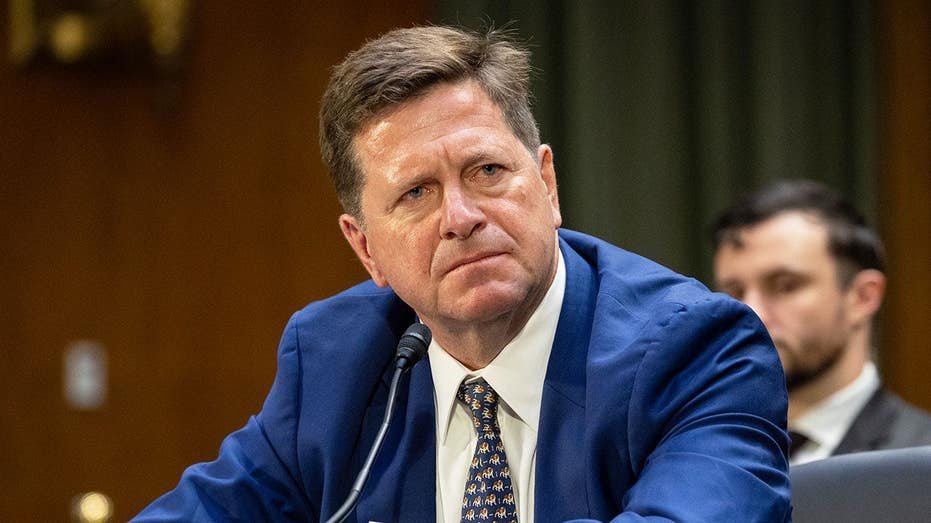
The Senate moved President Donald Trump's nominee for director of national intelligence toward a final confirmation vote Monday evening, even as a key counter-terrorism surveillance program remains in legal limbo. Jay Clayton, former chairman of the Securities and Exchange Commission, cleared a procedural hurdle by a 51-43 vote that fell largely along party lines, setting up a final confirmation vote expected later this week.
Clayton's nomination to lead the nation's 18 intelligence agencies has been a turbulent process. It began after former Director of National Intelligence Tulsi Gabbard abruptly resigned to care for her husband, who is battling cancer. Trump then installed Federal Housing Finance Agency Director Bill Pulte as acting DNI, a move that drew sharp criticism from Democrats who accused Pulte of being an unqualified loyalist.
The Senate Intelligence Committee advanced Clayton earlier this month on a narrow 9-8 vote, with all Republicans supporting him and all Democrats opposed. During that committee process, Clayton faced tough questioning from Democrats over his views on the 2020 election results, his knowledge of Gabbard's raid on election offices in Fulton County, Georgia, and subpoenas he issued while serving as U.S. Attorney for the Southern District of New York. The subpoenas targeting New York Times reporters were voluntarily withdrawn by the Department of Justice two days after Clayton's committee approval.
The procedural vote came as the Senate remains deadlocked over reauthorizing Section 702 of the Foreign Intelligence Surveillance Act, a broad surveillance tool used to monitor foreign targets overseas. The program, which has been credited with disrupting terrorist attacks including a planned mass-casualty assault on a Taylor Swift concert in Vienna, Austria, expired earlier this month after Congress failed to pass a renewal deal. Democrats walked away from a bipartisan compromise after Trump torpedoed Clayton's previously scheduled confirmation hearing, accusing the president of bad faith negotiations.
Senate Majority Leader John Thune, a South Dakota Republican, urged Democrats to set aside partisanship and support Clayton during the final vote. Thune noted that Democrats had repeatedly criticized acting DNI Pulte but then blocked Clayton, the qualified nominee who could replace him. He pointed out that Democrats' opposition allowed the Section 702 program to lapse for the first time in its history, warning that national security was being jeopardized by political games.
The Section 702 program has steadily gone dark since its expiration. New surveillance authorizations are now caught in a legal void, leaving intelligence agencies without the authority to collect certain foreign communications that pass through U.S. networks. Law enforcement officials have warned that the lapse weakens the nation's ability to detect and prevent terrorist plots. The program has been a cornerstone of U.S. counter-terrorism efforts for nearly two decades.
Meanwhile, acting DNI Bill Pulte announced on social media Monday that he had completed a fourth round of layoffs at the Office of the Director of National Intelligence. Pulte described the reductions as thoughtful and measured, aimed at refocusing the agency on national security and the law. Critics have raised concerns that the layoffs are disrupting intelligence operations and morale at a critical time.
Clayton's final confirmation vote could come as early as Tuesday. If confirmed, he will inherit a sprawling intelligence enterprise facing multiple challenges including the expiration of the Section 702 program, ongoing workforce reductions, and heightened global threats. Supporters argue his experience as SEC chairman and as a federal prosecutor makes him well-suited to oversee intelligence agencies, while opponents question his independence and loyalty to the president over the law.
73