
Memorandum
- From
- Caroline Mercer via fox - Politics
- Date
- Filed
- Politics·5 min to read
- Re
Sanders says Michigan Senate primary is about stopping the 'billionaire class'
ReSanders says Michigan Senate primary is about stopping the 'billionaire class'
Sen. Bernie Sanders dismissed Rep. Haley Stevens at a Detroit rally, arguing the Michigan Democratic Senate primary is a contest between progressive Abdul El-Sayed and the 'billionaire class.' He cited massive outside spending against El-Sayed as evidence of a threat to powerful interests.
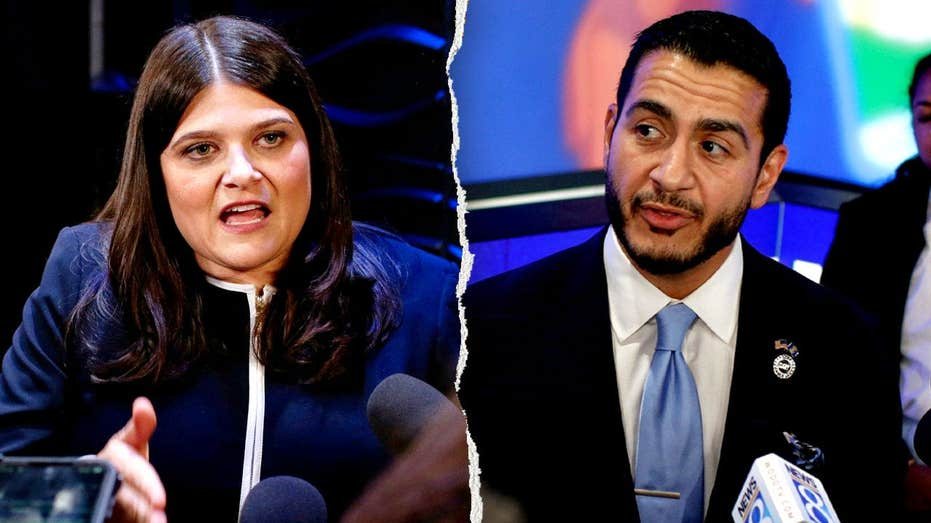
Sen. Bernie Sanders, I-Vt., took direct aim at the financial forces shaping Michigan's Democratic Senate primary, telling a Detroit rally on Saturday that the race is not about Rep. Haley Stevens but about whether the «billionaire class» can defeat progressive candidate Abdul El-Sayed. Speaking alongside El-Sayed at a campaign event, Sanders dismissed the congresswoman's candidacy as secondary to the broader struggle against wealthy donors and outside groups that have poured unprecedented sums into the contest.
«In all due respect to Haley Stevens, everybody knows that this is not an election between her and Abdul,» Sanders said. «This is an election between Abdul and the billionaire class. That is what this election is about.» The Vermont senator, who has endorsed El-Sayed as one of the leading progressive Senate candidates this cycle, claimed that outside groups have outspent El-Sayed's campaign by a margin of 12-to-1. He urged voters to question why the richest people in the country are spending tens of millions of dollars to defeat a candidate they view as a threat.
According to AdImpact, super PACs backing Stevens are spending about $26.9 million on television ads during the final five weeks of the primary, compared with roughly $2.1 million supporting El-Sayed. Sanders said the billionaire class has already spent $50 million against El-Sayed, with two weeks left before the Aug. 4 primary. «Now I want everybody here throughout the state, people turning on the TVs, and they see all these ads,» Sanders said. «I want you to ask yourself a simple question: Why are the richest people in the country spending tens and tens of millions of dollars to defeat Abdul El-Sayed?»
The Michigan Senate primary has emerged as one of the most closely watched Democratic contests of the 2026 cycle, highlighting the growing divide between the party's progressive and establishment wings. El-Sayed has been endorsed by Sanders and other prominent progressives, while Stevens has the backing of Senate Minority Leader Chuck Schumer and recently received the endorsement of retiring Sen. Gary Peters. The race tightened after state Sen. Mallory McMorrow ended her campaign earlier this month, leaving Stevens and El-Sayed in a head-to-head contest that many Democrats view as a proxy battle over the party's future direction.
Stevens has represented Michigan's 11th Congressional District since 2019 after serving on the Obama administration's auto industry task force. She attracted attention on the campaign trail in recent days after a couple of bizarre speeches went viral online. In one viral clip, Stevens was mocked online as critics compared her animated campaign speech to a classic «Saturday Night Live» sketch featuring Chris Farley's «van down by the river» character. The moment also drew renewed attention to a 2020 House floor speech in which Stevens, wearing pink latex gloves during the COVID-19 pandemic, continued speaking after her allotted time expired as the speaker pro tempore repeatedly declared her «out of order» and struck the gavel.
The winner of the Aug. 4 primary is expected to face Republican Mike Rogers in November. Sanders framed the contest as a national test of whether progressive candidates can overcome the financial might of wealthy interests. «The billionaire class, which has already — and there are two weeks left to go in the election — has already spent $50 million against him,» Sanders said, referring to El-Sayed. The senator's remarks underscored the high stakes of the race, which has drawn attention from both party factions and national donors.
El-Sayed, a former Detroit health department director, has campaigned on a platform of Medicare for All, a Green New Deal, and ending corporate influence in politics. Stevens, a moderate Democrat, has emphasized her experience in Congress and her work on the auto industry task force. The primary has become a flashpoint in the ongoing ideological struggle within the Democratic Party, with both sides viewing the outcome as a bellwether for the 2026 midterm elections.
72