Memorandum
- From
- Caroline Mercer via PBS NewsHour
- Date
- Filed
- Politics·6 min to read
- Re
Rubio convenes global conference on political terrorism ahead of midterms
ReRubio convenes global conference on political terrorism ahead of midterms
Secretary of State Marco Rubio hosted leaders from over 60 countries at a conference focused on combating left-wing political terrorism, a key issue for Republicans ahead of the midterm elections.
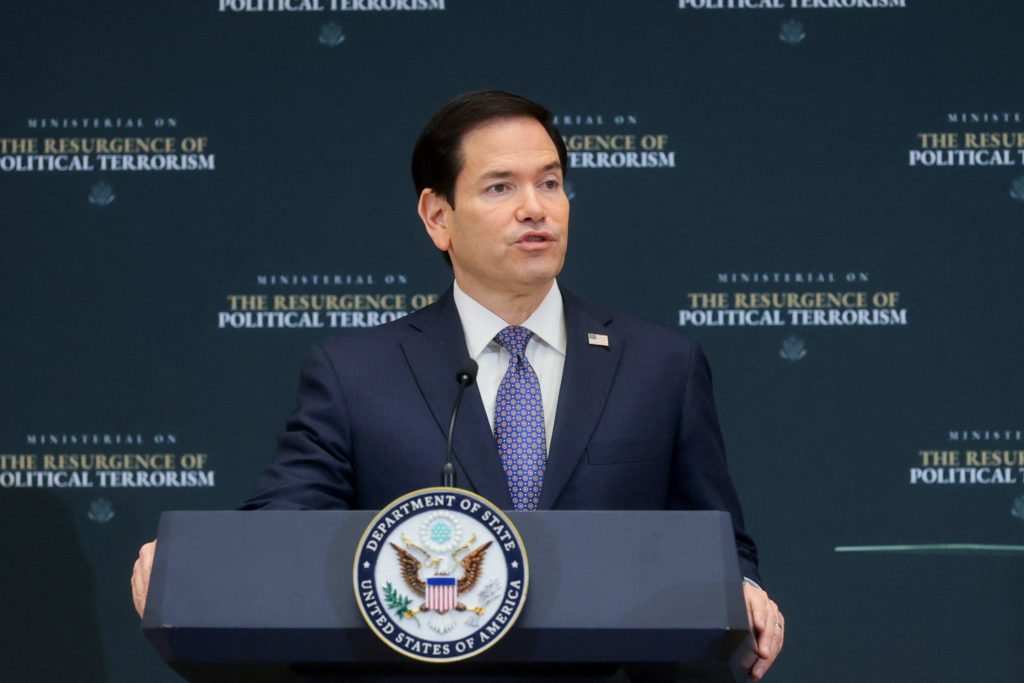
Secretary of State Marco Rubio convened leaders from more than 60 countries on Thursday for the Trump administration's latest initiative to address what it describes as left-wing political terrorism, a prominent issue for Republicans as the midterm elections approach. The conference, held at the State Department, aimed to coordinate international efforts to counter politically motivated violence and extremism, with a particular focus on leftist movements that the administration argues pose a growing threat to democratic institutions and public safety.
Rubio, in his opening remarks, emphasized the need for a unified global response to what he called an escalating pattern of attacks and intimidation targeting government officials, law enforcement, and political opponents. He cited recent incidents in the United States and abroad, including assaults on conservative lawmakers and vandalism of political offices, as evidence of a coordinated campaign by left-wing groups. The secretary called on participating nations to share intelligence, strengthen legal frameworks, and enhance public awareness campaigns to combat the phenomenon.
The conference marks the latest step in the Trump administration's broader strategy to prioritize political terrorism as a national security concern, a shift that has drawn both praise and criticism. Supporters argue that left-wing violence has been underreported and underprosecuted, while critics contend that the administration is using the term to target political opponents and suppress dissent. The event included closed-door sessions for diplomats and experts to discuss best practices and potential joint actions.
Among the topics discussed were the role of social media in radicalizing individuals, the financing of extremist groups, and the protection of vulnerable targets such as election officials and judges. Several participating countries presented case studies of their own experiences with political terrorism, including efforts to prosecute perpetrators and rehabilitate offenders. The United States pledged additional resources for international training programs and information-sharing platforms.
The conference comes as Republicans prepare for the midterm elections, where issues of public safety and political violence are expected to feature prominently in campaign messaging. Democratic leaders have accused the administration of exaggerating the threat for political gain, pointing to data showing that right-wing extremism has been responsible for a larger share of domestic terrorist incidents in recent years. However, Rubio and other officials argue that left-wing violence is on the rise and deserves equal attention.
In a related development, the Ohio gubernatorial race has become a flashpoint in the broader debate over political terrorism and public health policy. Vivek Ramaswamy, the Republican nominee, has sharply criticized his Democratic opponent, Amy Acton, for her handling of the COVID-19 pandemic as state health director. Acton has faced backlash for claiming that the virus's mortality rate was as high as 50% in the early days of the pandemic, a figure that public health experts have disputed. Ramaswamy's campaign has accused Acton of spreading misinformation and mismanaging the state's response.
Acton, a former Ohio Department of Health director, has defended her record, arguing that her actions saved lives and that the state's early shutdowns were necessary. She has also criticized Ramaswamy for profiting from COVID-19 treatments and vaccines. The exchange highlights how pandemic-related grievances have become intertwined with the political terrorism narrative, as both sides seek to frame the other as a threat to public safety and democratic norms.
Meanwhile, in Arizona's 6th Congressional District, a competitive House race has drawn attention after reports emerged that the Democratic candidate's campaign Instagram account followed accounts belonging to OnlyFans models and self-described witches. JoAnna Mendoza, a Marine Corps veteran challenging incumbent Republican Juan Ciscomani, has not commented on the report, which has been seized upon by Republican strategists as evidence of questionable judgment. The incident underscores the heightened scrutiny of candidates' online behavior in the current political climate.
The conference on political terrorism is expected to produce a joint declaration outlining commitments to enhance cooperation and share best practices. Participating nations have agreed to establish a working group to monitor trends and develop early warning systems. The administration plans to hold follow-up meetings in the coming months, with a focus on implementing the agreements reached in Washington.
Critics have questioned the effectiveness of such conferences, noting that previous efforts to combat political violence have yielded mixed results. However, supporters argue that the initiative sends a strong signal that the international community is united against extremism in all its forms. As the midterm elections draw nearer, the issue of political terrorism is likely to remain a central theme in the national conversation, shaping voter perceptions and candidate strategies alike.
69