Memorandum
- From
- Derek Weston via FOX News
- Date
- Filed
- Politics·4 min to read
- Re
Republicans Use Summer Recess to Campaign Against Far-Left Democratic Candidates
ReRepublicans Use Summer Recess to Campaign Against Far-Left Democratic Candidates
House Republicans are using the August recess to educate voters about far-left Democratic candidates, aiming to maintain their narrow majority by tying Democrats to what they call the 'commie caucus.' The GOP is also highlighting votes on stock trading, voter ID, and Iran war powers to create contrast ahead of November.
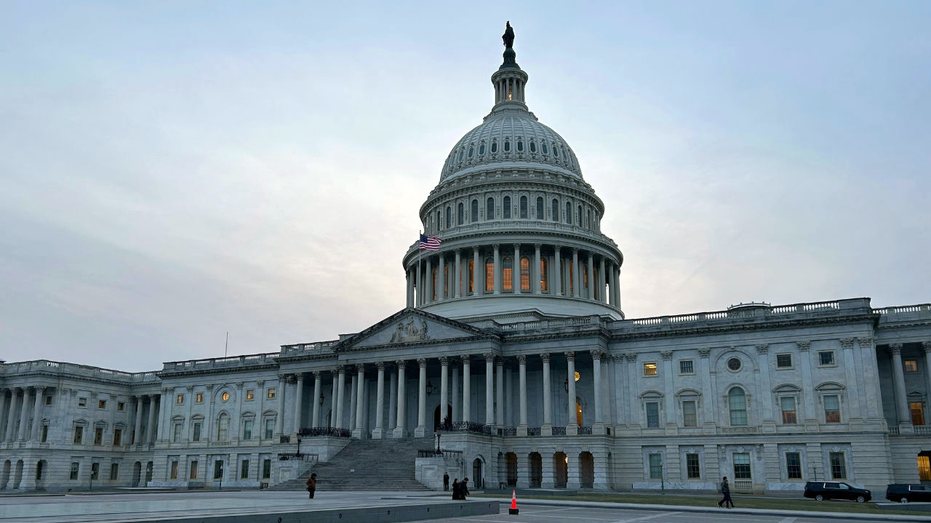
House Republicans have launched a summer campaign to educate voters about what they describe as a surge of far-left Democratic candidates, a strategy they hope will help preserve the party’s narrow majority in the November midterms. With the House on recess until August 31, GOP leaders are framing the election as a choice between « freedom and communism, » as House Majority Leader Steve Scalise put it. « We’re going to have a lot to talk about during this break, » Scalise said, emphasizing the contrast between Republican principles and what he called the Democratic Party’s leftward drift.
Republicans are zeroing in on candidates backed by the Democratic Socialists of America, particularly in districts in New York City and Colorado. Representative Nicole Malliotakis of New York warned that the « communist caucus, the commie caucus is coming to Congress. » While such left-wing candidates are likely to win their heavily Democratic districts, GOP strategists believe their presence on the ballot will alienate independent voters and moderate Democrats, providing an insurance policy for the Republican House majority.
Speaker Mike Johnson of New York argued that Democrats will have to answer for votes against funding the military, against government funding, and against « common sense policies like voter ID and proof of citizenship. » Republicans recently advanced a bill banning stock trades by members of Congress, which passed 232-198. However, the GOP added a voter ID requirement, a move Democrats called a partisan stunt. Representative Alexandria Ocasio-Cortez of New York said she voted no because « we are not going to sabotage mail-in voting in this country, and we’re not going to fall for that kind of bait-and-switch tactic. »
The Iran conflict also emerged as a central point of contention. The House passed a resolution to limit President Donald Trump’s war powers, with four Republicans joining Democrats in the 219-207 vote. House Foreign Affairs Committee Chairman Brian Mast of Florida condemned the rebuke, arguing it undermined American forces. « To belittle this mission is to belittle and demean the very service these members who gave their lives, » Mast said. Hours later, the Senate rejected a similar measure, with most Republicans defending the president’s military campaign against Iran. Senator Tim Sheehy of Montana characterized the U.S. actions as successful, claiming, « Last time I checked, we’ve wiped these bastards out. »
Senate Democrats, led by Minority Leader Chuck Schumer of New York, criticized Republicans for failing to assert congressional war powers. « Every time Republicans oppose our war powers resolution and vote against ending this war, they lose the faith of the American people, » Schumer said. House Democratic Leader Hakeem Jeffries of New York argued that the administration’s « whiplash policy » in Iran lacked a clear strategy. « You can’t run a war at 2:00 in the morning on Twitter, » said Representative Bennie Thompson of Mississippi. Jeffries acknowledged Democrats have no detailed plan to end the conflict, but insisted Trump « got us into this mess. »
As the recess unfolds, Republicans are confident that contrasting their record with far-left Democratic candidates and highlighting divisive votes on Iran and voting laws will boost their chances. Johnson said he expects a « robust dialogue » with voters over the summer. Democrats, meanwhile, are focusing on affordability and criticizing the GOP’s handling of the Iran operation, pointing to rising gas prices as evidence of the administration’s failures. With control of the House hanging in the balance, both parties are sharpening their messages for the fall campaign.
81