
Memorandum
- From
- Derek Weston
- Date
- Filed
- Politics·6 min to read
- Re
Poland is turning fighter scrambles into a civilian warning trigger
RePoland is turning fighter scrambles into a civilian warning trigger
The policy lesson from a July Russian missile incursion is institutional: military detection worked, but civilian warning lagged. Warsaw now wants RCB messaging to begin when a threat in Ukraine is serious enough to launch Polish fighters.
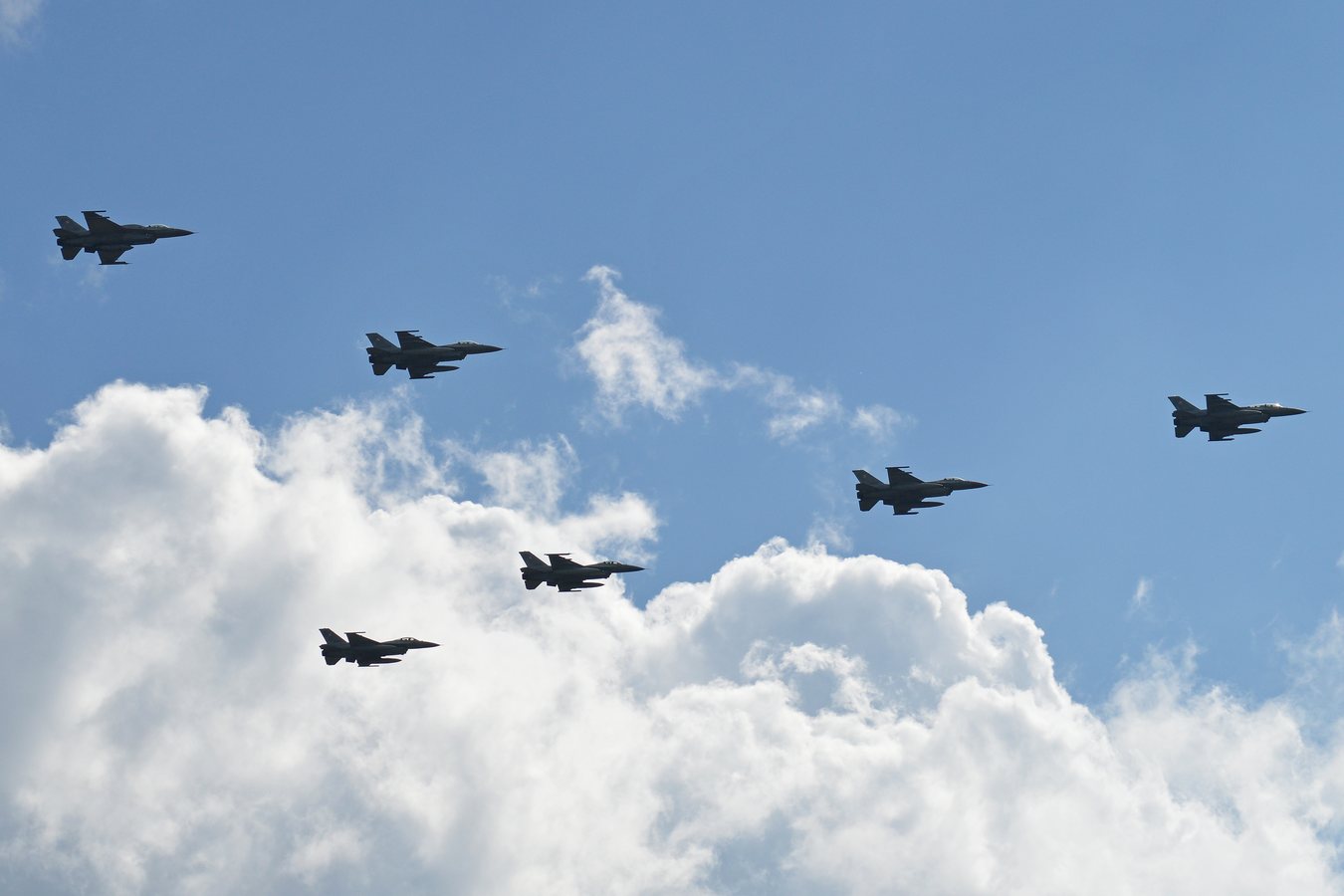
Poland’s planned new text-message warnings are best understood as a change in the handoff between military defense and civilian emergency management.
RMF24 reported on August 10 that residents are to receive SMS information when Polish fighters are scrambled because of a dangerous situation beyond the eastern border. The announcement was attributed to Magdalena Sobkowiak-Czarnecka, a secretary of state in Poland’s Ministry of National Defense, speaking to Wirtualna Polska.
The policy emerged from a July 30 Russian missile incursion. During a large Russian strike on western Ukraine, a Kh-101 cruise missile entered Polish airspace and fell near Tarnawa-Kolonia in the Lublin region. It landed in an uninhabited area, causing no injuries or reported damage.
The defense ministry’s position is that the military layer did what it was supposed to do. RMF24, citing Poland’s Operational Command, reported that an unidentified object was detected at 3:40 a.m. An F-16 was sent to identify and intercept it. Six minutes later the target disappeared from radar, and the impact site was found afterward.
The problem Warsaw is now trying to solve is what happened on the civilian side of the system.
Sobkowiak-Czarnecka said the Government Security Centre, or RCB, and the Interior and Administration Ministry are drawing lessons from the incident. Poland’s General Staff and Operational Command are participating in the discussions. The aim, in her description, is to close the system more tightly so that a military assessment of danger translates faster into information for people.
That matters because the two systems are designed around different questions. Air-defense commands ask whether an object poses a threat, whether aircraft should launch and whether interception is required. Civilian authorities must decide who should be warned, what people should be told and what action—if any—they should take.
The proposed policy creates a possible bridge between those decisions. When a dangerous situation remains over Ukrainian territory but Polish fighters are already being scrambled, authorities want to send additional information by SMS using RCB systems.
The word “possible” still belongs in that description because the operating rules are not final. The deputy defense minister did not announce a simple formula under which every Ukrainian air-raid alert would produce a Polish emergency text. She specifically tied the communication to Polish fighter activity and said the Interior Ministry would provide the details.
Poland already has the technical foundation for geographically targeted emergency messaging. RCB’s official guidance says Alert RCB is used in extraordinary circumstances when there is a probability of a direct threat to life or health across a meaningful area. It requires no subscription. Mobile carriers send the warning to users in the designated zone, with a powiat—the county-level administrative unit—as the smallest target area.
The policy challenge is therefore not primarily whether Poland can send millions of texts. It is how to define the threshold.
If every military precaution produces an emergency-style message, the public may learn to ignore them. If authorities wait until a projectile has crossed the border, the warning may come too late. If the text only reports that F-16s are flying, it can explain unusual military activity but may not tell a person what to do.
The July 30 event gives policymakers a concrete scenario for setting that threshold. The threat began as part of Russia’s attack on Ukraine. Polish military aviation was already reacting. The missile then crossed into NATO territory. The time between those stages was short enough that public communication could not be treated as a separate, slower process.
This is why the reform has broader significance than its delivery method. It turns a fighter scramble—traditionally a military operational fact—into a potential civilian warning trigger. That is a shift in how Poland defines the boundary between external war and domestic emergency management.
The current security environment adds context. Poland remains under elevated BRAVO and BRAVO-CRP alert levels through August 31, while a CHARLIE level applies to specified rail infrastructure. The Interior Ministry says the preventive BRAVO posture is connected to the regional geopolitical situation, Russian and Belarusian hybrid activity, and the consequences of Russia’s armed attack on Ukraine.
The new SMS concept therefore sits inside a larger adaptation of the Polish state rather than standing alone. Border security, air defense, infrastructure protection, cyber monitoring and civilian alerts increasingly operate as parts of one security architecture.
What is still missing is the rulebook. Warsaw has not publicly set out which fighter launches qualify, whether messages will be regional or broader, how quickly military data will reach RCB, or what instructions the messages will contain.
Until those details are published, the most accurate description is a policy direction rather than a finished service: Poland wants a dangerous situation in Ukraine that causes Polish fighters to launch to produce faster, direct civilian information through RCB systems. The July Kh-101 incursion is the event that turned that idea from a communications option into a security requirement.
64