
Memorandum
- From
- Connor Quincy via fox - Most Popular
- Date
- Filed
- Politics·6 min to read
- Re
New York City Mayor Mamdani Does Not Rule Out Cash Reparations, Awaits Commission Report
ReNew York City Mayor Mamdani Does Not Rule Out Cash Reparations, Awaits Commission Report
Mayor Zohran Mamdani declined to reject cash reparations for slavery-impacted New Yorkers, saying he will wait for the city's racial equity commission findings. The commission, established in 2024, is expected to issue final reports by 2027 and 2028.
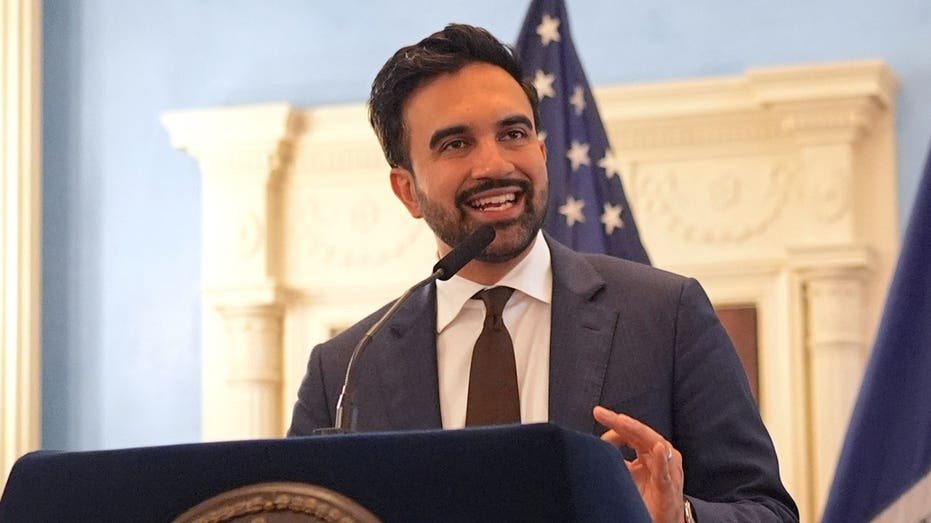
New York City Mayor Zohran Mamdani declined to rule out cash reparations for individuals affected by the city's historical involvement in slavery, stating during a recent interview that he would await the findings of the city's Commission on Racial Equity (CORE) before making any commitments. When asked by journalist Charles Blow onThe Rootwhether he would support a CORE recommendation for direct cash payments, Mamdani said he could not give an answer in advance but emphasized the importance of acknowledging the city's complicity in the slave trade.
Mamdani pointed to a statement he made during his mayoral campaign, which said that New York City actively participated in the slave trade and perpetuated its legacy through racist institutions, policies, and laws. He argued that the city has a responsibility to reconcile and repair that legacy. The mayor's remarks come as CORE continues its work under Local Laws 91 and 92, enacted in 2024 to study how city government contributed to slavery and its enduring harms, and to create a truth, healing, and reconciliation process.
CORE Chair and Executive Director Linda Tigani praised Mamdani for using his platform to acknowledge New York's history, noting that the city was home to the second-largest slaveholding population in America after Charleston, South Carolina, and that the first commodities traded on Wall Street included enslaved Black people. She stated that the commission must repay the longstanding debt owed and tackle the racial wealth gap directly correlated to slavery. Tigani's statement underscored that CORE has reached thousands of New Yorkers to formulate recommendations for structural change.
According to CORE's published schedule, the final report for the Truth, Healing and Reconciliation Planning Process is expected in June 2027, followed by the reparations study report in July 2027. Implementation of the reconciliation plan is slated for June 18, 2028. The commission has already held numerous community events, including a Juneteenth gathering described by Forbes as the city's largest reparations rally to date. Political strategist Tyrik Washington, who partnered with CORE on a reparations study, told Forbes that implementing reparations policies could lead to measurable reductions in occupational segregation and progress toward pay equity for Black New Yorkers within five to ten years.
However, the relationship between Mamdani's administration and CORE has not been entirely smooth. In April, the commission publicly rebuked the mayor after he released his Preliminary Citywide Racial Equity Plan, saying it failed to meet charter requirements. CORE's findings indicated that community members believed the plan lacked a meaningful citywide racial equity strategy, required race-disaggregated data standards, neighborhood-level accountability metrics, a clear response to community priorities, and transparent funding linked to equity outcomes. The commission criticized the mayor at a time when communities across the country are concerned about the direction of racial justice under the national political climate.
Despite these tensions, Mamdani has allocated $500,000 to community groups to participate in a Reparations, Truth, Healing, and Reconciliation Network, according to a progress update report released by CORE in January. The report detailed that more than two dozen groups will each receive tens of thousands of dollars to hold conversations on the development of a reparations study and to gather input on the early citywide plan. This funding comes as the city faces a projected $5.4 billion budget deficit, which has drawn criticism from some fiscal conservatives and raised questions about the feasibility of large-scale reparations.
The mayor's cautious stance on cash reparations reflects a broader national debate over how cities and states should address historical racial injustices. While some advocates push for direct payments as a form of compensation, others favor investments in education, housing, and economic opportunities. Mamdani's decision to defer to the commission's findings keeps the issue alive without committing to a specific policy, allowing the deliberative process to run its course. The commission continues to hold public sessions and is expected to produce detailed recommendations that may include cash payments, programs, or a combination of both.
For now, New Yorkers will have to wait until 2027 for the full reparations study, but the conversation about the city's historic role in slavery and its present-day consequences shows no signs of fading. The CORE process, while lengthy, represents one of the more structured municipal efforts in the country to reckon with slavery's legacy and propose actionable remedies.