Memorandum
- From
- Delaney Sawyer via FOX News
- Date
- Filed
- Politics·6 min to read
- Re
Midterm Elections Enter Final 100-Day Sprint as Republicans and Democrats Battle for Control
ReMidterm Elections Enter Final 100-Day Sprint as Republicans and Democrats Battle for Control
With 100 days until the 2026 midterm elections, Republicans hold narrow majorities in Congress while Democrats aim for small net gains to retake power. New polling shows a generic ballot advantage for Democrats, but redistricting and Republican financial advantages could shape the outcome. The campaign is marked by economic discontent and a rising socialist influence within the Democratic Party.
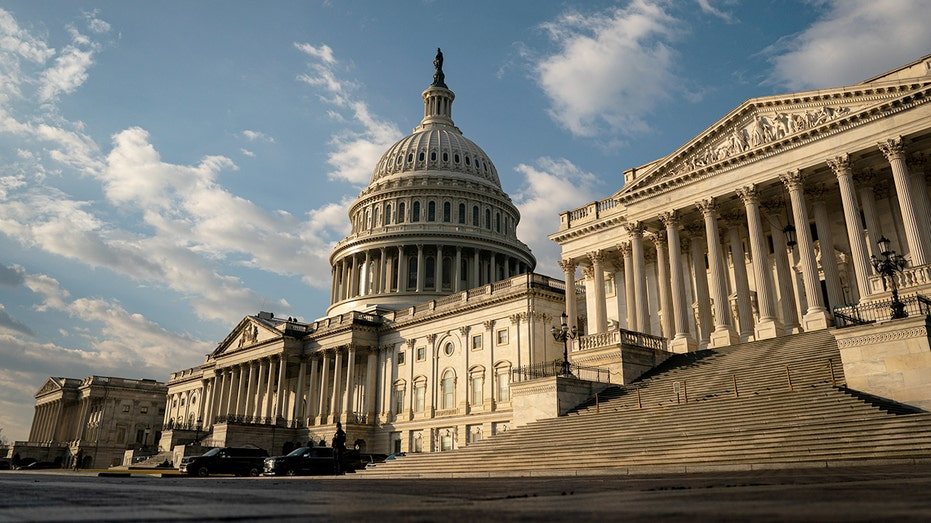
The 2026 midterm elections are now exactly 100 days away, setting the stage for an intense and expensive battle between Republicans and Democrats for control of Congress and statehouses across the country. Republicans currently hold razor-thin majorities in both chambers, with a 218-212 edge in the House (plus one independent and four vacancies) and a 53-47 advantage in the Senate, including two independents who caucus with Democrats. Every House seat and 35 Senate seats are on the ballot, meaning even a handful of competitive races could reshape the balance of power in Washington.
Democrats need a net gain of just six House seats to reclaim the speaker’s gavel and four Senate seats to win back the upper chamber. Historical trends favor the party out of power in midterm elections, but Republicans are bolstered by mid-decade redistricting wins in states like Florida and Texas, which have created roughly 10 additional right-leaning congressional districts. The latest Fox News Power Rankings indicate a tough road ahead for the GOP, though Republican National Committee Chair Joe Gruters expressed confidence. «We are in a prime position to win it in November,» Gruters told Fox News this week, citing President Donald Trump’s focus on tax cuts, no tax on tips, overtime, and Social Security, as well as border security and record investments.
On the Democratic side, the Democratic Congressional Campaign Committee has been focusing on the economy and affordability in its messaging. DCCC Spokesperson Nebeyatt Betre said in a press release, «From groceries to gas to health care, House Republicans have bled Americans’ wallets dry with their cost-raising agenda. Voters are exhausted by all the bad news vulnerable House Republicans have created, and the DCCC is working to make sure voters know they can hold Republicans accountable on Election Day.» A Fox News poll released this week showed that if the election were held today, 53% of voters would back the Democratic candidate in their House district and 46% the Republican, a 7-point edge just outside the poll’s margin of error. Democrats were up by 5 points in April, and 53% is the highest percentage either party has received on the generic House ballot in Fox News polling since 1996.
In the Senate, Republicans are defending seats in Alaska, North Carolina, Ohio, and Maine, with record spending already pouring into those states. Democrats hope to capitalize on the historic economic, foreign policy, and anti-incumbent mood among voters. The NRSC National Press Secretary Bernadette Breslin said in a statement, «Democrats want to export New York’s ‘commie corridor’ to a state near you, bringing crippling tax hikes, dismantled law enforcement, and bloated government spending with it. Americans will reject Democrats’ socialist spending spree this November and elect Republicans committed to advancing an affordability agenda that keeps the American Dream within reach.» NRCC spokesman Mike Marinella added that Republicans have the «momentum» and that House Democrats will «spend every day trying to explain away their radical socialist record.»
The upcoming November clash comes as the Democratic Party grapples with a socialist wave of candidates winning primary races across the country, causing headaches for establishment Democratic leaders like Sen. Chuck Schumer and Rep. Hakeem Jeffries. Just 50% of voters have a positive view of capitalism, down from 57% in 2019, while 30% view socialism favorably, up from 27% last year but below 32% in 2021. The Democratic Socialists of America are viewed positively by 31%. By an 11-point margin, more Democrats have a favorable opinion of socialism (52%) than capitalism (41%), while by a 50-point margin, more Republicans have a positive view of capitalism (61%) than socialism (11%). Republicans are seeking to capitalize on the socialist rise, particularly after socialist victories in New York City that rocked the political landscape in recent months.
Financially, the RNC enters the final 100 days with a significant advantage over its Democratic counterpart. According to the latest Federal Election Commission filings, the RNC has roughly $125.5 million in cash on hand, compared to about $14.9 million for the Democratic National Committee, which is also carrying approximately $18 million in debt. While Democrats remain competitive through their congressional campaign committees and strong individual candidate fundraising, the national party apparatus currently favors Republicans by a wide margin. The intense contest over the next 100 days will determine not only the balance of power in Washington but also the direction of policy on taxes, health care, border security, and the economy for years to come.
72