Memorandum
- From
- Delaney Sawyer via FOX News
- Date
- Filed
- Politics·6 min to read
- Re
Michigan Democratic Senate Primary Debate Turns Heated Over Israel, Campaign Finance
ReMichigan Democratic Senate Primary Debate Turns Heated Over Israel, Campaign Finance
Rep. Haley Stevens and Abdul El-Sayed clashed in a fiery Michigan Democratic Senate primary debate, with sharp exchanges over campaign funding, Israel policy, and immigration, as the race enters its final weeks.
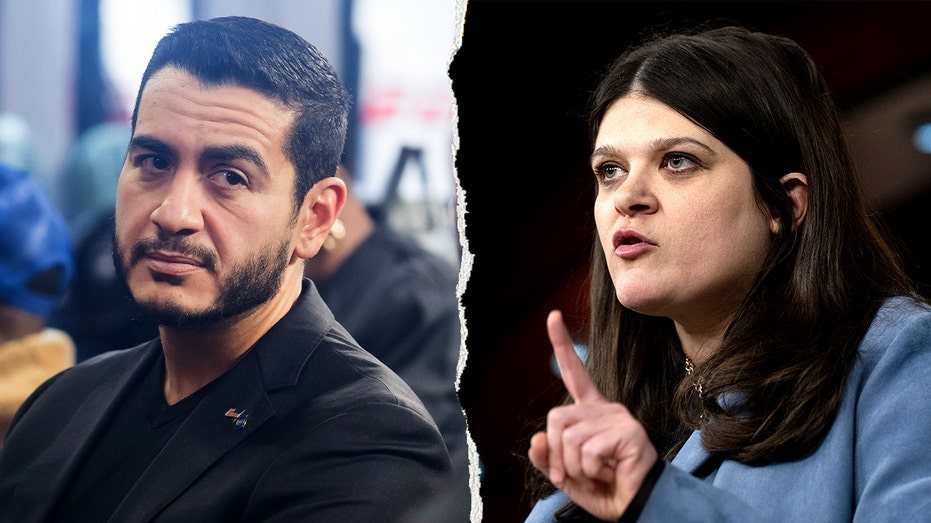
The battle for the soul of the Democratic Party erupted on the debate stage in Michigan on Tuesday, as moderate Rep. Haley Stevens and progressive challenger Abdul El-Sayed traded sharp accusations over campaign money, U.S. policy toward Israel, and immigration enforcement. The high-stakes showdown, held four weeks before the state's primary, underscored the deepening ideological divide within the party as it prepares for a critical general election fight for an open Senate seat.
The most contentious exchanges centered on outside spending and Israel. El-Sayed, a former Wayne County Health Department director endorsed by Sen. Bernie Sanders and Rep. Alexandria Ocasio-Cortez, repeatedly accused Stevens of benefiting from millions of dollars in contributions from pro-Israel groups and corporate-aligned political action committees. He directly challenged her independence, saying, «If you want your politics dictated by AIPAC or Chuck Schumer, then I'm not your guy.» Stevens, who is backed by Senate Minority Leader Chuck Schumer and the party establishment, fired back by questioning El-Sayed's transparency and accusing him of benefiting from Republican efforts to boost his candidacy. «What my opponent needs to answer is, why is the GOP spending thousands of dollars to prop up his campaign, saying that he will make Mike Rogers the next U.S. senator?» Stevens said.
Stevens pressed El-Sayed to release his tax returns, a move she said would demonstrate his commitment to transparency. «Abdul, you talk about getting money out of politics and putting money in people's pockets. But who is putting money in yours? What are you hiding?» she asked. El-Sayed did not directly address the request during the debate. The exchange highlighted a central theme of the primary: whether the party should embrace a more aggressive, anti-establishment agenda or stick with a centrist approach that has historically succeeded in competitive general elections.
On foreign policy, the candidates diverged sharply over Israel. El-Sayed, who has been sharply critical of the Israeli government, blamed the American Israel Public Affairs Committee for what he called undue influence over U.S. policy. «So long as our politicians continue to be bought off by AIPAC, do not be surprised when we fight wars that are in their best interest,» he said. Stevens, while agreeing with El-Sayed on the need for an immediate end to U.S. involvement in Iran, emphasized her support for a two-state solution. «The difference between my opponent and myself on this issue is that I believe in a two-state solution,» she said. «I can say that Israel has a right to peacefully exist alongside the people of Palestine and in Gaza.»
Immigration enforcement also became a flashpoint. El-Sayed called for abolishing Immigration and Customs Enforcement and accused Stevens of shifting her tone to be more aggressive toward the agency than she had been in the past. Stevens countered by accusing El-Sayed of using «Republican tactics,» pointing to a House vote that he claimed showed her support for ICE. She explained that the vote included a condemnation of an antisemitic terrorist attack in Boulder, Colorado, alongside funding for the agency, and said Republicans had inserted the ICE provision cynically. «There was a bill on the House floor to condemn an antisemitic terrorist attack that killed an individual and injured a Holocaust survivor. Instead of bringing us together, Republicans put in a cynical point about thanking ICE,» Stevens said. «I am always going to stand up to violence, and I just wish my opponent wouldn't pursue the cynical approaches of Republicans when we do need to be united.»
The debate also covered domestic policy, including child care and artificial intelligence. Stevens pointed to expanding grants and paid family leave, while El-Sayed called for making child care «100% free» and paying for it by taxing billionaire wealth. On AI, El-Sayed proposed stricter federal guardrails, union labor requirements, community benefit agreements, and an «FDA for AI's.» Stevens focused on ensuring that data centers pay utility and water bills so that Michigan families are not stuck with higher costs.
The primary field narrowed two days before the debate, when state Sen. Mallory McMorrow suspended her campaign. McMorrow, who had been running as a progressive in an ideological space between El-Sayed and Stevens, cited faltering poll numbers and fundraising that could not keep pace with her rivals. She pledged to support whichever Democrat wins the primary. The winner will face former Republican Rep. Mike Rogers in the general election. Rogers, who lost a close Senate race in 2024 to now-Sen. Elissa Slotkin, is on a glide path to the GOP nomination and is seen as a strong contender in a state that remains a top Republican target.
The open Senate seat, left by retiring Democratic Sen. Gary Peters, is a must-hold for Democrats as they aim to win back the Senate majority from the GOP, which currently controls the chamber with a slim 53-47 margin. The primary outcome will signal whether the party's base favors a centrist candidate who can appeal to swing voters or a progressive who energizes the left wing. With just weeks until the primary, both candidates are making their final pitches to voters in a race that could shape the Democratic Party's direction for years to come.
81