
Memorandum
- From
- Delaney Sawyer via FOX News
- Date
- Filed
- Politics·4 min to read
- Re
Michigan Democratic Senate Candidates Clash Over AIPAC Spending and Electability in Fiery Debate
ReMichigan Democratic Senate Candidates Clash Over AIPAC Spending and Electability in Fiery Debate
In a heated debate one week before Michigan's primary, Democratic Senate candidates Representative Haley Stevens and Dr. Abdul El-Sayed sparred over AIPAC campaign contributions, El-Sayed's controversial 'ogre on a pike' remark, and their respective electability against the Republican nominee.
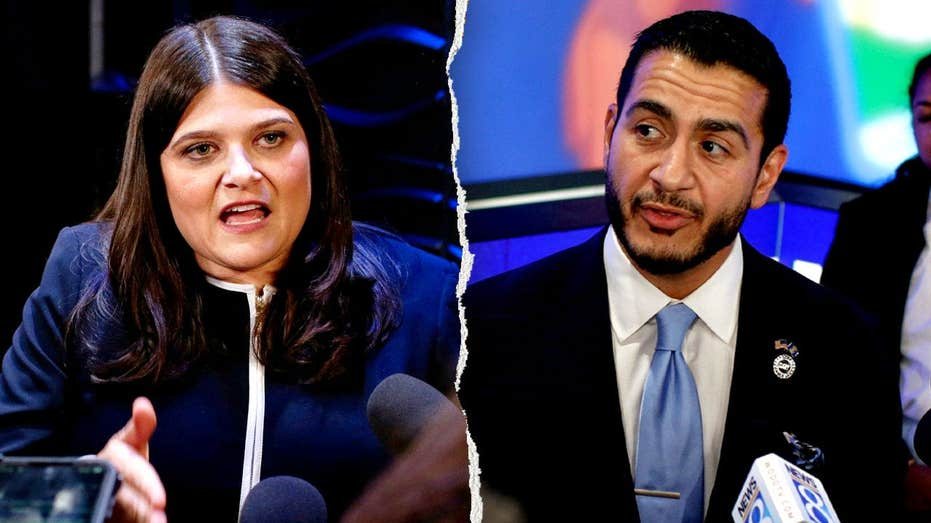
The battle between the Democratic Party's progressive and establishment wings erupted on stage Monday night during a fiery U.S. Senate debate in battleground Michigan, with both candidates sharpening their arguments over who could best represent the state and defeat the Republican opponent in November.
With the Aug. 4 primary just one week away, Representative Haley Stevens and former state health director Dr. Abdul El-Sayed engaged in a tense exchange over campaign finance, foreign policy, and character. The debate highlighted the deep divisions within the party as it prepares for the general election against former Representative Mike Rogers.
El-Sayed doubled down on his earlier remark about putting an « ogre on a pike, » which had drawn sharp criticism from fellow Democrats. He clarified that the comment was directed at Pennsylvania Senator John Fetterman, not Stevens, as some had assumed. « I was referring to a guy named John Fetterman, » El-Sayed said, accusing the Pennsylvania Democrat of abandoning his campaign values once in office. He did not apologize or retract the metaphor, arguing instead that he had previously defended Stevens against booing at a state party convention.
Stevens responded pointedly: « Thank you for clarifying that you didn’t call me an ogre. » The remark originated from a leaked audio recording of a donor Zoom call, in which El-Sayed discussed using a primary victory to build a national platform and challenge incumbent Democrats like Fetterman. « Ideally, you put one ogre on a pike, and then everyone else gets the message, » he was heard saying. Representative Hillary Scholten, who has endorsed Stevens, called the language a « violent, vulgar » threat.
The debate also centered on the massive outside spending supporting Stevens. The moderator pressed her on whether more than $46 million in spending linked to the pro-Israel group AIPAC should concern voters that she would do the group’s bidding. Stevens replied, « Absolutely not, » and defended her support for a two-state solution. « I have been very clear, consistent and transparent, » she said. « I want to see long-term peace. »
El-Sayed argued that the spending revealed a fundamental difference between the candidates. « The difference between us is $46 million of AIPAC spending, » he said. « They’ve set a record in this race to help elect my opponent. » He tied the contributions to Stevens’ vote for additional aid to Israel, accusing the Israeli government of working to « foreclose on the possibility of Palestinian self-determination. » He called for redirecting tax dollars to Michigan schools, health care, and infrastructure rather than « killing kids and women. » Stevens countered that outside groups backed both campaigns and accused El-Sayed of benefiting from a super PAC funded partly by his father-in-law.
Stevens continued to question El-Sayed’s financial transparency, repeating an attack from their first debate. She noted that he had not released his full tax returns while earning approximately $300,000 in outside income. « You sat in the podcast chair and hawked junk health care cures, » she charged. El-Sayed rejected the « socialist » label often applied to him, describing himself as « just a capitalist who understands how capitalism works. »
Both candidates sought to position themselves as the strongest challenger to Rogers, who is backed by national Republicans. Stevens emphasized her experience in Congress and her ability to win over moderate voters, while El-Sayed argued that his grassroots support and clear progressive vision would energize the base. The general election is expected to be highly competitive in a state that flipped from Donald Trump to Joe Biden in 2020.
77