
Memorandum
- From
- Delaney Sawyer via New York Post
- Date
- Filed
- Politics·5 min to read
- Re
James Carville says AOC has no chance at Democratic presidential nomination
ReJames Carville says AOC has no chance at Democratic presidential nomination
Veteran Democratic strategist James Carville argued that Representative Alexandria Ocasio-Cortez has no realistic path to the Democratic presidential nomination, citing her far-left politics as a barrier in a primary electorate that historically favors moderates.
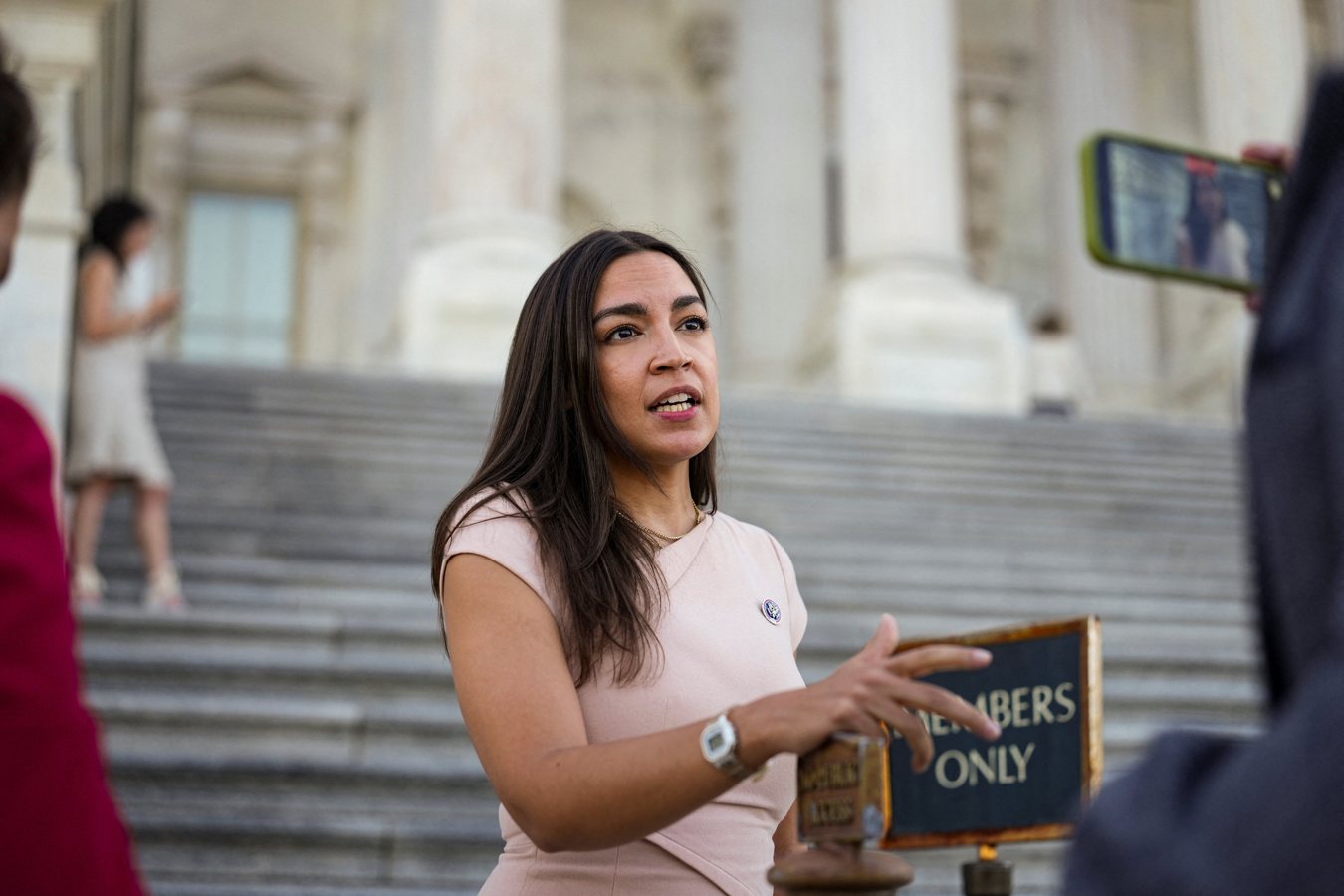
Veteran Democratic strategist James Carville has declared that Representative Alexandria Ocasio-Cortez has no realistic chance of winning the Democratic presidential nomination, arguing that her far-left politics are out of step with the party's primary voters. The 81-year-old pundit made the remarks during a recent episode of his podcast, sparking fresh debate about the direction of the Democratic Party ahead of the next presidential cycle.
Carville, a longtime fixture in Democratic politics who helped steer Bill Clinton to the White House, asserted that Ocasio-Cortez, a New York congresswoman and prominent member of the progressive «Squad,» would face insurmountable obstacles in a primary contest. «She's not gonna have any chance,» Carville said, pointing to historical patterns in which Democratic primary voters have consistently favored more moderate candidates over those perceived as being on the party's left flank. He noted that while Ocasio-Cortez commands a passionate following among younger and more progressive activists, the broader Democratic electorate tends to prioritize electability and centrist appeal.
The comments come amid ongoing tensions within the Democratic Party between its progressive and moderate wings, a dynamic that has shaped key races and policy debates in recent years. Ocasio-Cortez has not formally announced a presidential bid, but her high profile and fundraising ability have made her a frequent subject of speculation. Carville's assessment reflects a view held by some establishment figures that a candidate with Ocasio-Cortez's ideological positioning would struggle to expand beyond her base in a nationwide primary.
Carville's critique is part of a broader pattern of commentary in which he has warned Democrats against veering too far left, arguing that the party must appeal to swing voters and working-class constituencies to win general elections. He has previously criticized what he sees as the party's overemphasis on cultural issues and its reluctance to embrace pragmatic economic messaging. In the same podcast episode, Carville also discussed Republican enthusiasm levels, suggesting that visible support for former President Donald Trump has waned in some areas, which he interpreted as a potential sign of lower GOP turnout in upcoming midterm elections.
Ocasio-Cortez has not directly responded to Carville's remarks, but her allies have pushed back against the notion that her politics are a liability. Supporters point to her ability to mobilize young voters and her success in winning reelection in a competitive district as evidence of her political strength. However, national polling has consistently shown that Democratic primary voters prioritize electability, and candidates perceived as too progressive have historically struggled to gain traction outside of deep-blue districts.
The debate over Ocasio-Cortez's national prospects is likely to intensify as the 2028 presidential cycle approaches. Other potential Democratic contenders, including governors, senators, and cabinet officials, are also positioning themselves for a possible run. Carville's blunt assessment underscores the strategic calculations that will shape the party's nominating process, as Democrats seek to reclaim the White House after President Trump's 2024 victory.
Carville's comments also highlight the enduring influence of veteran strategists in shaping party narratives, even as a new generation of leaders emerges. While his predictions have sometimes been controversial, his track record in analyzing electoral trends keeps his voice relevant in Democratic circles. Whether Ocasio-Cortez ultimately decides to run or not, Carville's warning serves as a reminder of the ideological fault lines that continue to define American politics.
75