
Memorandum
- From
- Derek Weston via FOX News
- Date
- Filed
- Politics·5 min to read
- Re
House Republicans Advance Strategy to Bypass Democrats on SAVE Act
ReHouse Republicans Advance Strategy to Bypass Democrats on SAVE Act
Speaker Mike Johnson's plan to incorporate key parts of the SAVE Act into a budget reconciliation bill cleared a key procedural hurdle, moving closer to a House vote and handing Republicans a significant win.
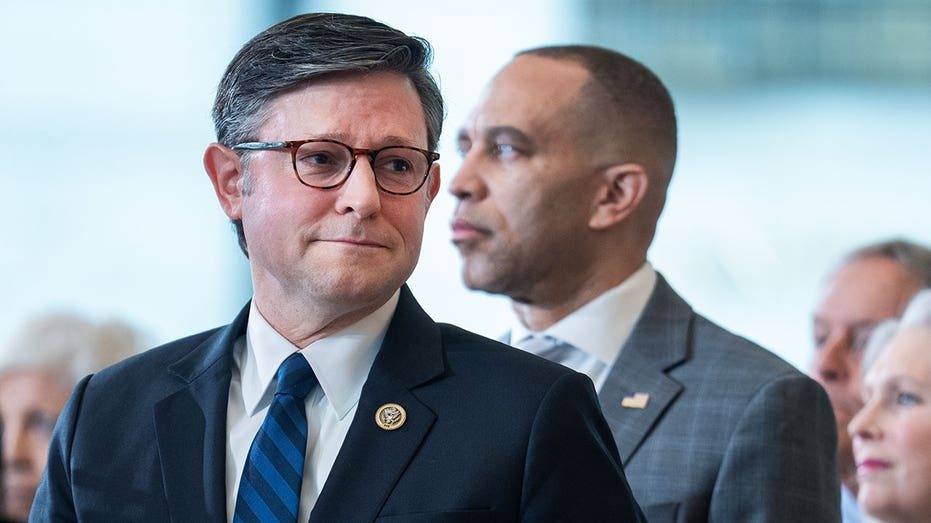
Speaker Mike Johnson's strategy to circumvent Democratic opposition to the Safeguarding American Voter Eligibility (SAVE) Act cleared a critical procedural hurdle on Monday evening, bringing the election integrity legislation closer to a House-wide vote and handing Republicans a major victory. The plan, which would embed key provisions of the SAVE Act into a larger budget reconciliation bill, survived a vote in the House Rules Committee, setting the stage for a chamber-wide test vote expected Tuesday afternoon. If adopted, the framework would allow Republicans to advance the measure without needing Democratic votes in the Senate, where the bill has previously stalled.
The SAVE Act, which would implement federal voter ID requirements and a proof of citizenship mandate in the voter registration process, has faced significant headwinds in Congress despite strong support from President Donald Trump. While the legislation passed the House earlier this year, it has struggled in the Senate, where at least several Democratic votes are needed to break a filibuster and reach final passage. Johnson's new approach leverages the reconciliation process, which allows the party in power to pass sweeping fiscal policy reforms with a simple majority in the Senate, bypassing the usual 60-vote threshold. However, reconciliation bills are subject to strict guidelines, requiring that provisions directly affect federal spending and revenues.
House Republicans aim to use the reconciliation bill to fund states' election integrity efforts, replenish military funding amid ongoing conflicts, and provide aid to American farmers. The legislation would set the stage for $95 billion in new federal spending over the next decade. The first step in the reconciliation process is to pass a framework that directs relevant committees to craft detailed budget allocations, which are then consolidated into a single bill that must pass both chambers before reaching the president's desk. The House Rules Committee vote on Monday advanced this framework, paving the way for a test vote on Tuesday and a final vote expected Wednesday afternoon, according to a preliminary schedule obtained by Fox News Digital.
President Trump urged Republicans to support the bill earlier Monday, arguing it would "get AS MUCH of THE SAVE AMERICA ACT as possible in a Budget Bill, along with aid to our incredible Farmers, and funding for our Military." The push comes amid internal GOP tensions over spending priorities, with some fiscal hawks threatening to sink the megabill. Despite these challenges, Johnson's strategy has united Republicans behind a single legislative vehicle, increasing the likelihood of advancing the SAVE Act's core provisions without Democratic input.
Democrats have sharply criticized the SAVE Act, accusing Republicans of attempting to suppress voter turnout. House Minority Leader Hakeem Jeffries dismissed the legislation as a "phony issue" created by Trump, arguing that Republicans should focus on housing, healthcare, and grocery costs instead. Senate Minority Leader Chuck Schumer has repeatedly referred to the bill as "Jim Crow 2.0," claiming its goal is to disenfranchise low-income Americans and people of color. Republicans counter that the SAVE Act would make American elections safer and more secure by requiring proof of citizenship for voter registration and implementing federal voter ID standards.
The procedural victory on Monday marks a significant step for Republicans, who have struggled to advance the SAVE Act through the Senate. By embedding the measure in a reconciliation bill, Johnson aims to circumvent the filibuster and deliver a key campaign promise to Trump and conservative voters. The upcoming votes this week will test the unity of the House GOP and determine whether the strategy can withstand Democratic opposition and internal dissent. If successful, the bill would represent one of the most significant election integrity measures passed in recent years, reshaping voter registration requirements nationwide.
90