Memorandum
- From
- Delaney Sawyer via fox - Politics
- Date
- Filed
- Politics·6 min to read
- Re
House Republicans Accused of Blocking Veterans Bill Over Voter ID Dispute
ReHouse Republicans Accused of Blocking Veterans Bill Over Voter ID Dispute
A sweeping veterans benefits package is stalled in the House after a group of Republicans joined Democrats to block a procedural vote, tying the legislation to a dispute over the SAVE America Act.
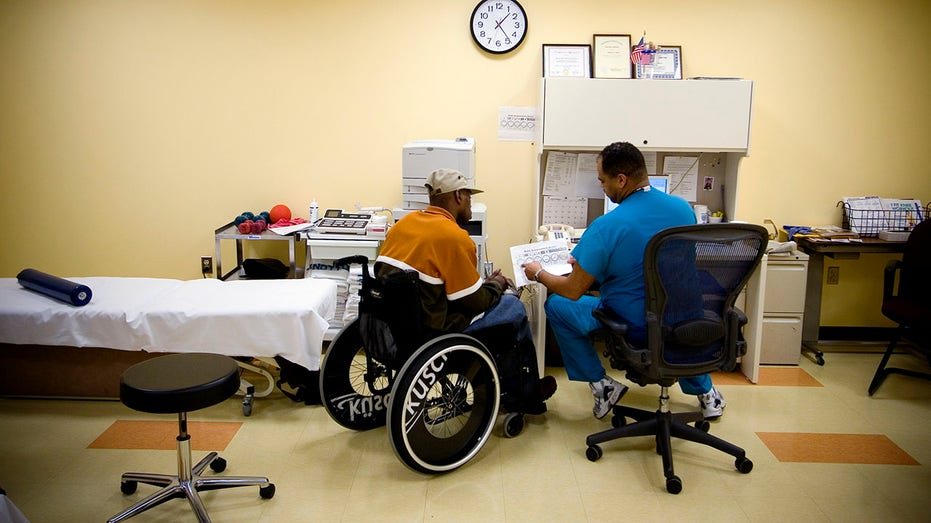
A comprehensive veterans benefits package that supporters describe as the largest expansion of health care and benefits for former service members in more than a decade faces an uncertain path forward in the House, caught in a crossfire between Republican factions over a separate voter ID bill. The legislation, known as the Take Care of American Veterans Act, combines roughly 60 individual veterans bills into a single package that would expand access to community care outside the Department of Veterans Affairs, increase benefits for combat-wounded veterans, caregivers, and Gold Star families, and broaden mental health services.
House Veterans' Affairs Committee Chairman Mike Bost, an Illinois Republican, told Fox News Digital he intends to bring the bill back for a vote as soon as lawmakers return from the July recess next week. But the measure was derailed last month after a group of House Republicans joined Democrats to defeat a procedural vote, preventing the House from taking up the legislation. The procedural rule, H. Res. 1398, governed floor consideration of several bills, including the National Defense Authorization Act and the veterans package. It failed after 14 Republicans voted against it, bringing floor business to a standstill.
Representative Anna Paulina Luna, a Florida Republican, said she voted against the rule in protest over House leadership's handling of the SAVE America Act, legislation championed by President Donald Trump that would require proof of U.S. citizenship to register to vote in federal elections. Speaker of the House Mike Johnson sent lawmakers home early after the vote failed. Bost accused the holdouts of effectively holding veterans legislation hostage, arguing that their protest against the SAVE Act's treatment should not block unrelated bills. «They're holding all bills hostage,» Bost said. «They're not voting for any rule. Any bill that has to pass a rule before it comes to the floor—which this bill does because of its size—can't move.»
Bost said he supports the SAVE America Act and has voted for it three times, but he argued that the Senate's failure to act on the voter ID bill should not stop the House from advancing other legislation. «I agree with that bill,» Bost said. «But the Senate still has to do their work. We don't stop our work because the Senate isn't doing it.» With only 23 legislative days left in the current congressional session, time is running short for the veterans package. John Byrnes, strategic director of Concerned Veterans for America, a group that supports the bill, warned that every procedural delay pushes other legislation further down the calendar. «This bill will save lives in 2027,» Byrnes said. «If we lose veterans because they could have had faster, better access to health care, we're never going to get those veterans back.»
Representative Chip Roy, a Texas Republican who also voted against the procedural rule, raised concerns about how the bill is financed. Roy, who previously served on the House Veterans' Affairs Committee, pointed to provisions that offset new spending through changes affecting other veterans. «You're taxing certain veterans to provide some sort of benefits and changes to other veterans,» Roy said. «There are concerns about some of the pay-fors.» The Veterans of Foreign Wars has also taken issue with Section 108 of the bill, warning that it would codify changes to future disability ratings for tinnitus and sleep apnea to help finance other veterans' priorities. Bost dismissed those concerns, saying no veteran currently receiving benefits would see them reduced. «If you're receiving a benefit right now, that's not going to be reduced at all,» Bost said.
Roy acknowledged that he supports much of what the bill seeks to accomplish but said other legislative priorities, including border security and the SAVE Act, remain critical for a bloc of House Republicans. «There is a block of us for whom border security, the SAVE Act and demonstrating our leadership on major issues is critical,» Roy said. «Some of these other bills may or may not get hung up based on a desire of many in the conference to see movement on other things.» The standoff underscores the deepening divisions within the House Republican conference, where a small group of conservatives has repeatedly used procedural tactics to force action on their priorities, often at the expense of other legislation. The veterans package, which had broad bipartisan support in committee, now hangs in the balance as lawmakers return to Washington with a crowded agenda that includes must-pass defense authorization and government funding bills.
82