Memorandum
- From
- Connor Quincy via FOX News
- Date
- Filed
- Politics·6 min to read
- Re
Fraud expert warns AI is helping criminals outpace government fraud defenses
ReFraud expert warns AI is helping criminals outpace government fraud defenses
A fraud expert testified before the House Oversight Committee that the federal government lacks the tools and policies to combat AI-powered fraud, warning that criminals are moving faster than agencies and exploiting seams between programs.
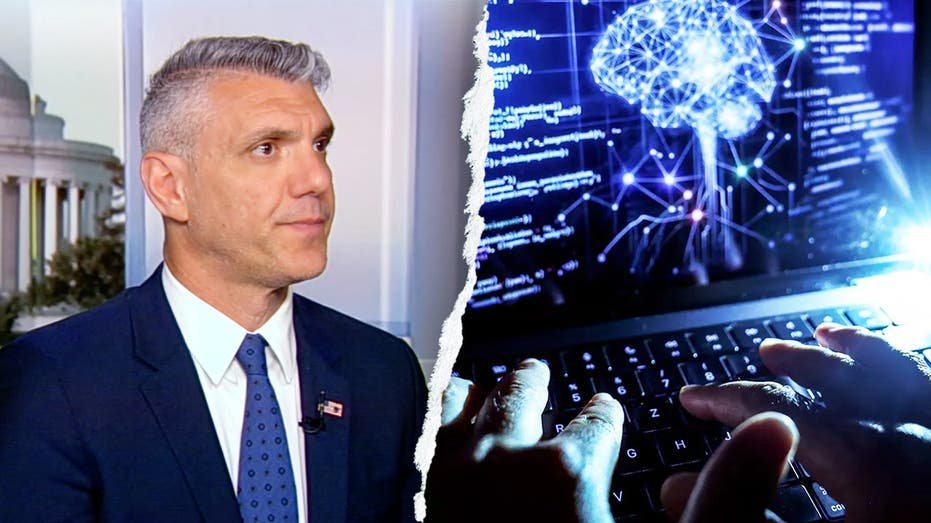
A fraud expert who testified before the House Oversight Committee on Wednesday warned that the federal government lacks the tools, policies, and interagency coordination needed to prevent criminals from using artificial intelligence to steal taxpayer money. David Maimon, head of Fraud Insights at SentiLink, told lawmakers that fraud against government programs has evolved from isolated schemes into a durable, specialized criminal infrastructure that exploits gaps between agencies.
«What's happening right now is the fact that we simply don't have the right tools to deal with fraud,» Maimon said in an interview after the hearing. «We don't have the right policies to deal with fraud. We don't have enough deterrence. We have no close collaboration between the government and the private sector to try and find the right solution to this issue.» The hearing, titled «Emerging Fraud Threats and the Evolving Fraud Landscape,» was held by the Government Operations Subcommittee as the Trump administration pursues a nationwide «War on Fraud» led by Vice President JD Vance.
Maimon told lawmakers that criminals are now using AI to create fake documents, deepfake videos, and sophisticated phishing emails that steal passwords and personal information or bypass identity verification systems. «It's difficult to prove that you're not essentially using AI while verifying your identity with documents and liveness tests and selfie images,» he said. During the hearing, he specifically warned that fraudsters are already deploying «AI-generated faces and deepfake video to defeat liveness checks at digital banks and tax preparers.»
The expert highlighted how his company has infiltrated thousands of online marketplaces where fraudsters share stolen information and tactics. «We were able to infiltrate thousands of markets where fraudsters are operating, where you can find identities and stolen checks, you can find tutorials of how to engage in fraud against the government or target financial institutions across the country,» Maimon said. He described a sprawling underground economy where criminals trade tools and techniques faster than government agencies can adapt.
One of the biggest challenges, Maimon said, is the government's slow deployment of fraud-fighting tools, which allows criminals to «take advantage of these opportunities» and «continue to exploit» resources. «The bad guys are moving faster than the government,» he said. «While the government is still trying to catch up and roll out better tools, criminals keep finding new ways to steal money.» He emphasized that the pace of technological change demands a more agile response from federal agencies.
Maimon pointed to his earlier investigation of Medicaid fraud as an example of the problem. His team discovered providers that had billed the government about $2 million and claimed to have staff and caregivers, but when investigators visited the addresses in person, many of the employees and operations didn't exist. «Sometimes you need to take a look at signals that appear in the database, but also at the physical location,» he said. The case illustrates how fraudsters exploit the gap between digital claims and physical reality.
Instead of relying on pictures or videos that AI can easily fake, Maimon recommended that the government verify identities using trusted historical data that is harder for AI to manipulate. «In order to make sure that we address this issue, and it really depends on the type of fraud that you're dealing with, but to address this issue in a more effective way, maybe we need to have some historical signals around identities we're trying to verify, rather than just looking at images that could be created easily by AI tools,» he told lawmakers.
The fraud expert also stressed that the damage goes beyond government finances, ultimately hurting the people these programs are designed to serve. «Every dollar we protect from organized fraud is a dollar that stays available for the people Congress intended to help,» he said. However, after years of studying dark web and Telegram marketplaces, Maimon said law enforcement has uncovered only a fraction of organized fraud. «I think they're just scratching the surface,» he said.
Maimon told lawmakers that «criminals exploit the seams between agencies precisely because our defenses are built program by program, while their infrastructure is built to move across all of them.» He called for closer collaboration between the government and the private sector to develop more effective fraud detection and prevention strategies. The hearing comes as the Trump administration intensifies its efforts to crack down on fraud, waste, and abuse across federal programs, with Vice President Vance leading the initiative.
70