Memorandum
- From
- Delaney Sawyer via FOX News
- Date
- Filed
- Politics·5 min to read
- Re
Fauci Invokes Fifth Amendment Over 100 Times as Senate Hearing Erupts in Tensions
ReFauci Invokes Fifth Amendment Over 100 Times as Senate Hearing Erupts in Tensions
Dr. Anthony Fauci repeatedly invoked his Fifth Amendment rights during a Senate hearing, prompting Senator Rand Paul to threaten contempt charges and Senator Bernie Moreno to deliver a blistering rebuke over Fauci's pandemic role.
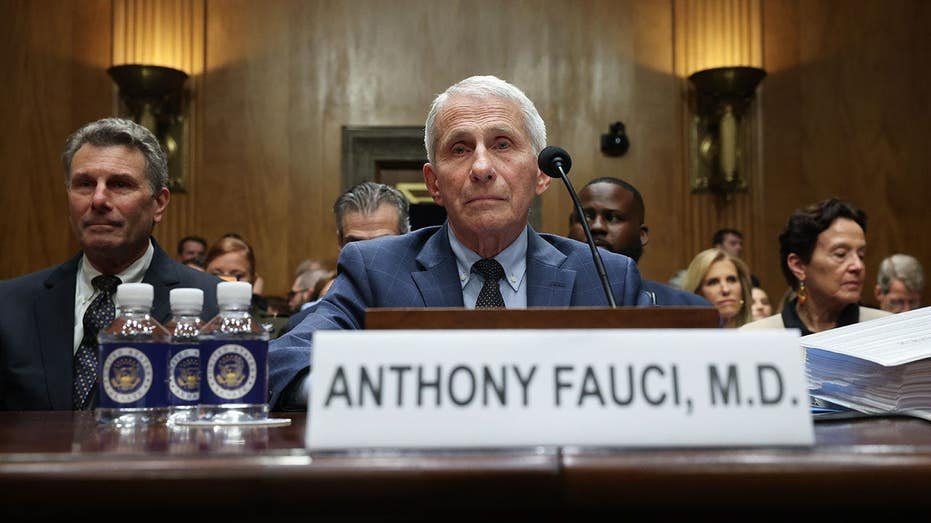
Dr. Anthony Fauci declined to answer questions from lawmakers more than 100 times during a contentious Senate hearing on Monday, invoking his Fifth Amendment rights and triggering threats of contempt charges from Republican senators. The former chief medical advisor to President Biden, who received a preemptive pardon from Biden in January, faced a combative panel led by Senator Rand Paul of Kentucky, who has long accused Fauci of funding risky gain-of-function research linked to the origins of the COVID-19 pandemic.
Paul opened the hearing by accusing Fauci and the National Institutes of Health of misleading Congress, destroying records, and eroding public trust. He asserted that Fauci's legacy would be defined by a loss of faith in government institutions. Fauci, reading from a prepared statement, argued that Paul's «obvious obsession» with prosecuting him and the public release of over 1,000 pages of his diary compelled him to decline to answer questions. «Although it pains me to do so because of the respect I have for the legislative branch of government, and my decades-long record of cooperating with Congress, under the advice of my attorneys, I will invoke my right under the Fifth Amendment,» Fauci said.
Tensions escalated when Paul, as chairman of the Homeland Security and Governmental Affairs Committee, declared that he was denying Fauci's right to invoke the Fifth Amendment, asserting that obstructing a congressional investigation is against the law. Fauci's lawyer, David Schertler, interjected to remind Paul of the constitutional right, prompting Paul to order security to remove Schertler from the room. «This is the way Anthony Fauci wants to be remembered — for a lawyer not listening to the rules,» Paul said. The move drew objections from Senator Gary Peters of Michigan, the top Democrat on the panel, but Paul insisted that neither Schertler nor the half-dozen other attorneys accompanying Fauci were recognized by the committee.
Senator Bernie Moreno of Ohio delivered one of the most pointed exchanges of the hearing. Noting that Schertler had previously represented former Senator Bob Menendez, who was convicted on corruption charges, Moreno referenced an article that described Schertler as the lawyer to call when «you're in deep s---.» Moreno then asked Fauci, «Do you feel like you're in deep s---?» When Fauci again declined to answer, Moreno erupted, stating that Fauci's influence over pandemic policy had driven him to run for the Senate. «Here I am sitting in front of you six years later saying, 'Who the f— do you think you were for doing that? It is a total disgrace what you did to this country,'» Moreno said.
Throughout the hearing, Fauci repeated the same phrase 111 times: «On the advice of counsel, I respectfully decline to answer based upon my rights under the Fifth Amendment to the Constitution.» He invoked the shield in response to every question from both Republican and Democratic senators, effectively delivering no substantive testimony on his role in the nation's COVID-19 response or his agency's funding of research in China.
Paul announced that he would seek contempt charges against Fauci and scheduled a committee vote for the following week. «We're going to have a vote next week on contempt,» Paul said, adding that there is a separate legal question about whether Biden's pardon grants Fauci complete immunity. The pardon, issued in the final hours of the Biden administration, covered Fauci for any federal crimes he may have committed from 2014 onward, but Paul has argued that it does not preclude congressional contempt proceedings.
Paul has for years pursued Fauci, alleging that the National Institutes of Health funded gain-of-function research at the Wuhan Institute of Virology that may have triggered the pandemic. Fauci and his supporters have denied those allegations, insisting that the NIH did not fund such research in China. The hearing, which Paul's office had prepared for extensively, was intended to force Fauci to testify under oath about his knowledge and actions. However, Fauci's blanket use of the Fifth Amendment left many questions unanswered.
The confrontation highlights the deepening partisan divide over accountability for the pandemic response. Republican lawmakers have vowed to continue investigating Fauci, while Democrats have defended his record and criticized the hearing as a political spectacle. The contempt vote next week could set the stage for a legal battle over the scope of a presidential pardon and a witness's right to remain silent before Congress.